 Sumas Roofing
 What Acme's Weather Does to Windows Over Time
Acme sits in the foothill country outside Sumas, in the part of Whatcom County where Pacific storm systems dump their rain first and the moisture rarely lets up for long. Homes here deal with driving, wind-driven rain that hits window frames sideways rather than straight down, long stretches of damp air moving in off the Sound and up the valleys, and a moss season that can run most of the year on shaded north and west walls. None of that is dramatic on its own, but it adds up. Wood sashes swell and stick. Old aluminum frames sweat and corrode at the corners. Caulk that looked fine at installation dries out, cracks, and lets water track behind the trim where nobody sees it until there's a soft spot in the sill.
Custom windows done right for this climate aren't just about looks or a tighter fit than a big-box stock size. They're about frame materials, flashing details, and sealants chosen specifically because they hold up under sustained Whatcom County moisture, not because they performed fine in a showroom in a drier climate.
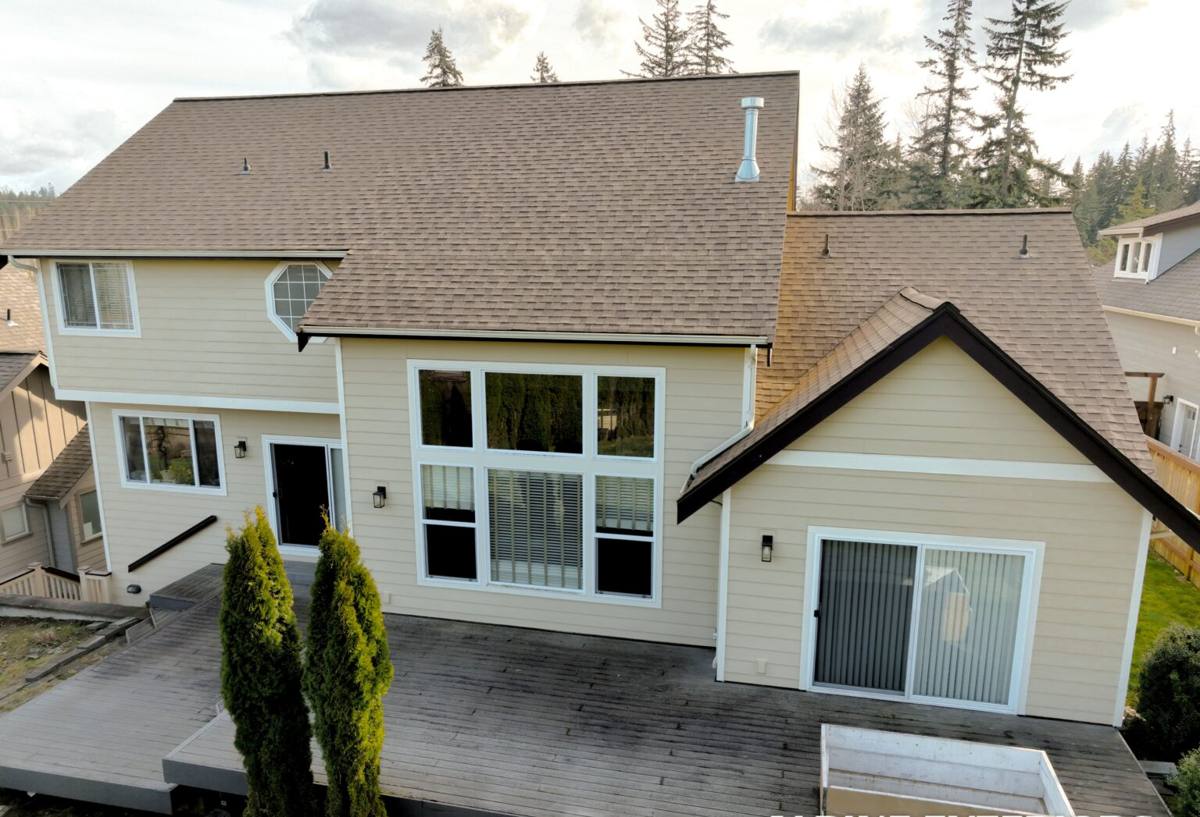
What "Custom" Actually Means for a Job Out Here
"Custom" gets used loosely in this industry, so it's worth being specific. For us it means the window is built or selected to fit an actual rough opening rather than forcing the opening to fit a stock size, and that every material decision — frame, glazing, flashing, trim — gets made with Acme's exposure in mind, not a generic national spec sheet.
That matters more here than in a lot of places. Older homes in this area were often built with openings that don't match today's standard sizes, and additions or past remodels sometimes left openings that are slightly out of square. A stock window jammed into an opening like that gets shimmed, packed with foam, and caulked heavy to make it fit — and that's exactly the kind of installation that fails first when driving rain hits it at an angle.
Where Custom Sizing Pays Off Most
- Older farmhouses and remodeled homes in the Acme area with non-standard or slightly out-of-square openings
- Additions where the original framing wasn't built to modern window rough-opening tolerances
- Larger picture or bay windows where even a small manufacturing tolerance shows up as a visible gap
- Homes where you're changing window size or style, not just swapping like-for-like
What a Correct Installation Actually Involves
The window unit itself is maybe half the job. The other half — the part homeowners rarely see once trim goes back on — is what actually determines whether that window is still performing well in ten or fifteen years.
Flashing and Water Management
Every opening needs a flashing sequence that sheds water down and out, never trapping it behind the sheathing. That means sill pan flashing under the window, house wrap or building paper integrated correctly at the sides and head, and a drip cap or head flashing that actually directs water away from the top of the frame rather than just sitting decoratively on top of it. Skipping or shortcutting this is the single most common reason a "new" window starts showing water damage inside a few wet seasons — and in a climate with as much sustained rain as this one, there's no forgiving margin for a shortcut here.
Sealing and Insulation
Low-expansion foam or backer rod and sealant around the frame, not just caulk smeared over gaps, keeps both air and moisture from working their way in. The exterior sealant joint has to be compatible with the siding material and rated for sustained UV and moisture exposure, not just whatever's on the truck.
Fit and Reveal
The window should sit square in the opening with a consistent reveal around the sash so it operates smoothly and seals evenly. A window that's slightly racked in the opening will show it first as a hard-to-close sash, and later as a wear point where the weatherstripping fails early on one side.
Signs Your Current Windows Are Already Losing the Fight
Most window failure in this climate is slow and easy to miss until it's a bigger repair. A few things worth checking before you decide it's just cosmetic:
- Fogging or a visible haze between panes on a double-pane unit — that's a failed seal, not a cleaning issue
- Soft or discolored wood at the sill or bottom corners of the frame, inside or out
- Persistent condensation on the inside of the glass in cold weather, especially worse than neighboring windows
- Moss or dark staining building up on the sill or exterior casing faster than on the rest of the wall
- Drafts you can feel by hand around the frame edges on a windy day
- Sashes that stick, won't stay open, or need force to latch — often a sign the frame has shifted or swollen
Frame Material: What Actually Holds Up Here
Every material has a real trade-off. We'll walk you through what fits your house, your budget, and your exposure rather than pushing one option across the board.
| Frame Material | Moisture Performance | Maintenance | Typical Trade-Off |
|---|---|---|---|
| Vinyl | Good — won't rot, low water absorption | Low | Fewer color/finish options, can look less premium on higher-end homes |
| Fiberglass | Very good — dimensionally stable in wet/dry cycling | Low | Higher upfront cost than vinyl |
| Wood (unclad) | Requires diligent upkeep in sustained damp climates | High — needs regular repainting/sealing | Best classic look, most maintenance-sensitive here |
| Wood, clad exterior | Good — cladding protects wood from direct weather | Moderate | Interior wood warmth with better exterior durability; higher cost |
| Aluminum | Prone to condensation and corrosion without thermal breaks | Moderate | Slim sightlines, but a poor thermal-break unit performs badly in cold, damp weather |
Our default recommendation for most Acme homes is fiberglass or vinyl for straightforward replacements, and clad-wood where the homeowner specifically wants a wood interior look and is comfortable with the added cost. We steer people away from unclad wood on heavy weather-exposure walls not because wood is a bad material, but because the maintenance schedule it demands in a climate this consistently damp is a real ongoing cost most homeowners underestimate until they're repainting sashes every few years.
Our Process, Start to Finish
- On-site assessment. We look at your existing openings, siding condition, and any signs of past water intrusion before recommending anything — not just measure and quote.
- Material and style selection. We walk through frame material, glazing package, and grille or trim style based on your home's exposure and your budget.
- Accurate measurement and ordering. Custom units are built to your actual openings, which takes lead time — we'll give you a realistic timeline up front.
- Removal and opening prep. We check framing condition once the old window is out; if there's hidden rot or damage, we flag it before closing anything back up.
- Flashing, install, and sealing. Proper sill pan flashing, house wrap integration, and sealant go in as part of the install, not as an afterthought.
- Interior and exterior trim. Finish work is matched to your home's existing trim profile wherever practical.
- Final walkthrough. We test every sash, check the seal, and go over care and warranty details before we consider the job done.
What Drives the Cost of a Custom Window Job
Costs vary a lot based on size, quantity, and condition of the opening, so we won't quote a number without seeing the job — but these are the factors that actually move the price:
| Factor | Why It Matters |
|---|---|
| Frame material | Vinyl is generally the most affordable; fiberglass and clad-wood cost more upfront but often less over time |
| Window size and configuration | Large picture windows, bays, and multi-unit combinations cost more than standard single units |
| Opening condition | Rotted framing or old, non-standard openings found during removal add labor and material |
| Glazing package | Upgraded low-E coatings or gas fills add cost but improve comfort and condensation resistance |
| Number of openings | Doing a whole elevation or the whole house at once typically lowers the per-window cost |
| Access and site conditions | Second-story or hard-to-reach openings take more time and equipment |
Why a Crew That Already Works Acme and Sumas Matters
A lot of window problems we get called out to fix weren't caused by a bad window — they were caused by an installer who treated Acme like it's the same job as a dry-climate subdivision somewhere else. Flashing details that would be adequate in a drier region aren't enough here, where wind-driven rain and sustained damp air test every seam for months at a time.
Working this part of Whatcom County regularly means we've seen how homes here actually age — which walls take the worst of the weather, how moss builds up on shaded siding, what older Acme and Sumas-area framing tends to look like once you open it up. That's not a marketing point, it's just what happens when a crew keeps working the same region job after job instead of treating every house like the first one they've ever seen.
Keeping New Windows Performing for the Long Haul
A correctly installed window still needs basic upkeep to get its full lifespan out of this climate. A short list worth putting on a yearly calendar:
- Clear moss and debris from sills and tracks before it holds moisture against the frame
- Check exterior caulk lines each fall for cracking or separation before winter storms arrive
- Make sure weep holes on vinyl and fiberglass frames stay clear so water can drain out
- Wipe down tracks and hardware to keep sashes operating smoothly, especially after long wet stretches
- Watch for new interior condensation patterns, which can signal an early seal issue worth catching before it's a bigger repair
If your windows in Acme are drafty, fogged, sticking, or just original to a home that's due for an update, we're happy to come take a look. The estimate is free, there's no pressure attached to it, and you'll get a straight answer about what your home actually needs — just fill out the form below to get started.