 Sumas Roofing
 Decking Built for Blaine's Coastal Conditions
Blaine sits close enough to Semiahmoo Bay and the Strait of Georgia that salt air is a real factor in how a deck ages, not just a talking point. Add in Whatcom County's long, wet fall-through-spring stretch and the moss and algae growth that comes with it, and you've got a climate that's genuinely hard on outdoor wood surfaces. Composite decking was designed for exactly this kind of exposure, and when it's installed correctly, it holds up to Blaine's weather far better than a standard wood deck without the annual maintenance grind.
We work in and around Sumas and the border communities regularly, and Blaine's mix of salt-influenced air, driving rain off the water, and shaded, moisture-trapping yards is a pattern we see often. That's different from what you'd deal with further inland, and it changes some of the decisions that go into a proper composite deck build.
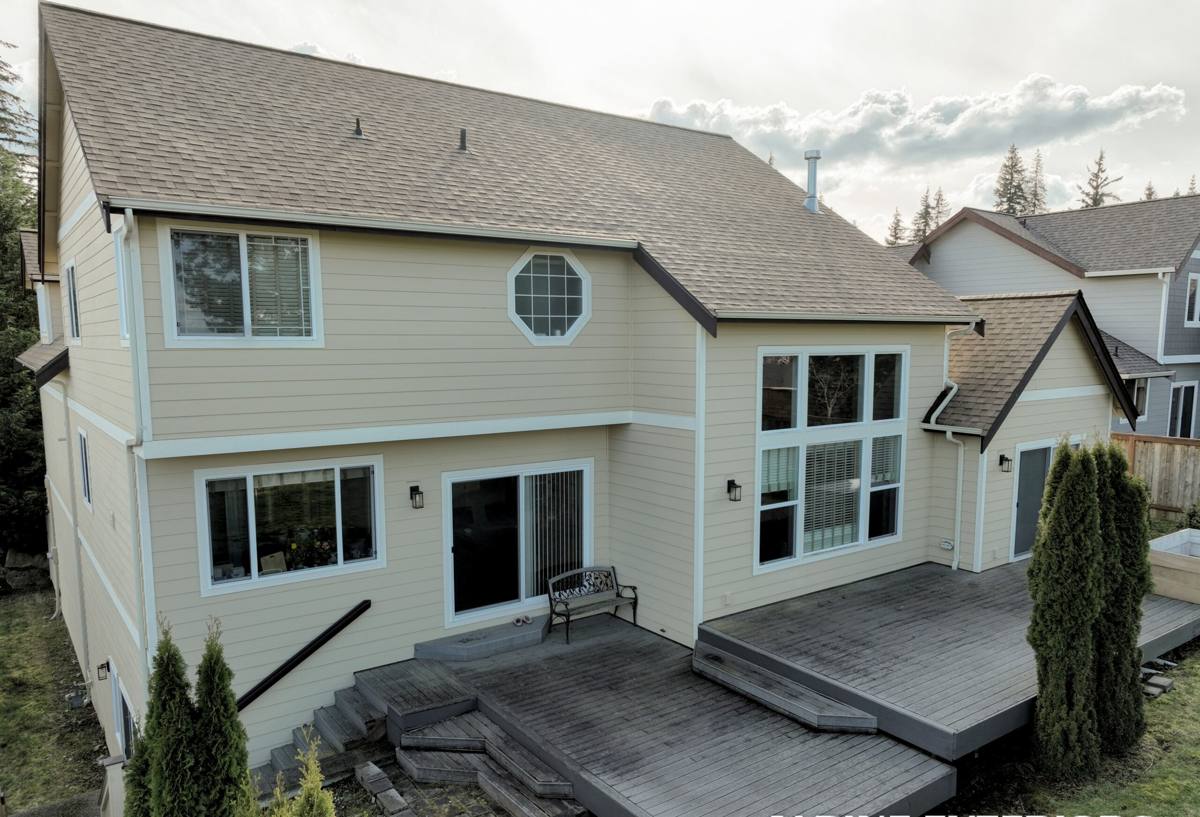
Why Wood Struggles Here — and Why Composite Holds Up
Traditional wood decking in Blaine faces a tough combination: salt air accelerates corrosion on fasteners and hardware, driving rain gets into end grain and joints, and the region's mossy, low-sun months keep surfaces damp for extended periods. That dampness is what feeds moss and mildew, and it's what eventually leads to soft spots, splintering, and rot in untreated or poorly maintained wood.
Composite decking doesn't eliminate every one of these issues, but it changes the equation. The boards themselves don't absorb water the way wood does, so they're not prone to swelling, splitting, or rot from moisture cycling. Most modern composite products also resist mold and mildew growth on the board surface itself, which matters a lot in a climate where things stay damp for weeks at a time. That doesn't mean a composite deck never needs cleaning — moss and algae can still take hold on any outdoor surface given enough shade and moisture — but the material itself isn't degrading while that's happening.
What Salt Air Actually Affects
Salt-laden air mostly targets metal, not the composite boards. Fasteners, joist hangers, post bases, and any exposed hardware are where we pay the closest attention. Standard hardware can corrode faster near the water than it would further inland, so we spec corrosion-resistant fasteners and structural hardware rated for coastal-adjacent use. This is one of the areas where cutting corners doesn't show up as a problem right away — it shows up two or three years later as rust streaks, loosening connections, or hardware failure at the worst possible time.
What a Correct Composite Deck Build Involves
A composite deck is only as good as what's underneath it. The boards get the attention because they're what you see and stand on, but the substructure — framing, ledger attachment, joist spacing, and drainage — is what determines whether the deck performs for the next 20-plus years or starts having problems in five.
- Proper joist spacing: Composite boards often require tighter joist spacing than wood, especially at angles or on stairs. Manufacturer spec sheets vary by product, and we follow them rather than reusing wood-deck spacing out of habit.
- Ledger board flashing: Where the deck attaches to the house, correct flashing keeps water from getting behind the siding — a bigger deal in a climate that sees as much driving rain as Blaine does.
- Hidden fastener systems: Most composite lines use hidden clips rather than face-screwing, which gives a cleaner look and reduces the number of penetration points where water could otherwise sit.
- Ventilation and drainage: Composite decking needs airflow underneath it just like wood does. Skipping proper under-deck ventilation traps moisture and defeats a lot of the material's natural advantage.
- Expansion gaps: Composite boards expand and contract with temperature more than people expect. Gaps at board ends and around fixtures need to be sized correctly or you'll see buckling later.
Railing and Fastener Choices
Railing systems and fasteners are where a lot of composite decks either look great for decades or start showing problems early. We match railing hardware and post connections to the same coastal-conscious standard as the decking hardware — stainless or coated fasteners, not whatever's cheapest at the hardware store. It costs a little more up front and saves a lot of grief later.
Managing Moss and Algae on a Composite Deck
Whatcom County's moss season is long, and Blaine's shaded, moisture-holding lots can make it worse in spots that don't get much direct sun. Composite decking resists staining and doesn't feed mildew growth the way bare wood can, but moss and algae are organic growth that can settle on any exterior surface — decking, siding, roofing — given enough shade and standing moisture.
The good news is that composite surfaces are much easier to keep clean than wood. A simple periodic wash — plain soap and water or a manufacturer-approved deck cleaner, applied with a soft brush — keeps most composite decks looking new without the sanding, staining, or sealing that wood decks demand every year or two. Homes in shadier Blaine yards or under tree cover will want to clean a bit more often than a deck in full sun, but it's a maintenance task measured in minutes, not a weekend project.
Comparing Wood and Composite for a Blaine Deck
| Factor | Traditional Wood | Composite Decking |
|---|---|---|
| Moisture/rot resistance | Vulnerable without regular sealing | Resists swelling and rot by design |
| Salt air impact | Accelerates weathering and graying | Board material largely unaffected; hardware still needs attention |
| Moss/algae buildup | Can penetrate and stain surface fibers | Sits on the surface; easier to wash off |
| Annual maintenance | Sanding, staining, or sealing most years | Occasional washing; no sealing needed |
| Upfront material cost | Lower | Higher |
| Typical lifespan with upkeep | 10–15 years before major repair | 25+ years, manufacturer-dependent |
Wood isn't a bad material — it's a legitimate choice for homeowners who want that specific look and don't mind the upkeep. But for a deck exposed to Blaine's combination of salt air and moss season, composite generally means fewer weekends spent on maintenance and a more consistent appearance over the years.
Our Process for a Blaine Composite Deck
- On-site assessment: We look at sun exposure, drainage, proximity to water, and any existing structure before recommending a board line or substructure approach.
- Product selection: We walk through composite options with you based on your budget, the look you want, and how the site's shade and moisture patterns should factor into the choice.
- Substructure build or repair: Framing gets built or reinforced to spec, with corrosion-resistant hardware and correct ledger flashing where the deck meets the house.
- Board installation: Boards go down with hidden fasteners, correct spacing, and expansion gaps sized for our temperature swings.
- Final walkthrough: We go over basic care — cleaning frequency, what to avoid, and what to expect from the material over time — so there are no surprises.
Cost Factors for a Composite Deck in Blaine
Every deck is different, and pricing depends on more than square footage. A few things that move the number up or down:
- Deck size and shape — multiple levels, angles, or curves add labor
- Substructure condition — repairing or replacing existing framing versus building new
- Board tier and manufacturer — composite lines range from entry-level to premium, with real differences in warranty and appearance
- Railing style — cable, composite, or metal railing systems all price differently
- Site access — tight lots or elevated decks can add complexity
- Ledger and flashing work — more involved when tying into existing siding
We give straight, itemized estimates so you can see exactly what you're paying for rather than a single lump number.
Why Hire a Crew That Already Works in Blaine
A contractor who works Whatcom County's border communities regularly already knows the wrinkles that come with this stretch of coastline — how much moisture a ledger flashing detail needs to handle, which hardware actually holds up near the water, and how shaded, moss-prone lots behave differently than a sunny inland yard. That's the kind of judgment that doesn't come from a spec sheet; it comes from having built and repaired decks under these exact conditions.
We treat every composite deck build in Blaine the same way we'd want one built at our own house — right the first time, with materials and hardware sized for what the site actually faces, not just what's cheapest or fastest.
Get an Estimate
If you're weighing a new composite deck or replacing an aging wood one in Blaine, we're happy to take a look and give you a straightforward, no-pressure estimate. Fill out the form below and we'll get back to you with next steps.