 Sumas Roofing
 Why Blaine's Coastline Climate Wears Out Siding Faster
Blaine sits about as close to salt water and the Canadian border as a Washington home can get, and that location shapes what siding has to survive here. Homes facing Semiahmoo Bay and Drayton Harbor take on salt-laden air that settles into any seam, fastener hole, or crack in a wall system and quietens down slowly, corroding metal trim and softening anything that isn't built to shed moisture. Add the near-constant driving rain that blows in sideways off the water during fall and winter storms, and siding here is doing more defensive work than siding fifty miles inland.
Then there's moss. Whatcom County's long, cool, wet stretch from October through May gives moss, algae, and mildew months to establish themselves on any siding surface that stays damp. On the north and shaded sides of a home — common in Blaine's tree-lined lots — that green film can hang on year-round if the siding underneath doesn't drain and dry properly. None of this is exotic weather. It's just relentless, and it adds up over the life of a house.
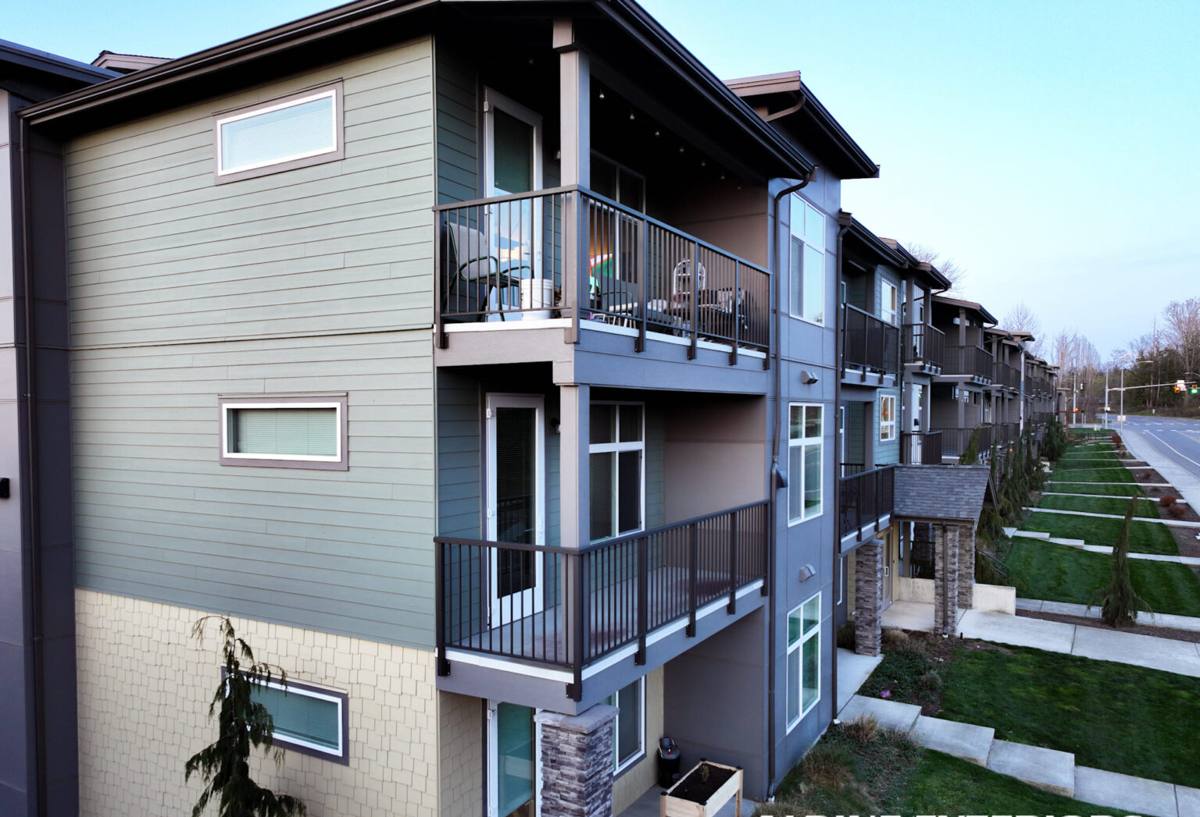
What Blaine Homes Actually Need From Their Siding
Given that climate, a siding system for Blaine needs to do three things well: resist moisture intrusion at every seam and penetration, tolerate repeated wet-dry cycling without swelling or delaminating, and hold its finish without chalking, fading, or feeding mold under a factory coat. A lot of siding failures we see in this area aren't really about the material being "bad" — they're about a product that couldn't keep up with this specific combination of salt exposure, wind-driven rain, and shade-driven moss growth, or that was installed without accounting for it.
That's a different problem than what you'd plan for on the dry side of the Cascades, and it's why a generic siding job — done to a spec written for a drier climate — tends to show its age here faster than it should.
Why We Install Only James Hardie Fiber Cement
We standardized on James Hardie fiber cement siding for every home we side, including here in Blaine, and we don't install vinyl, LP SmartSide, Cemplank, Allura, or bare cedar or spruce. That's not a marketing position — it's a decision based on what holds up in this exact climate.
Fiber cement is non-combustible and dimensionally stable, meaning it doesn't expand and contract with moisture the way wood-based products do, which matters when a wall is cycling through wet Pacific storms most of the year. James Hardie's HZ5 product line is engineered specifically for climates with freeze-thaw exposure and sustained moisture, which fits the Whatcom County coastline better than a general-purpose product line does. The ColorPlus factory finish is baked on under controlled conditions rather than field-applied, which gives it better long-term color retention and a real, transferable warranty backing it — something field-painted or engineered-wood siding typically can't match once you look closely at the fine print.
We're not going to tell you every other product is junk — vinyl is inexpensive and low-maintenance in the right setting, and cedar has a look some homeowners genuinely want. But for a coastal Whatcom County home facing salt air, wind-driven rain, and a long moss season, we've made the call that Hardie's combination of moisture performance, fire rating, and factory finish is what we're willing to put our name behind and warranty.
How Hardie Compares to What We Don't Install
| Material | How It Handles Blaine's Climate | Long-Term Trade-Off |
|---|---|---|
| James Hardie fiber cement | Non-combustible, dimensionally stable, engineered HZ5 line for wet/coastal exposure | Higher upfront material and labor cost than vinyl |
| Vinyl siding | Sheds rain but can warp, crack, or fade with UV and temperature swings; seams are a moisture path | Shorter realistic lifespan in coastal wind exposure; limited repair-in-place options |
| LP SmartSide / engineered wood | Wood-strand core is more moisture-sensitive if any seam or cut edge is exposed | Swelling and edge failure risk if caulking or flashing isn't maintained |
| Cedar / primed spruce | Natural material, attractive, but organic and moisture-absorbent | Needs ongoing refinishing and is more hospitable to the moss and mildew this area produces |
What a Correct Siding Replacement Involves
Replacing siding well isn't just pulling off old panels and nailing up new ones. Especially on a coastal Blaine home, what's underneath the siding matters as much as the siding itself.
Tear-Off and Wall Inspection
Full removal of the old siding lets us actually see the sheathing, framing, and any past water damage instead of covering it up. Homes near the bay with years of salt and moisture exposure sometimes have soft sheathing or rusted fasteners hiding behind siding that still looked fine from the street. We flag and repair that before anything new goes up.
Weather-Resistive Barrier and Flashing
A correctly installed weather-resistive barrier (WRB) with properly lapped and sealed seams is the actual first line of defense against wind-driven rain — the siding is the second. Flashing at every window, door, deck ledger, and roof-to-wall intersection needs to direct water out, not behind the cladding. This is where a lot of siding jobs quietly fail, because it's invisible once the siding goes up and easy to rush.
Fastening and Clearances to Hardie Spec
James Hardie's warranty depends on installation to its published spec — correct fastener type and spacing, proper clearance from grade, roofing, and decks, and correctly primed and painted cut edges. We follow that spec because it's the difference between a warranty that actually holds and one that gets voided by an installation shortcut nobody notices until there's a problem years later.
Finish Detail Work
Trim, corners, and caulking at penetrations are where moss and moisture find their way in first. Clean, tight detail work here is what keeps a Blaine home's siding looking sharp through its second and third wet season, not just its first.
Our Process for Blaine Homeowners
- On-site assessment: We walk the exterior, check the sides most exposed to weather off the bay, and look for existing moisture or rot before quoting anything.
- Written scope and estimate: You get a clear breakdown of what's being replaced, what Hardie product and profile we're recommending, and why — no vague allowances.
- Tear-off and sheathing repair: Old siding comes off, and any damaged sheathing or framing is repaired before we move forward.
- WRB and flashing installation: Weather barrier and flashing go in first, sealed and lapped correctly at every penetration.
- Hardie installation to spec: Panels or lap siding installed with correct fastening, clearances, and edge treatment per James Hardie's requirements.
- Final walkthrough: We go over the finished work with you, including warranty paperwork, before calling the job done.
Signs Your Blaine Home May Need Siding Replacement
- Persistent moss or algae staining that comes back within a season of cleaning
- Soft spots, bubbling, or visible warping in wood-based or engineered siding
- Paint that's chalking, peeling, or fading unevenly, especially on bay-facing walls
- Visible gaps, cracked caulking, or separated seams around windows and trim
- Rising energy bills that suggest the wall assembly is no longer sealing properly
- Siding that's original to a home built more than 20-25 years ago in vinyl, cedar, or older composite products
Cost Factors for Siding Replacement
Every home is different, but a few factors consistently drive the cost of a Blaine siding replacement more than others:
| Factor | Why It Matters |
|---|---|
| Extent of sheathing/framing repair | Salt-air and moisture damage found during tear-off adds labor and materials before new siding even goes up |
| Home size and wall complexity | More corners, gables, and penetrations mean more flashing and detail labor |
| Hardie product line and profile | Lap siding, panel systems, and trim packages vary in material cost and installation time |
| Access and site conditions | Tight lots, second stories, and staging near the water can affect equipment and labor time |
| Existing paint or finish removal | Full disposal and prep work for old materials adds to the scope |
We give you real numbers based on your specific home during the on-site assessment rather than a rough phone estimate, since the sheathing condition alone can swing a project meaningfully.
Why Local Experience in Blaine Matters
A crew that's already worked homes along this stretch of Whatcom County knows which walls take the worst of the weather off the water, where moss tends to establish first, and how the local building department expects flashing and clearance details handled. That's not something you can fully substitute with a generic install checklist. It shows up in fewer callbacks, siding that actually dries out between storms, and a finished job that's built for the specific weather Blaine gets, not the weather a crew is used to somewhere else.
If your Blaine home's siding is showing its age or you're planning ahead for a replacement, we're happy to walk the exterior with you and give you a straightforward, no-pressure estimate — just fill out the form below.