 Sumas Roofing
 Board & Batten Siding and Everson's Climate
Board and batten siding has a clean, vertical look that shows up on farmhouses, ranch homes, and newer builds all through the Nooksack Valley. It's a good match for the area's mix of older agricultural properties and newer construction, but the look only holds up if the material underneath it is built for what Whatcom County weather actually does to a house. Everson sits in a stretch of the county that gets long stretches of gray, wet weather, wind-driven rain off passing fronts, and a moss season that can run most of the year on north-facing walls and shaded siding. Any siding product installed here needs to handle standing moisture, repeated wet-dry cycling, and the kind of low-angle sun that never quite dries a wall out.
We install board and batten as a James Hardie fiber cement system — vertical panels with battens over the seams, engineered and manufactured specifically for regions like ours. This page covers what that means in practice for a home in Everson: what the climate actually demands, what a correct installation looks like, and why the details of the job matter more here than they would in a drier part of the country.
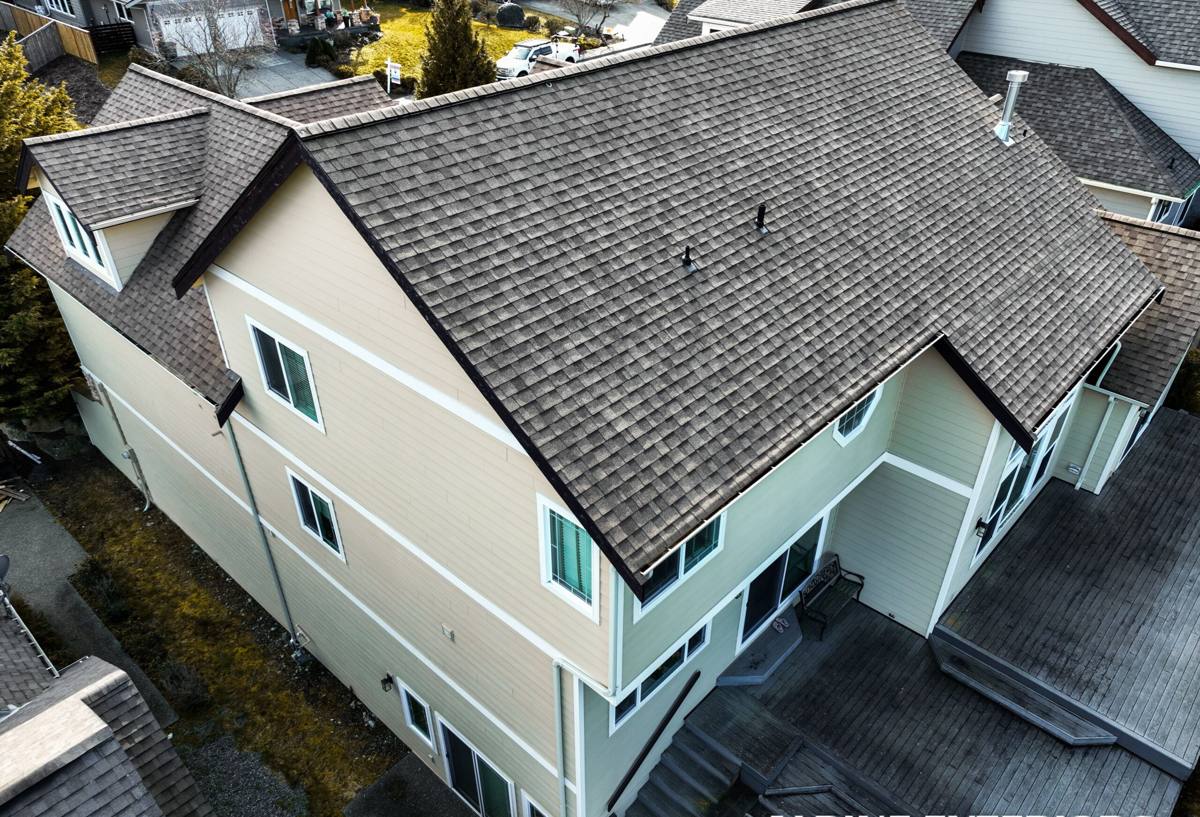
What Local Homes Actually Need From Their Siding
Whatcom County's marine-influenced climate brings a specific set of stresses that a lot of siding products simply weren't designed around:
- Long wet seasons where siding rarely gets a full dry-out period between rain events
- Driving, wind-pushed rain that can force moisture into poorly flashed seams and butt joints
- Persistent shade and humidity on north- and east-facing walls that feeds moss and algae growth
- Repeated freeze-thaw cycles in winter that stress any material prone to swelling or cracking
- Salt-laden air moving inland off the Salish Sea, which accelerates corrosion on unprotected fasteners and trim
Board and batten siding, because it's a vertical profile with more seams and butt joints than horizontal lap siding, is actually more sensitive to these conditions if it's not detailed correctly. Every batten, every panel joint, and every horizontal seam is a place water can find its way in if the installer cuts corners. That's the real reason the choice of material and the quality of the installation matter more on a board and batten job than on almost any other siding style.
Why We Install Only James Hardie for Board & Batten
We standardized on James Hardie fiber cement for every siding job we do, and board and batten is no exception. Hardie's vertical panel and batten systems are engineered from cement, sand, and cellulose fiber rather than wood or wood byproducts, which means the material itself doesn't absorb water the way engineered wood siding can, and it won't rot, delaminate, or feed moss and mildew the way untreated or lightly primed wood-based products will over time.
James Hardie also builds its siding in climate-specific formulations under its HZ5 engineering, designed for regions with heavy moisture exposure like the Pacific Northwest. The factory-applied ColorPlus finish bakes color onto the panel before it ever reaches the jobsite, which holds up better against the county's rain and UV cycle than field-applied paint and comes with its own finish warranty. Combined with Hardie's product warranty, that's a level of long-term backing we can't offer with primed spruce, cedar, LP SmartSide, or vinyl — all of which have real strengths in the right application, but none of which we're willing to put our name behind for the wet, moss-heavy conditions Everson sees for most of the year.
Board & Batten Product Options
For vertical board and batten, we generally work with Hardie's smooth or cedarmill-textured panels paired with matching battens, or the Artisan-tier products where a homeowner wants a more refined, tighter-reveal look. Both are available pre-finished in Hardie's ColorPlus palette, so the batten and panel color match exactly and won't need repainting on the same schedule as field-painted wood siding.
What a Correct Board & Batten Installation Involves
Board and batten looks simple from the street, but a correct install involves more steps than most homeowners expect, and skipping any of them is where moisture problems start in a climate like ours.
Behind the Panel
Every job starts with the wall itself, not the siding. That means checking sheathing condition, installing or verifying a weather-resistant barrier, and — on most Everson jobs — installing vertical furring strips to create a rainscreen gap. That gap lets any moisture that gets behind the panel drain and dry out instead of sitting against the sheathing, which matters enormously in a climate that doesn't give walls much chance to dry between storms.
Flashing and Joints
Every window, door, and horizontal panel joint needs proper flashing and correctly lapped house wrap so water sheds outward instead of pooling behind the siding. Butt joints where panels meet get back-flashed, not just caulked, because caulk alone degrades faster than the siding around it and isn't a substitute for physical water management.
Fastening and Batten Placement
Battens need to land over the panel seams and be fastened into framing at the spacing Hardie's installation instructions specify, using corrosion-resistant fasteners appropriate for coastal-influenced air. Fastener spacing and battens set too far apart are a common shortcut on rushed jobs, and it shows up years later as movement, cracked caulk lines, or water intrusion at the seams.
Trim, Caulk, and Paint Touch-Up
Cut edges get sealed, factory-finished touch-up paint gets used to match ColorPlus exactly, and trim details around windows, corners, and the foundation line get finished to shed water rather than trap it.
Board & Batten Compared to Other Siding Choices for This Climate
Homeowners in Everson often ask how board and batten in fiber cement stacks up against other materials they've seen quoted. Here's an honest comparison based on how each performs under Whatcom County's wet, moss-prone conditions:
| Siding Material | Typical Cost Range | Moisture Performance | Maintenance | Expected Lifespan |
|---|---|---|---|---|
| James Hardie Fiber Cement | Mid to upper-mid | Excellent — non-combustible, won't rot or swell | Low — factory finish, occasional wash | 30+ years |
| Vinyl | Lower | Fair — can warp, and seams can allow moisture behind panels | Low, but fades and cracks over time | 15–25 years |
| Primed Spruce / Cedar | Mid | Poor to fair — absorbs moisture, prone to rot without diligent upkeep | High — repainting, sealing, moss treatment | 10–20 years with upkeep |
| LP SmartSide | Mid | Fair — engineered wood core sensitive to sustained moisture exposure | Moderate — edge sealing, repainting cycles | 20–30 years with maintenance |
These ranges are broad and every property is different — roofline complexity, tear-off needs, and trim detail all move the number. The point of the table isn't to pick a number, it's to show why moisture performance and maintenance burden matter as much as the sticker price in a climate that stays wet as much of the year as ours does.
Our Process, Start to Finish
- On-site assessment of the existing siding, sheathing condition, and moisture history around windows, corners, and grade level
- Written estimate covering tear-off, sheathing repair if needed, rainscreen furring, and the specific Hardie board and batten products recommended
- Removal of old siding and inspection of the wall assembly before anything new goes up
- Installation of weather-resistant barrier, furring, flashing, and the Hardie panel and batten system to manufacturer spec
- Trim, caulking, and touch-up finish work matched to the ColorPlus factory color
- Final walkthrough and cleanup
We don't shortcut the tear-off and inspection step even when the existing siding looks fine from the ground. On a lot of Everson homes, especially older farmhouses and homes with mature landscaping close to the walls, moisture damage behind the old siding isn't visible until it's off the wall — and it's much cheaper to address during a siding job than to discover later.
Maintenance Through Whatcom County's Moss Season
Fiber cement board and batten needs far less upkeep than wood-based alternatives, but "low maintenance" isn't "no maintenance" in a climate this wet. A simple annual routine keeps it looking right and keeps small issues from becoming expensive ones:
- Rinse siding annually, focusing on north-facing and shaded walls where moss and algae take hold first
- Keep gutters clear so overflow doesn't run down the face of the siding during heavy rain
- Trim back shrubs and trees that keep siding shaded and damp longer than the rest of the house
- Check caulk lines at trim and butt joints every couple of years and have any cracked sections resealed
- Watch for moss buildup at the base of battens and along horizontal joints, since that's where trapped moisture shows up first
Why Hiring a Crew That Already Works in Everson Matters
Board and batten done wrong doesn't usually fail in year one — it fails in year five or eight, after repeated wet seasons have worked their way into a joint that wasn't flashed right or a batten that was fastened too far apart. A crew that works this specific part of Whatcom County regularly has already seen how local wall assemblies, older framing, and this climate interact, and builds the rainscreen gap, flashing details, and fastening pattern accordingly rather than defaulting to a generic install written for a drier region. That local pattern-recognition is worth more on a board and batten job than on almost any other siding style, simply because there are more seams for water to find.
If you're weighing board and batten siding for a home in Everson, we're happy to take a look and walk you through what your specific walls need — no pressure, no upsell, just a straight assessment and a written estimate. Reach out through the form below to schedule a free estimate.