 Sumas Roofing
 Siding in Custer Has to Answer to the Weather, Not Just Look Good
Custer sits close enough to the water and low enough in the valley that its siding problems aren't hypothetical. Homes here deal with salt-laden air rolling in off the bay, driving rain that hits siding sideways during winter storms, and a moss season that can run eight months or longer in shaded, north-facing spots. Any siding product installed in this pocket of Whatcom County is going to get tested every single year, not occasionally. That's the lens we use when we talk about siding for this neighborhood: not "what looks good in a showroom," but "what survives a Custer winter and still looks good in June."
We install James Hardie fiber cement siding exclusively, and we work in and around Sumas and Custer regularly enough to know which parts of a house fail first out here and why. This page is about what that means specifically for a Custer home — not a general siding pitch.
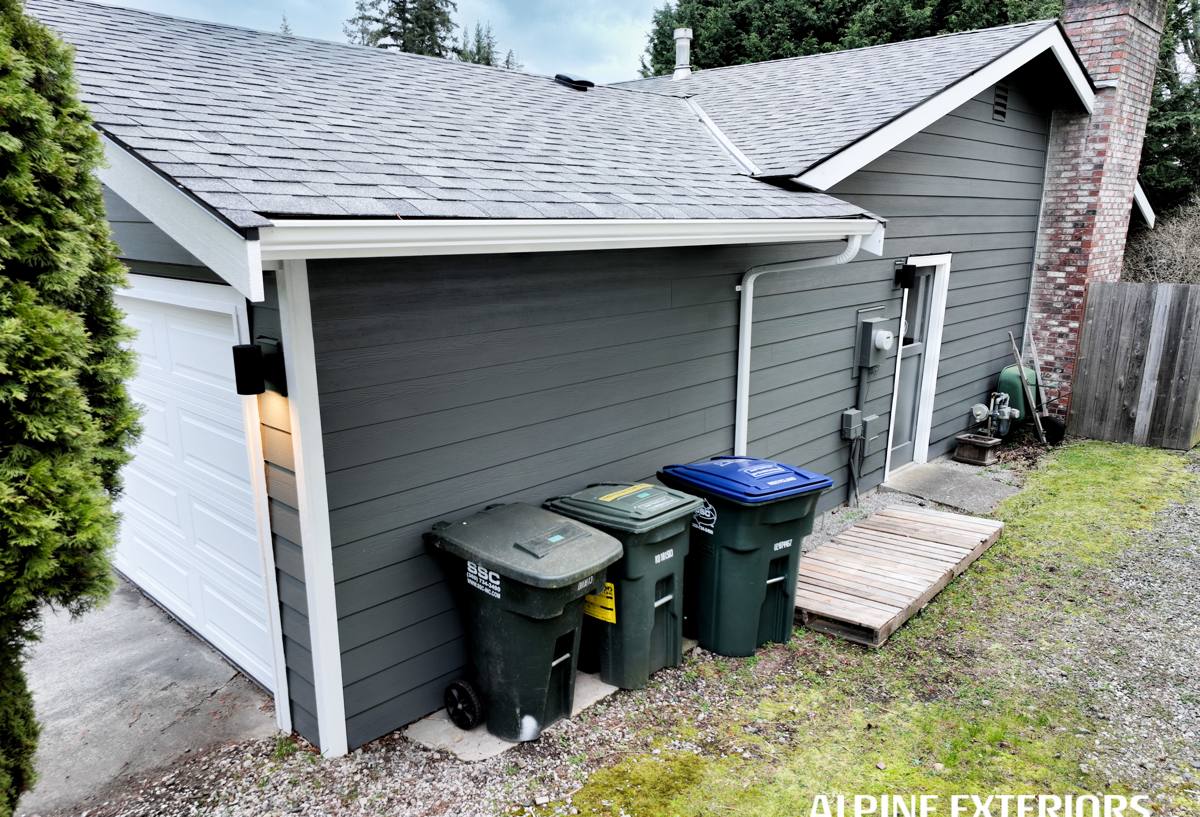
What Salt Air, Rain, and Moss Actually Do to Siding
Salt Air
Proximity to Puget Sound and the bay means airborne salt settles on exterior surfaces even a few miles inland. Salt is corrosive to exposed metal fasteners and trim, and it accelerates the breakdown of some paint films and lower-grade composite products. It doesn't damage properly finished fiber cement the way it can attack untreated wood or poorly coated metal, but it does mean fastener choice and finish quality matter more here than in a drier, inland town.
Driving Rain
Custer's rain doesn't just fall — wind off the flats pushes it sideways into wall assemblies, especially on west- and south-facing elevations. That kind of wind-driven rain finds every gap in flashing, every under-caulked seam, and every place where siding was nailed too tight or lapped short. Water intrusion is rarely a siding-material failure; it's almost always an installation or flashing failure that a mediocre product finish just can't cover for.
Moss and Sustained Dampness
Shaded walls, especially those facing north or tucked behind trees and fences common on Custer lots, stay damp for extended stretches. Moss and algae take hold on any surface that holds moisture at the surface, and once established, they hold even more moisture against the substrate. Wood-based sidings (cedar, primed spruce, LP SmartSide) are especially vulnerable because moss retention plus organic material equals rot risk over time. Fiber cement doesn't feed mold or moss the way wood-based products can, which is one of the reasons it holds up better on the shaded sides of Custer homes.
Why We Install Only James Hardie Here
We don't offer vinyl, LP SmartSide, Cemplank, Allura, primed spruce, or cedar, and Custer's climate is a big part of why. Vinyl can warp and become brittle with temperature swings and doesn't hold paint if a homeowner ever wants a color change. Wood-based composite and cedar need diligent, ongoing maintenance to resist moisture and moss in a climate that doesn't give siding much of a dry season to recover in. Cemplank and Allura are also fiber cement, but James Hardie's HZ5 product line is engineered specifically for the Pacific Northwest's moisture exposure, and the ColorPlus factory finish is baked on with a process that holds color and resists fade and moisture intrusion better than field-applied paint.
For a Custer home, that translates to fewer repaint cycles, less caulk failure at the seams, and a surface that doesn't feed moss the way organic materials do. It's not that other products can't be installed correctly — it's that we've standardized on the one system that gives us the most confidence in this specific climate, and we'd rather do one thing exceptionally well than several things adequately.
What a Correct Hardie Installation Involves
The material is only half the equation. A huge share of siding failures we get called to inspect in this area trace back to installation shortcuts, not product defects. On a Custer home, we pay particular attention to:
- Weather-resistive barrier and flashing sequencing — house wrap lapped correctly, all penetrations flashed, and window/door flashing integrated before siding goes on, not caulked over after the fact
- Rainscreen or proper drainage gap — a small air gap behind the siding lets any moisture that does get past the cladding drain and dry instead of sitting against the wall sheathing
- Correct fastener type and placement — corrosion-resistant fasteners driven per Hardie's nailing pattern, not overdriven (which cracks the board's edge) or underdriven (which leaves gaps)
- Proper clearances — siding held up off roofing, decks, and grade per Hardie's minimum gap specs so it isn't sitting in standing water or splashback
- Caulked and painted cut edges — every field cut sealed before installation, since a raw cut edge is the one place factory-finish protection doesn't reach
- Correct panel and joint layout — butt joints backed and sealed, not just butted tight and hoping
Skip any one of these on a home exposed to Custer's rain and moss conditions, and you're looking at trapped moisture, premature caulk failure, or moss creep at the seams within a few years — even with a good product.
Our Process for a Custer Siding Job
- On-site assessment — we look at current siding condition, moisture staining, existing flashing details, and which elevations get the most wind-driven rain and shade-driven moss
- Product and line selection — HZ5 panel or plank profile, color, and trim package suited to the home and to Custer's exposure
- Tear-off and substrate check — removing old siding lets us inspect sheathing for hidden rot or past water damage before anything new goes up
- House wrap and flashing installation — the unglamorous work that determines whether the siding lasts 10 years or 40
- Hardie installation to spec — following manufacturer nailing, clearance, and joint requirements exactly, not "close enough"
- Trim, caulking, and touch-up — sealing cut edges and finishing detail work at corners, windows, and transitions
- Final walkthrough — reviewing the finished work with the homeowner before we consider the job done
Why a Crew That Already Works Custer Matters
Siding crews that mainly work drier inland areas or unfamiliar climates sometimes treat flashing and drainage details as optional extras rather than the core of the job. In Custer, that gap shows up fast — usually as a stained soffit, a moss line at a butt joint, or paint failure at a caulk seam within the first couple of winters. A crew that's already worked houses in this specific stretch of Whatcom County knows which elevations to over-detail, which trim intersections tend to trap water, and how much drainage gap actually matters on a shaded, north-facing wall near the water. That local pattern recognition doesn't show up on a spec sheet, but it shows up in how long the job lasts.
Cost Factors for a Custer Hardie Siding Project
| Factor | Why It Matters Here |
|---|---|
| Home size and elevation count | More wall area and more corners/transitions means more flashing and trim detail work |
| Current siding condition | Hidden moisture damage under old wood or composite siding adds sheathing repair costs |
| Panel vs. lap plank profile | Different install labor and trim requirements; both perform well when detailed correctly |
| Drainage gap / rainscreen addition | Adds material and labor but meaningfully reduces long-term moisture risk in this climate |
| Trim and color package | ColorPlus factory finish vs. field-painted trim affects both cost and long-term maintenance |
| Access and site conditions | Tree cover, fencing, and tight lot lines common in Custer can affect staging and labor time |
We give specific numbers only after seeing the house — anyone quoting a firm price sight unseen on a re-side isn't accounting for what's usually hiding behind the old siding.
Signs a Custer Home May Need Siding Attention Soon
- Moss or dark streaking concentrated on shaded or north-facing walls
- Soft spots, bubbling, or visible warping in wood-based siding
- Cracked or failing caulk lines at seams, corners, and window trim
- Paint that's peeling or chalking heavily compared to other parts of the house
- Staining or discoloration on interior walls near exterior corners, which can point to water getting behind the siding
- Siding that sits tight against roofing, decking, or grade with little to no gap
None of these mean a full replacement is automatically required, but they're worth having looked at before the next wet season, not after.
What to Expect After Installation
A correctly installed Hardie system in this climate should need very little from a homeowner: periodic rinsing to keep moss and pollen from building up, occasional inspection of caulk lines at joints and trim, and prompt attention if a hard impact ever chips the factory finish down to bare material. That's a meaningfully lighter maintenance load than wood or wood-composite siding requires in a place where the siding rarely gets a long stretch to fully dry out. The ColorPlus finish is also backed by a manufacturer finish warranty separate from the product warranty, which matters in a climate where UV and moisture both work on painted surfaces year-round.
If you're weighing a siding project on a Custer property and want a straight assessment of what your home actually needs — not a generic pitch — we're glad to walk the exterior with you and give you a free, no-pressure estimate.