 Sumas Roofing
 Building Decks for Deming's Wet, Shaded Ground
Deming sits back from town in the tree cover and river-bottom air that runs along the Nooksack corridor toward Sumas, and that setting is exactly why decks here fail faster than decks built in open, sunny yards. Heavy shade means slower drying times after every rain. Driving rain off Whatcom County storms hits horizontal surfaces harder than it hits siding, and it doesn't run off — it sits, soaks, and finds every gap in a fastener pattern or flashing detail. Add a moss season that can stretch from October well into spring, and you have a structure that's wet more often than it's dry.
None of that means a deck can't last. It means the design, the materials, and the way it's built all have to account for water that doesn't leave in a hurry. A deck built the way you'd build one in a dry climate — standard hardware, no gap for airflow, decking run tight against the house — will show rot, staining, and soft spots inside a few years out here. A deck built for this ground will not.
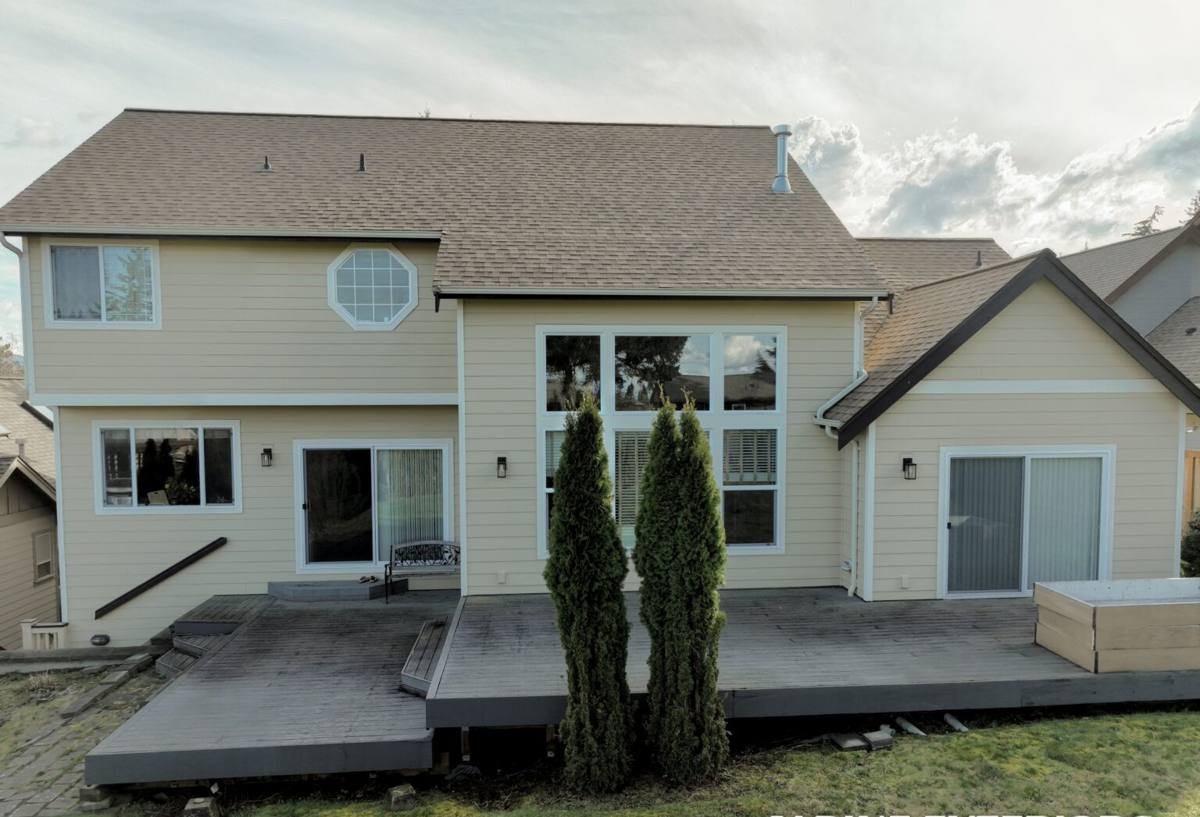
What Driving Rain and Moss Actually Do to a Deck
It helps to be specific about the failure points, because they're predictable and preventable.
Trapped moisture at the ledger
The ledger board — where the deck attaches to the house — is the single most common point of hidden rot on decks in this region. Without proper flashing that sheds water away from the house framing, moisture wicks in behind the ledger and rots the rim joist from the inside, often for years before it's visible.
Moss and algae on horizontal surfaces
Any decking surface that stays shaded and damp will grow moss and algae, full stop, regardless of material. The question isn't whether growth happens, it's how much it degrades the surface and how hard it is to remove without damaging the material underneath. Some surfaces scrub clean for years; others pit, stain, or splinter after a few cleanings.
Fastener corrosion
Standard exterior screws and joist hardware corrode faster in a climate that's damp for eight or nine months a year. Corroding fasteners lose grip strength long before they look obviously rusted, which is part of what makes this an easy thing to under-build.
End-grain and cut-edge absorption
Boards absorb water fastest through cut ends and drilled holes — spots where the factory seal or original moisture barrier is broken. A deck with unsealed cut ends will rot from those points first, no matter how good the board looks otherwise.
Decking Material Comparison for This Climate
There's no single "best" decking material — there's a best material for your budget, your maintenance appetite, and how much shade your yard actually gets. Here's how the common options hold up against driving rain and a long moss season.
| Material | Moisture behavior | Moss/algae resistance | Maintenance |
|---|---|---|---|
| Pressure-treated fir/hem-fir | Absorbs water readily; needs a sealed finish to perform | Grows moss quickly in shade without regular cleaning | Annual cleaning and re-sealing recommended |
| Cedar | Naturally moisture-resistant, but still needs finish maintenance | Better natural resistance, still needs cleaning in deep shade | Periodic cleaning and oil/sealer |
| Capped composite | Doesn't absorb water into the core; very stable | Surface can still host algae film in shade; cleans off easily | Occasional wash, no sealing or staining |
| Uncapped composite | Some older composite lines absorb moisture at the core over time | Similar surface growth to capped composite | Low, but core moisture issues can shorten lifespan |
In heavily shaded yards, we lean toward capped composite or a properly detailed cedar deck over bare pressure-treated boards left unfinished, simply because the maintenance burden of keeping bare wood sealed in a shade-and-rain cycle is more than most homeowners want to keep up with. That's a judgment call based on upkeep and moisture behavior, not a claim that treated lumber is a bad product — it's a solid, economical choice for anyone willing to stay on top of the finish.
What a Correctly Built Deck Includes
The visible decking is maybe a third of what makes a deck last. The rest is underneath.
Footings sized for saturated ground
Ground that stays wet for months compacts and shifts differently than dry soil. Footings need to be poured to frost depth and sized for the actual load, not just deep enough to pass a quick glance.
Ledger flashing done right
A correctly flashed ledger uses metal flashing integrated with the house's existing water-resistive barrier, lapped so water sheds outward and down, never behind the siding. This is the detail we check first on any repair or rebuild.
Joist tape or capping
Capping the tops of joists (with joist tape or a similar barrier) keeps water from soaking into end grain through fastener holes — the single cheapest upgrade for joist longevity in a wet climate.
Stainless or coated fasteners and hardware
Hidden fastener systems and structural hardware rated for ground contact and coastal exposure hold up far longer than standard galvanized hardware once you're dealing with sustained damp conditions.
Airflow underneath
Decks built low to grade or against solid skirting without ventilation trap moisture underneath. Proper clearance and, where needed, gaps in skirting keep air moving so the frame can actually dry between storms.
Our Process for a Deming-Area Deck
- Site visit and assessment — we look at drainage, sun exposure, existing structure (if it's a rebuild), and how the deck ties into the house.
- Design and material selection — sized to your space and matched to how much shade the site actually gets, not a generic template.
- Permitting — most decks of any real size require a permit through the county; we handle that paperwork as part of the job.
- Demolition or footing layout — old structure removed and disposed of, or footings laid out and inspected before pour.
- Framing and flashing — ledger, joists, and flashing installed to the details above, inspected before decking goes down.
- Decking, railing, and finish work — surface material installed, railings set, stairs finished.
- Final walkthrough — we go over the finished deck and what upkeep (if any) it needs going forward.
Railings and Hardware Choices That Matter Here
Railing posts are another spot where driving rain finds a way in if the base isn't detailed correctly — a post set directly into wet decking without a barrier will trap water at the base and rot from the bottom up. We isolate post bases from direct water contact and use fasteners and brackets rated for exterior, high-moisture use throughout the railing system, not just on the decking itself. For families with kids or entertaining space, cable or metal baluster systems shed less water than dense wood balusters and tend to need less upkeep in a shaded yard.
Keeping a Deck Healthy Through Moss Season
- Sweep leaves and debris off the deck surface regularly through fall — trapped organic material is what feeds moss growth.
- Clean the surface at least once a year with a deck-safe cleaner, more often in deep shade.
- Check the ledger area and any spot where the deck meets the house for staining or soft wood once a year.
- Keep gutters and downspouts near the deck clear so runoff isn't dumping directly onto the structure.
- Re-seal or re-stain wood decking on the schedule the product calls for — don't wait until it looks obviously dry or gray.
- Trim back overhanging branches where possible to cut down on shade and debris.
Why a Crew That Already Works Deming Makes a Difference
A deck built without accounting for this area's rain pattern and shade cover will look fine the day it's finished — the problems show up two, three, five years in, and by then they're expensive. A crew that already works this ground knows which details actually matter here: how deep footings need to go in ground that stays saturated most of the year, which decking materials hold up under near-constant shade, and how to flash a ledger so it doesn't quietly rot the house it's attached to. That's not something you get from a general contractor pulling from a one-size-fits-all spec sheet. Whatcom County's mix of rain, river-bottom shade, and long wet seasons rewards decks built specifically for it — and penalizes the ones that weren't.
If you're planning a new deck or need an honest look at one that's showing its age, we're happy to come out, walk the site, and put together a straightforward, no-pressure estimate using the form below.