 Sumas Roofing
 Building a Deck for Maple Falls, Not Just Any Deck
A deck built to a generic spec sheet will survive a dry climate just fine. It won't survive a Maple Falls winter the same way. Out here in the foothills east of Sumas, decks sit under tree cover for months at a time, catch driving rain off the Cascades, and stay damp long after the rest of Whatcom County has dried out. We build decks for this specific area, and that changes real decisions — footing depth, board spacing, fastener choice, and how we detail the ledger board against the house.
This page covers what a deck actually needs to hold up in Maple Falls, what a correct build involves from the ground up, and how our process works when you call us for an estimate.
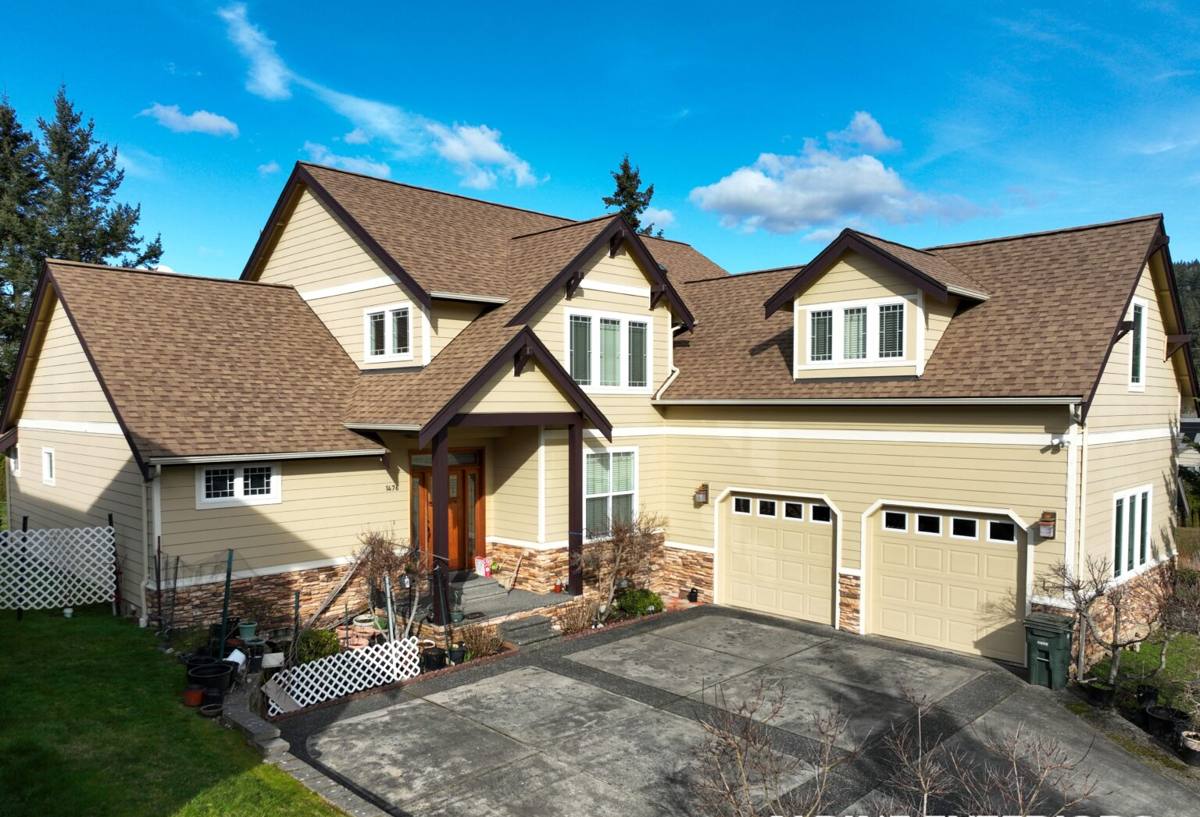
What Maple Falls' Climate Actually Does to a Deck
Whatcom County's weather is defined by long stretches of driving rain, short daylight in winter, and — in shaded, tree-covered spots like Maple Falls — a moss season that can run six months or longer. None of that is exotic, but it adds up fast if a deck isn't built with it in mind.
- Standing moisture: Boards under trees or on the north side of a house dry slower. Any spot where water pools instead of running off becomes a rot starting point within a few seasons.
- Moss and algae growth: Shaded decking holds moss almost year-round here. Moss retains moisture against the board surface, which accelerates decay in untreated or poorly sealed wood.
- Freeze-thaw cycling: Maple Falls sits at higher elevation than Sumas proper, so it sees more frost and the occasional hard freeze. Water that gets into a joint or a fastener hole and then freezes will split wood or work fasteners loose over time.
- Wind-driven rain at ledger connections: The ledger board — where the deck attaches to the house — is the single most common failure point we see on older decks in this region, because wind-driven rain pushes moisture behind poorly flashed connections.
None of this means a deck can't last decades in Maple Falls. It means the build has to account for water movement at every joint, not just at the visible surface.
Getting the Structure Right: Footings and Framing
Footings
Frost depth and soil drainage both matter more here than in drier parts of the state. We set footings to the depth required by Whatcom County code for the site conditions, and we pay attention to how well the surrounding soil drains — a footing in a low, wet spot needs different treatment than one on a well-drained slope.
Framing
Pressure-treated framing lumber is the standard for structural members, but the treatment rating matters. Ground-contact-rated lumber should go anywhere framing sits close to grade or in a persistently damp, shaded area — which describes a lot of Maple Falls lots. We also space joists to match whatever decking material you choose, since composite and wood have different span requirements.
Ledger Attachment
This is where we spend extra care. A correctly flashed ledger board keeps water from getting trapped between the deck and the house — the single most common source of hidden rot on older decks in this climate. Proper flashing, a gap or drainage plane, and correctly sized structural fasteners (not just deck screws) are non-negotiable here, not upgrades.
Decking Material Options for a Wet, Shaded Climate
There's no single "best" decking material — there's a best material for your budget, your sun exposure, and how much upkeep you want to do. Here's how the common options actually perform in a Maple Falls setting.
| Material | Upfront Cost | Moisture/Moss Behavior Here | Maintenance |
|---|---|---|---|
| Pressure-treated wood | Lowest | Performs well if sealed and kept clear of standing water; shaded boards need more frequent cleaning to stay ahead of moss | Annual cleaning, re-sealing every 2-3 years |
| Cedar | Moderate | Naturally moisture- and insect-resistant, but still needs sealing to resist moss staining in shaded spots | Cleaning and sealing every 1-2 years to keep color and resistance |
| Composite | Highest | Doesn't rot, but moss and algae still grow on the surface in shade and need scrubbing off; drainage beneath the boards still matters | Periodic cleaning, no sealing required |
A point we're upfront about: composite decking doesn't rot, but it isn't maintenance-free in a climate like this. Moss and mildew will grow on any surface that stays damp and shaded, composite included. The advantage of composite is you're not fighting wood decay — you're just cleaning a surface periodically. For a lot of shaded Maple Falls lots, that trade-off is worth the higher upfront cost. For sunnier lots with good airflow, well-sealed cedar or pressure-treated wood holds up fine and costs less.
Board Orientation and Airflow
Regardless of material, how the deck is built matters as much as what it's built from. We leave proper gapping between boards for drainage and airflow, and we make sure the framing underneath isn't trapping moisture against the joists. A deck with tight, unventilated framing will stay damp longer no matter how good the decking material is.
Fasteners, Flashing, and the Details That Prevent Rot
Most deck failures we get called out to inspect in this area aren't caused by bad decking material — they're caused by skipped details. A few that matter specifically here:
- Stainless or coated structural fasteners at every load-bearing connection, matched to the type of pressure-treated lumber used (some treatments corrode standard galvanized fasteners faster).
- Ledger flashing that actually sheds water away from the house band board, not just a bead of caulk.
- Post base connectors that keep post ends off wet concrete or soil, since end-grain wood in ground contact is the fastest place for rot to start.
- Joist tape or drip caps on top of framing members to keep fastener penetrations from becoming water entry points.
These aren't upgrades we upsell — they're what a correct deck build looks like in a climate that stays wet for months at a time.
Railings, Stairs, and Code Requirements
Any deck more than a modest height off grade needs code-compliant railings, and stair geometry (rise, run, and railing height) is inspected, not optional. We build to current Whatcom County code requirements and pull the necessary permits — a deck that isn't permitted and inspected can become a real problem at resale or insurance time, even years later. Railing material choices follow the same logic as decking: wood needs sealing and inspection for loose connections, metal and composite railing systems need less upkeep but cost more upfront.
Our Process, Start to Finish
- Free on-site estimate. We look at your specific lot — sun exposure, drainage, existing structure if it's a replacement or repair — before quoting anything.
- Material and design conversation. We walk through the trade-offs above in plain terms so you're choosing based on your budget and how much upkeep you actually want to do, not a sales pitch.
- Permitting. We handle the permit application and coordinate required inspections.
- Build. Footings and framing first, then decking, then railings and stairs, with attention to every flashing and fastener detail above.
- Final walkthrough. We go over care and maintenance specific to the material you chose before we consider the job done.
Maintenance Checklist for a New Maple Falls Deck
Whatever material you choose, a little seasonal attention goes a long way in this climate. A simple routine to follow:
- Sweep debris and standing leaves off the deck surface regularly in fall — trapped organic matter holds moisture and feeds moss growth.
- Scrub visible moss or algae off the surface as soon as it appears rather than letting it establish, especially on shaded sections.
- Check and clear gaps between boards so water keeps draining through rather than pooling on top.
- Inspect the ledger board area and any visible flashing once a year for signs of water staining or gaps.
- Re-seal wood decking on the schedule appropriate to the product (typically every 1-3 years) — don't wait until the wood looks gray and dry.
- Check railing posts and stair stringers for looseness at fastener points, particularly after a hard freeze.
Why a Crew That Already Works Maple Falls Matters
A lot of the decisions above — footing depth for local soil and frost conditions, which lumber treatment rating to use where, how much airflow a shaded deck actually needs — come from having built and repaired decks in this specific area, not from a general spec sheet. We work throughout the Sumas and Maple Falls area regularly, so we're not guessing at how a deck here holds up five or ten winters in; we've seen it. That local experience shows up in the small decisions that separate a deck that needs major repair in eight years from one that's still solid in twenty-five.
If you're planning a new deck or need to replace one that's showing its age, we're happy to take a look and give you a straightforward, no-pressure estimate. There's a form below — reach out and we'll set up a time to come see your property.