 Sumas Roofing
 Why Decks in Laurel Wear Out Faster Than Homeowners Expect
Laurel sits in a part of Whatcom County where the weather doesn't do decks any favors. Between the driving rain that rolls through for months at a stretch, the humid air off the surrounding lowlands, and a moss season that can run from early fall through late spring, an outdoor deck here is under near-constant moisture pressure. Most decks aren't destroyed by one bad storm — they're worn down slowly, board by board, fastener by fastener, until a homeowner realizes the structure underneath has been quietly failing for years.
Moss, Moisture, and Wood Rot
Moss doesn't just look bad on a deck surface — it holds water against the wood and blocks airflow, which is exactly what wood decay fungi need to get established. Once moisture gets trapped between boards, under railings, or where the deck meets the house, rot can spread inside the framing long before it shows up as a soft spot you can feel underfoot. In our experience working this area, the ledger board (where the deck attaches to the house) and the framing near grade are almost always the first places to go, because they trap water the longest and dry out the slowest.
Freeze-Thaw and Fastener Failure
Whatcom County doesn't get brutal winters, but it does get enough freeze-thaw cycling to work moisture into small cracks and joints, widening them year over year. Combined with older fastener types that corrode or back out over time, this is why a deck that looks structurally fine from a distance can have loose ledger connections, sistered joists, or hidden post rot underneath. A driving rain event on a deck with compromised fasteners or flashing is when small problems turn into safety issues.
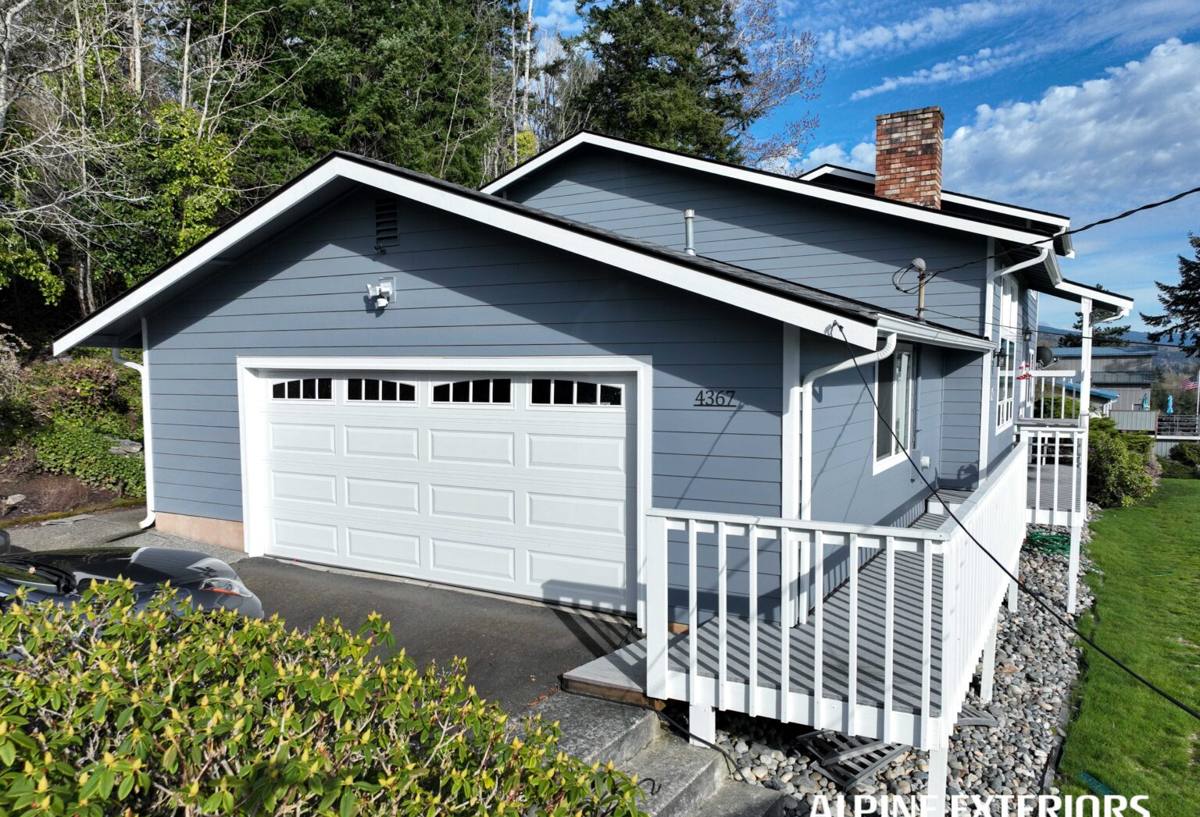
Signs a Laurel Deck Needs Replacement, Not Just Repair
Not every aging deck needs a full teardown. But there's a point where patching individual boards or re-securing a railing is just delaying a bigger job — and spending money that won't carry forward into the replacement. Here's what tells us a deck has crossed that line:
- Soft, spongy, or spring-back boards in multiple areas, not just one or two spots
- Visible rot, discoloration, or fungal growth at the ledger board or support posts
- Railings or stairs that flex, wobble, or feel less solid than they used to
- Persistent moss or algae that returns within weeks of cleaning
- Fasteners that are rusted, popped up, or missing entirely
- Gaps opening up between boards, or boards cupping and warping
- A deck older than 15-20 years that's never had the substructure inspected
If a deck shows two or more of these, a full replacement is almost always the more honest recommendation than a patchwork repair.
What a Correct Deck Replacement Actually Involves
A deck replacement isn't just tearing off old boards and screwing down new ones. Done right, it starts from the ground up, because the parts you can't see are what determine whether the new deck lasts.
Substructure First
We inspect and, where needed, replace the footings, posts, beams, and joists before a single new board goes down. In this climate, framing lumber needs to be rated for ground contact or exposure as appropriate, and joist spacing needs to match the decking material being installed — composite and PVC products often call for tighter spacing than traditional wood.
Ledger Board and Flashing
This is the single most important detail on any deck attached to a house, and it's the detail most likely to be done poorly on older installs. Proper flashing — installed so water sheds away from the house rather than behind the siding — is what prevents the slow rot that eventually compromises both the deck and the wall it's attached to. We treat this as non-negotiable, not an upsell.
Decking Material Selection
The right material depends on budget, maintenance appetite, and how much moisture exposure the deck's location and orientation get. We'll walk through the honest trade-offs of each option rather than just installing whatever's cheapest or trendiest.
Decking Material Comparison for This Climate
| Material | Moisture Behavior | Maintenance | Typical Lifespan |
|---|---|---|---|
| Pressure-treated wood | Prone to cupping/splitting if not sealed regularly | Annual cleaning + resealing recommended | 10-15 years |
| Cedar | Naturally rot-resistant but still needs sealing here | Regular cleaning, periodic staining | 15-20 years |
| Composite decking | Resists rot well; can still trap surface moisture/algae | Periodic washing, no staining/sealing | 20-30 years |
| PVC/capped polymer | Best moisture resistance of the group | Low; occasional washing | 25+ years |
None of these is the "right" answer for every homeowner — wood costs less up front but asks for more upkeep in a wet climate; composite and PVC cost more initially but reduce the annual maintenance burden that this weather tends to demand. We'll give you our honest take based on how the deck will actually be used, not just push the highest-margin product.
Our Process for a Laurel Deck Replacement
1. On-Site Assessment
We look at the existing deck's framing, ledger connection, footings, and drainage — not just the surface boards — so the quote reflects what's actually needed, not just a guess.
2. Scope and Material Walkthrough
We go over material options, railing and stair configurations, and any code-driven requirements (guard height, baluster spacing) before anything is finalized.
3. Demolition and Disposal
Old decking, railings, and any compromised framing are removed and hauled off. We check what's underneath as we go, since hidden rot sometimes extends further than what's visible from above.
4. Structural Rebuild
Footings, posts, beams, and joists are repaired or replaced to current framing standards, with proper flashing installed at the ledger board.
5. Decking, Railing, and Finish Work
New decking is installed to the manufacturer's spacing and fastening specs, followed by railings, stairs, and any trim or finishing details.
6. Final Walkthrough
We walk the finished deck with you, check for level, secure railings, and confirm everything matches what was scoped.
Permits and Local Code Considerations
Most deck replacements that involve structural work — new footings, changes to the ledger attachment, or a deck built above a certain height — require a permit through the local jurisdiction. Whatcom County and its municipalities have their own permitting requirements, and guard rail height, baluster spacing, and stair geometry are all governed by current building code, not just personal preference. We handle the permit process as part of the job so you're not left tracking down inspections yourself. Skipping this step to save time is one of the more common ways homeowners end up with problems at resale.
Cost Factors for Deck Replacement
Every deck is different, so we won't quote a number without seeing the site — but these are the factors that move the price up or down the most:
| Factor | Effect on Cost |
|---|---|
| Deck size (square footage) | Larger footprint means more material and labor across the board |
| Height above grade | Taller decks need more substructure, footings, and often stairs |
| Decking material | Composite/PVC costs more upfront than wood, less over time |
| Substructure condition | Rotted framing or footings adds rebuild scope beyond surface boards |
| Railing style | Cable, glass, or custom railing systems cost more than standard baluster rail |
| Access to the site | Tight side yards or elevated decks can add labor and equipment time |
As a broad range, a straightforward wood deck replacement typically lands well below what a comparable composite or PVC rebuild costs, with the gap widening as size and railing complexity increase. We'll break down where your project falls once we've seen it in person.
Why a Crew That Already Works Laurel Matters
A deck built without accounting for how this specific climate behaves is a deck that's going to show problems early — moss coming back fast, boards cupping sooner than expected, a ledger connection that starts leaking within a few wet seasons. Working decks throughout Sumas and the surrounding Whatcom County area means we're not guessing at how local moisture, moss, and rain patterns affect a given material or detail — we've seen what holds up here and what doesn't. That local track record shows up in small decisions: how flashing is lapped, how much fastener spacing gets adjusted for composite boards in a wet climate, where drainage needs extra attention. Before hiring anyone for a deck replacement, it's worth asking a few direct questions:
- Do you pull permits and handle inspections, or is that left to me?
- What's your approach to ledger board flashing specifically?
- Can you walk me through the framing inspection before quoting a full rebuild?
- What warranty applies to labor versus what the material manufacturer covers?
- Have you worked on decks in this area before, and what typically fails first here?
A contractor who answers those clearly and specifically, rather than in generalities, is one who's actually done the work locally — not just read a script.
If your deck is showing its age — soft spots, returning moss, a railing that doesn't feel as solid as it used to — we're happy to take a look and walk you through what's really going on underneath. Fill out the form below for a free, no-pressure estimate on your Laurel deck replacement.