 Sumas Roofing
 Why Decks in Deming Need to Be Built Differently
Deming sits back in the Nooksack Valley foothills, shaded by timber and close enough to the river bottom that ground moisture rarely lets up. Even though it's inland from the coast, the same marine air system that soaks the rest of Whatcom County still pushes through here — driving rain in the fall and winter, heavy dew and fog through spring, and long stretches where a deck surface simply doesn't fully dry out for days at a time. That combination is exactly what turns an average deck into a moss-covered, soft-spotted problem within a few years.
A deck built to a generic spec sheet — the kind you'd get from a big-box contractor who builds the same design in Arizona and Alabama — is not built for this. Ledger flashing, fastener grade, decking material, and even the gap spacing between boards all need to be chosen with this specific climate in mind. That's the difference between a deck that looks good for two summers and one that holds up for twenty.
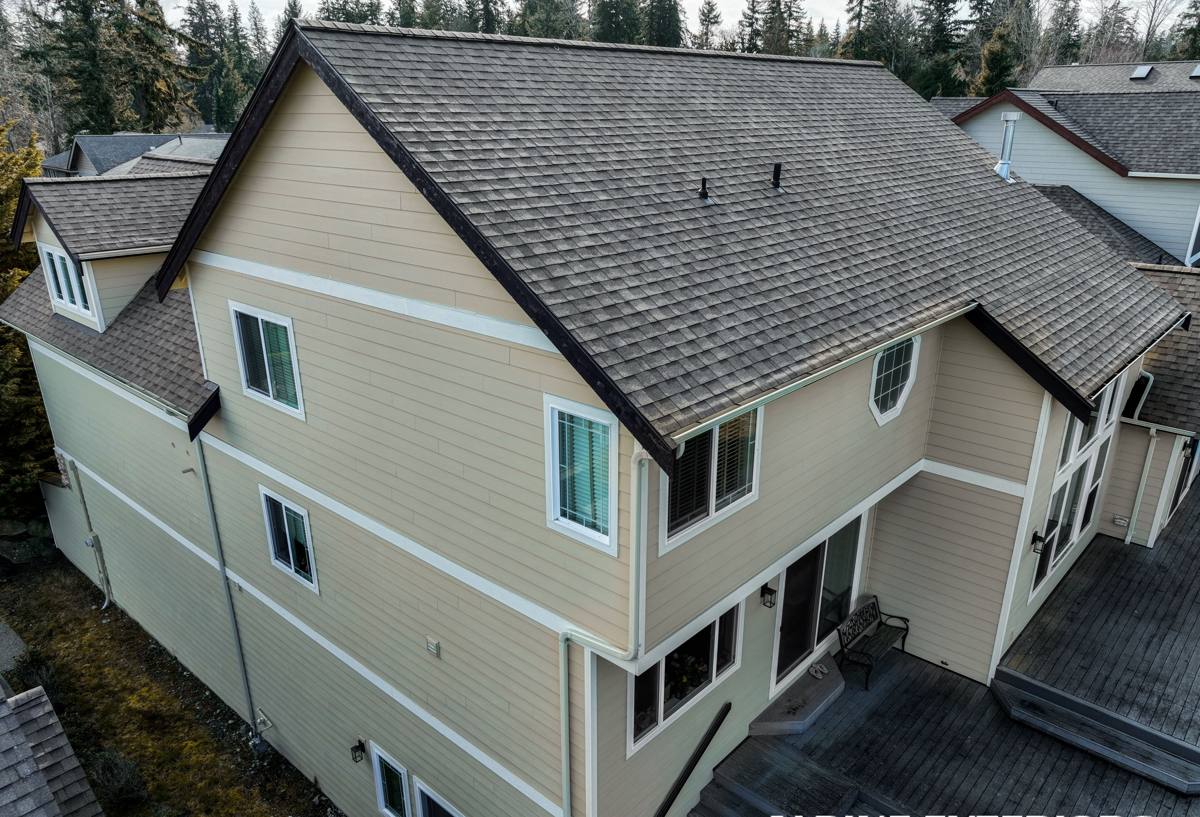
What a Correct Deck Build Actually Involves
"Correct" isn't a marketing word here — it's a specific list of things that have to happen in order, done right, before the boards ever go down.
Footings and Framing
Footings need to sit below frost depth and bear on undisturbed, well-draining soil — not backfill. In a shaded, damp lot like much of Deming, that often means digging a little deeper and checking the soil more carefully than you would on an open, sunny site. Framing lumber should be rated for ground contact or exterior exposure, and every joist hanger, post base, and structural screw needs to be corrosion-resistant hardware rated for wet, high-moisture use — not the cheaper coated fasteners that start rusting and staining within a season or two.
Ledger Attachment
The ledger board — where the deck attaches to the house — is the single most common failure point on any deck in this region, and it's usually invisible until something goes wrong. It needs proper flashing that sheds water away from the house framing, plus a waterproof membrane behind it, and it has to be bolted (not just nailed) into solid framing. A ledger that traps water against the house wall is a rot problem waiting to happen, and by the time you see the symptoms — soft siding, a spongy spot near the door — the damage is already done.
Decking and Drainage
Board spacing, under-deck grading, and airflow all matter more here than in a dry climate. Decking laid too tight, over ground that doesn't drain, traps moisture underneath and speeds up mold, mildew, and moss growth on the underside of the boards — where you can't see it until it's already spread.
Decking Material Options for This Climate
There's no single "best" decking material — there's a best material for your budget, your maintenance tolerance, and how much shade and moisture your specific lot deals with. Here's how the common options actually compare once you factor in a Deming-style climate:
| Material | Upfront Cost | Moisture Behavior | Maintenance | Typical Lifespan |
|---|---|---|---|---|
| Pressure-treated lumber | Lowest | Prone to cupping/splitting if not sealed regularly | Annual cleaning and re-sealing recommended | 10–15 years with upkeep |
| Cedar | Moderate | Naturally rot-resistant but still needs sealing | Sealing every 1–2 years, moss removal | 15–20 years with upkeep |
| Composite decking | Higher | Doesn't rot or splinter; can still get slick with moss/algae film | Periodic washing, no sealing needed | 25+ years |
| PVC decking | Highest | Fully moisture-proof, resists mold growth on the surface | Occasional washing | 25–30+ years |
Wood costs less to install but asks more of you every year. Composite and PVC cost more upfront but hold up against moss and moisture with far less maintenance — which matters a lot in a spot where the shade and dampness barely let up half the year. We'll walk through the honest trade-offs for your specific site rather than push whatever's easiest to install.
Our Deck Building Process
Every deck we build in the Deming area follows the same sequence, adjusted for your site conditions:
- Site assessment — we look at drainage, sun/shade exposure, tree cover, and existing structure before recommending anything.
- Design and material selection — sized, laid out, and priced based on how you'll actually use the space and what maintenance level you want to commit to.
- Permitting — Whatcom County requires permits for most new decks above a certain height or size; we handle the paperwork and inspections.
- Footings and framing — dug to proper depth, framed with moisture-rated lumber and corrosion-resistant hardware.
- Ledger and flashing — installed and flashed correctly before decking goes down, since this step gets covered up and can't be fixed later without tearing into it.
- Decking and railing installation — spaced and fastened for proper drainage and airflow underneath.
- Final walkthrough — we go over the finished deck and what maintenance it'll need going forward.
Moss, Mildew, and What Long-Term Care Actually Looks Like
Moss doesn't mean a deck was built wrong — it means it's exposed to the same shade and moisture as everything else growing around it in this part of the county. What matters is whether the deck was built in a way that makes moss manageable instead of destructive.
- Sweep debris and standing organic matter off the deck surface regularly, especially in fall when leaves and needles pile up fastest.
- Rinse or lightly power-wash boards once or twice a year to knock back moss and algae before it gets a foothold.
- Check the underside and framing once a year for soft spots, staining, or fastener corrosion — catching a small issue early is a lot cheaper than replacing joists later.
- Keep gutters and downspouts near the deck clear so runoff isn't dumping extra water onto the structure.
- Reseal wood decking on schedule — don't wait until it looks dry and gray to do it.
None of this is complicated, but it does need to actually happen. A deck that's built with proper drainage and gapping needs far less of this kind of upkeep than one that traps water against the framing from day one.
Permits and Local Requirements
Most new decks in unincorporated Whatcom County, including Deming, need a building permit if they're attached to the house or above a certain height off grade. Permit review checks things like footing depth, guardrail height, and setback from property lines. Skipping this step is a common shortcut with some contractors, but it can come back to bite you at resale or if there's ever a structural question down the line. We pull permits and schedule inspections as part of the job — it's built into the process, not an upsell.
Why a Crew That Already Works in Deming Matters
Deming isn't downtown Bellingham — it's a spread-out, rural community, and that changes a few things about how a build actually goes. Material deliveries take longer to schedule. Weather windows for pouring footings or setting ledger flashing are tighter given how much rain this valley sees. And soil conditions on a shaded, riverside-adjacent lot aren't the same as a lot out in open, sunny ground.
A crew that's already worked jobs out here knows how to plan around those realities instead of learning them on your project. We're based in Sumas, so we're not driving in from across the county for a single job and disappearing when it's done — if something needs a follow-up look after the first wet season, we're close by.
Questions to Ask Before You Hire
Whether you go with us or someone else, these are the questions worth asking any deck builder in this region:
- Are you licensed and insured to do structural work in Whatcom County?
- What fastener and hardware grade do you use, and is it rated for wet-climate exposure?
- How do you flash and waterproof the ledger board?
- Will you pull the permit and schedule the required inspections?
- What's the expected maintenance schedule for the decking material you're recommending?
- Can you walk me through drainage and grading under the deck before framing starts?
If a contractor can't give you clear, specific answers to these, that's worth noticing before you sign anything.
Get a Free Estimate for Your Deming Deck
If you're planning a new deck or replacing an aging one in the Deming area, we're happy to come take a look, walk the site with you, and give you a straightforward, no-pressure estimate. Use the form below to get started.