 Sumas Roofing
 Deck Repair Built for Deming's Wet, Wooded Climate
Deming sits in the Nooksack River valley, tucked against the foothills east of Sumas, and that location shapes what happens to a deck here more than almost anything else. Homes are often surrounded by tall trees, set back from the road under heavy canopy, and exposed to long stretches of damp, shaded air for much of the year. Add Whatcom County's driving rain, the salt-tinged air that rolls in off the Sound and up the valley, and a moss season that can run from October through May, and you get decks that fail in specific, predictable ways. We've repaired enough of them around Deming and Sumas to know the pattern before we even walk the site: soft spots near the house, green-black staining on the north side, and fasteners that have started to bleed rust into the boards.
A deck repair here isn't the same job as a deck repair in a drier inland town. The fix has to account for how much moisture the structure sees, how long it stays wet after a storm, and how much shade keeps it from ever fully drying out between rains.
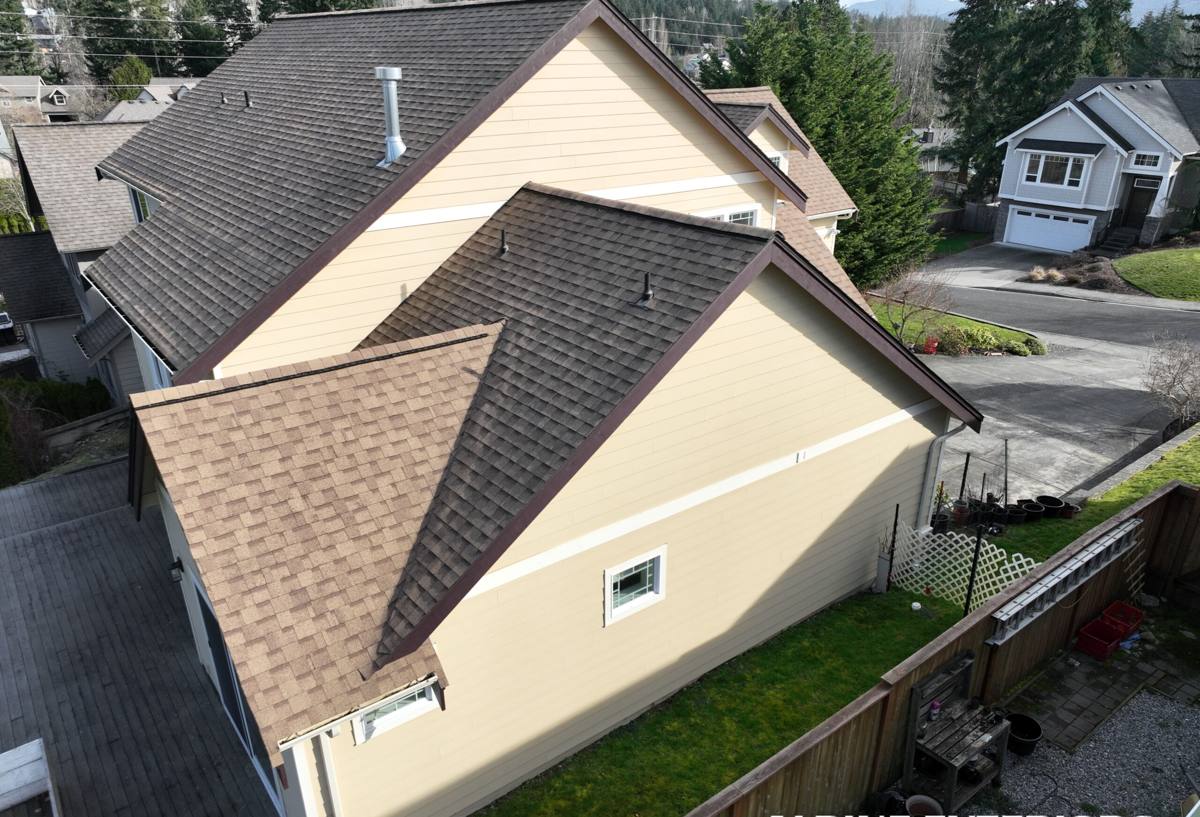
Why Decks in This Area Fail Faster Than Owners Expect
Moss and Organic Buildup
Moss doesn't just look bad on decking — it holds water against the wood surface long after the rest of the yard has dried. Under a moss mat, boards stay damp for days, which is exactly the condition that lets rot fungi take hold. On shaded Deming lots, moss can establish itself on a deck within a single wet season if it's not kept off.
Salt-Laden, Driving Rain
Storms moving through Whatcom County often bring rain sideways, which drives moisture into places a flat roof or a vertical wall would normally shed it away from — under railings, into end-grain cuts, and behind fascia boards. The trace salt content in that coastal air also accelerates corrosion on any exposed fasteners, hinges, or metal connectors, which is why we see rust-streaked screw heads on decks that are otherwise structurally sound.
Ledger Board and Framing Rot
The ledger board — where the deck attaches to the house — is the single most common failure point we find. It's tucked against the siding, often under a door threshold, and it's the last place water has a chance to evaporate. When flashing was skipped or installed wrong during original construction, water tracks behind the ledger for years before an owner ever sees a soft spot on the surface.
Post Bases and Ground Contact
Decks built close to grade, or with posts set in soil that stays wet from valley runoff, take on moisture from below as well as above. Post bottoms and the framing just above them are a second common rot zone, especially on older decks that predate current post-base hardware standards.
What a Correct Deck Repair Actually Involves
A lot of deck "repairs" amount to swapping a few boards and calling it done. That approach almost never addresses the reason the wood failed in the first place, which means the same spot rots again in a few years. Our process starts with finding the actual cause, not just the visible symptom.
- Probe every board and the framing underneath with an awl or moisture meter, not just a visual check — soft wood under a solid-looking surface is common
- Trace water paths back to their source: a failed ledger flashing, a clogged gap between boards, a missing drip edge, or grade that slopes toward the house
- Check every post base, joist hanger, and structural connector for rust, cracking, or undersized hardware relative to current code
- Replace rot back to solid wood, not just the visibly stained section — cutting a foot past where rot appears to end is standard practice, not overkill
- Correct the drainage or flashing issue that caused the damage, so the same section doesn't fail again in a few seasons
- Re-fasten with corrosion-resistant hardware rated for coastal/wet exposure, not standard interior-grade screws
Ledger Flashing — The Detail Most Repairs Skip
If we're opening up a ledger board area for any reason, we check the flashing behind it. A deck ledger that's rotting is very often a flashing problem, not a wood-quality problem — and replacing the boards without fixing the flashing just buys a few more years before the same failure returns.
Our Repair Process, Step by Step
- On-site inspection: We walk the full deck, probe suspect areas, and check the substructure from underneath where access allows.
- Written scope: You get a clear explanation of what's failing, why, and what it will take to fix it correctly — no vague line items.
- Demo of damaged material: We remove rotted boards, framing, or hardware back to solid wood, confirming the extent as we go.
- Structural correction: Any flashing, drainage, post-base, or connector issue causing the rot gets addressed, not just covered over.
- Rebuild: New boards, framing, and fasteners go in to match the existing deck as closely as possible, using corrosion-resistant hardware throughout.
- Final walkthrough: We check railings, stair connections, and fastening before we consider the job finished.
Repair vs. Rebuild: How We Help You Decide
Not every deck with damage needs to come down. But a deck with widespread rot, undersized framing by today's standards, or a ledger connection that's failed more than once is often better served by a partial or full rebuild than another round of patching. Here's how we generally think through it:
| Situation | Usually Repair | Usually Rebuild |
|---|---|---|
| Rot limited to a few boards or one section | Yes | No |
| Ledger flashing failed, structure otherwise sound | Yes, with flashing correction | No |
| Rot found in multiple framing members | No | Yes |
| Posts or footings undersized or failing | No | Yes |
| Deck is under 10 years old, isolated damage | Yes | No |
| Deck is 20+ years old with recurring rot history | Sometimes | Often, yes |
We'll always give you the honest read on which category your deck falls into, and we won't push a full rebuild when a targeted repair will genuinely hold up.
Materials: What Holds Up in This Climate and What Doesn't
Material choice matters more here than in drier parts of the state, simply because the wood or composite spends more of the year wet. For structural framing — joists, beams, posts — we use pressure-treated lumber rated for ground contact where applicable, since standard-grade treated lumber isn't always sufficient for Deming's damp, shaded lots.
For decking surface, owners generally choose between a few options, each with real tradeoffs:
- Pressure-treated lumber: Lowest upfront cost, but needs regular sealing and cleaning to resist moss and rot in this climate — skipping maintenance shortens its life noticeably here.
- Cedar: Naturally more rot-resistant and a good regional fit, but still benefits from periodic sealing given the amount of rain exposure.
- Composite decking: Higher upfront cost, resists rot and moss staining far better, but requires correct fastening and gapping — installed wrong, moisture can still get trapped underneath.
We don't push one material as universally "best" — it's a real conversation about your budget, how much upkeep you want to do, and how shaded or exposed your specific deck is.
What to Check Before You Call for a Repair
- Press on boards near the house and near stair landings — any give or soft spots?
- Look for green-black staining or moss patches, especially on shaded or north-facing sections
- Check fastener heads for rust streaking down the board
- Look at the railing posts — any wobble when you push on them?
- Check where the deck meets the house siding for gaps, dark staining, or peeling paint/caulk
- Note any spots where water visibly pools after rain instead of draining off
If you notice two or more of these, it's worth getting a professional look before the damage spreads further into the framing.
Why a Crew That Already Works Deming Makes a Difference
Deck repair around Deming and greater Sumas isn't a generic skill — it's shaped by the valley's specific mix of shade, moisture, and coastal air. A crew that's diagnosed rot patterns on decks throughout Whatcom County knows to check the ledger flashing first, knows which lots hold moisture longest, and doesn't need to guess at how much material to cut back before it hits solid wood. That local pattern recognition is what separates a repair that lasts one season from one that lasts a decade. We show up, tell you honestly what we find, and fix the actual cause — not just the board you can see from the yard.
If you've noticed soft spots, moss buildup, or rust staining on your deck, we're happy to take a look. Reach out for a free, no-pressure estimate using the form below.