 Sumas Roofing
 Why Siding Fails Faster in Deming Than It Should
Homes in and around Deming sit in one of the wetter, shadier stretches of Whatcom County — tucked along the Nooksack River valley, under heavy tree cover, with the Cascade foothills wringing extra moisture out of every system that rolls through. Add in the marine-influenced air that moves across the whole county off the Salish Sea, and you get a climate that keeps exterior surfaces damp for long stretches of the year rather than a quick soak-and-dry cycle. That combination — driving rain, salt-tinged coastal air working its way inland, and a moss season that can run from fall through spring — is exactly the kind of environment that exposes weak siding fast.
Siding doesn't usually fail because of one bad storm. It fails because it never gets a real chance to dry out between storms. Wood-based products swell and shrink with every wet-dry cycle, paint and caulk lose their grip a little more each season, and shaded north- and east-facing walls in tree-covered lots stay damp long after the sun comes out elsewhere. Over years, that's what turns a cosmetic issue into a structural one.
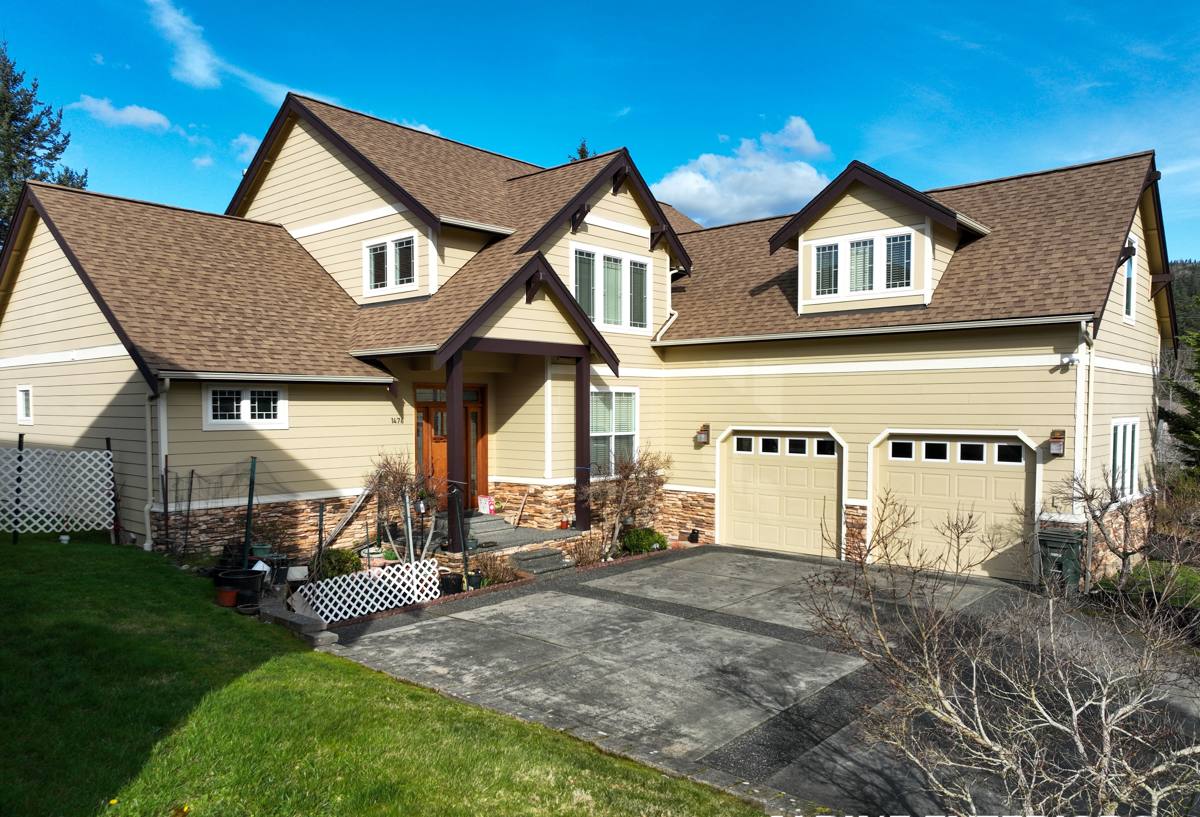
Signs a Deming Home Needs Replacement, Not Just Repair
Repair makes sense when the damage is isolated and the material underneath is sound. Replacement becomes the honest recommendation once the damage is systemic — spread across multiple walls, or tied to the material's own limits rather than a one-time event. Before we quote a job, we're looking for:
- Soft, spongy spots when you press on the siding, especially near the bottom courses and around windows
- Paint that's bubbling, peeling, or chalking heavily rather than just fading
- Persistent moss or algae buildup on shaded or north-facing walls that comes back within a season of cleaning
- Visible warping, cupping, or gaps opening up at panel seams and lap joints
- A musty smell near exterior walls or unexplained increases in heating costs
- Siding that's pulling away from nail lines or fasteners that have backed out
- Rot at butt joints, corners, or anywhere trim meets siding
Any one of these can sometimes be spot-repaired. Several of them showing up together, especially on a home more than 15–20 years old with the original wood-based or composite siding, usually means the material has reached the end of what it can do in this climate.
What a Correct Siding Replacement Job Actually Involves
Tear-off and what's underneath
A proper job doesn't stop at the visible surface. Once the old siding comes off, we inspect the sheathing, framing, and any existing weather-resistive barrier for rot, soft wood, or prior water intrusion. In a climate that stays damp as long as ours does, it's common to find some degree of hidden moisture damage behind older siding — particularly around windows, at wall penetrations, and near ground level. That gets repaired before anything new goes up. Installing new siding over a compromised wall assembly just hides the problem for a few more years.
Moisture management comes before the siding
The single biggest factor in how long siding lasts here isn't the siding itself — it's what's behind it. A correctly lapped weather-resistive barrier, properly integrated flashing at every window, door, and penetration, and a drainage plane that lets incidental moisture escape rather than pool are what actually keep water out of the wall. Skipping or rushing this step is the most common cause of premature siding failure we see on re-do jobs.
Fastening, gaps, and manufacturer spec
Fiber cement siding has specific fastening patterns, minimum gaps at butt joints, and clearance requirements from grade, roof lines, and other surfaces. These aren't suggestions — they're what the manufacturer's warranty is actually built on, and they're also what keeps the material performing through freeze-thaw cycles and constant wet-dry swings. Installed too tight or fastened wrong, even the best siding product will underperform.
Trim, corners, and finish detail
The detail work — corner boards, trim around openings, caulking joints — is where water either gets turned away or finds a way in. It's also usually what a homeowner notices first, since it defines the clean or sloppy look of a finished elevation.
Why We Install Only James Hardie Fiber Cement Siding
We made a deliberate call to standardize on James Hardie fiber cement and stop installing everything else — no LP SmartSide, no vinyl, no Cemplank or Allura, no primed spruce or cedar. That's not a marketing position; it's a maintenance and moisture-behavior decision based on what actually holds up in a climate like Whatcom County's.
Built for exactly this climate
Hardie's HZ5 product line is engineered specifically for climates with freeze-thaw cycles and heavy moisture exposure, which describes the Pacific Northwest well. Fiber cement doesn't absorb and swell with water the way wood fibers do, so it isn't feeding the same rot and moss-friendly conditions that wood-based and some engineered-wood products can develop over time in a shaded, damp lot.
A factory finish that isn't riding on field paint
ColorPlus finish is baked on at the factory under controlled conditions, rather than relying on paint applied on-site or touched up over the years. That matters directly here: field-applied paint and stain are exactly what struggles in a climate that rarely gives a long dry window to cure properly. A factory finish with its own warranty removes that weak link.
What that means for the warranty
Hardie backs the siding itself with a long, transferable product warranty, and ColorPlus finishes carry their own separate finish warranty. Warranty transferability matters to resale value too — a documented, brand-name warranty is something a buyer's inspector can verify, unlike a generic "we'll stand behind our work" promise tied to a contractor who may not be around in fifteen years.
Why we don't install the alternatives
Engineered wood siding has genuine strengths — cost and workability among them — but it still relies on wood fiber, which means edge and moisture sensitivity if it's ever cut, drilled, or left exposed without complete field sealing, something that's easy to get imperfectly right on a real job site. Vinyl is inexpensive and low-maintenance in mild climates but can warp or become brittle with UV and temperature swings, and it doesn't carry the same fire rating. Primed wood and cedar look great and have a long tradition in this region, but they demand a repainting and recaulking schedule that most homeowners underestimate, especially with our wet-dry cycling. We'd rather put one product on a home that we know performs to spec here than offer several and let cost be the only deciding factor.
How the Options Compare in This Climate
| Material | Moisture/Rot Behavior | Ongoing Maintenance | Typical Lifespan Here | Fire Rating |
|---|---|---|---|---|
| James Hardie fiber cement | Doesn't swell or feed rot; stable in wet-dry cycling | Occasional wash; no repainting for the finish's warranty term | Decades with correct install | Non-combustible |
| Engineered wood (e.g. LP SmartSide) | Wood-fiber core; vulnerable at cut edges and unsealed penetrations | Field-sealing and inspection of joints/edges | Shorter if edges aren't perfectly maintained | Combustible |
| Vinyl | Doesn't rot but can warp, oil-can, or crack with temperature swings | Low, but limited repair options once damaged | Variable; UV and cold-brittleness dependent | Combustible |
| Cedar / primed wood | Natural material; absorbs moisture without diligent finish upkeep | Regular repainting/staining and caulk renewal | Shorter without strict maintenance discipline | Combustible |
Our Process, Start to Finish
- On-site inspection and honest assessment of whether repair or full replacement makes sense
- Written estimate covering material, tear-off, any sheathing repair, and the full scope — no vague allowances
- Tear-off, sheathing and framing inspection, and repair of any hidden moisture damage found
- Weather-resistive barrier and flashing installed and integrated at every window, door, and penetration
- James Hardie siding installed to manufacturer fastening, gapping, and clearance specifications
- Trim, corners, and caulking completed for a clean, weathertight finish
- Final walkthrough so you can see the work up close before we call it done
Why a Crew That Already Works in Deming Matters
Siding work in this part of Whatcom County has quirks that don't show up in a generic install manual. Wooded, sloped lots common around Deming mean drainage and grading around the foundation often need attention before siding goes up, not after. Shaded elevations under mature trees hold onto moisture differently than an open, sun-exposed wall across town, which changes where moss and mildew show up first and how urgently a given section needs attention. Knowing the local permitting expectations, and knowing which stretches of the year actually give a reliable dry window for tear-off and installation, comes from working here repeatedly — not from a single job. A crew that's already done siding replacement on homes like yours in this area isn't guessing at any of that.
What Drives the Cost of a Siding Replacement
| Factor | Why It Moves the Price |
|---|---|
| Home size and elevation count | More square footage and more architectural breaks mean more material and labor |
| Existing siding layers and tear-off complexity | Multiple layers or difficult removal (old paint, adhesives) add labor time |
| Hidden sheathing or framing repair | Rot found during tear-off has to be fixed before new siding goes on |
| Trim and architectural detail | Corner boards, window casings, and accent details take more precision and time |
| Site access | Tree cover, slope, and tight lot lines common around Deming can slow staging and material handling |
| Hardie product line and profile | Panel size, texture, and color options affect material cost |
We don't quote a number without seeing the home. Anyone who does is either padding the estimate to cover surprises or planning to hit you with change orders once the tear-off starts.
Keeping New Siding Performing Through the Wet Season
Fiber cement is low-maintenance, not no-maintenance. A few habits keep it performing for the long haul in a climate like this: keep gutters and downspouts clear so runoff isn't sheeting down the wall face, trim back vegetation that's shading and holding humidity against the siding, do an occasional gentle wash to keep moss and algae from taking hold on shaded elevations, and have caulking at trim joints checked every few years rather than waiting for a visible gap. None of this is heavy work, but it's the difference between siding that looks new for decades and siding that starts showing its age early because moisture had a shortcut it shouldn't have had.
If your Deming home's siding is showing any of the signs above, or you're just planning ahead before the next wet season sets in, we're happy to come take a look. The estimate is free, there's no pressure attached to it, and you'll get a straight answer about whether you're looking at repair or replacement.