 Sumas Roofing
 Why Ferndale's Climate Is Hard on Windows
Ferndale sits close enough to Bellingham Bay and the Salish Sea that salt-laden air reaches window frames, hardware, and seals long before it reaches homes further inland. Add in Whatcom County's long stretch of driving, wind-pushed rain from fall through spring, and the shaded, damp conditions that let moss and mildew take hold on north-facing walls and sills, and you have a climate that punishes weak spots in a window system fast. A window that would coast along for decades in a drier climate can start fogging, sticking, or leaking in Ferndale within a handful of years if it wasn't built or installed with this environment in mind.
This isn't a knock on any particular product — it's just physics. Salt accelerates corrosion of hardware and fasteners. Constant moisture finds any gap in flashing or sealant. And moss holds water against wood and trim far longer than a dry surface ever would. Energy-efficient windows for a Ferndale home need to solve for insulation value, but they also need to solve for durability in this specific mix of salt, rain, and moisture.
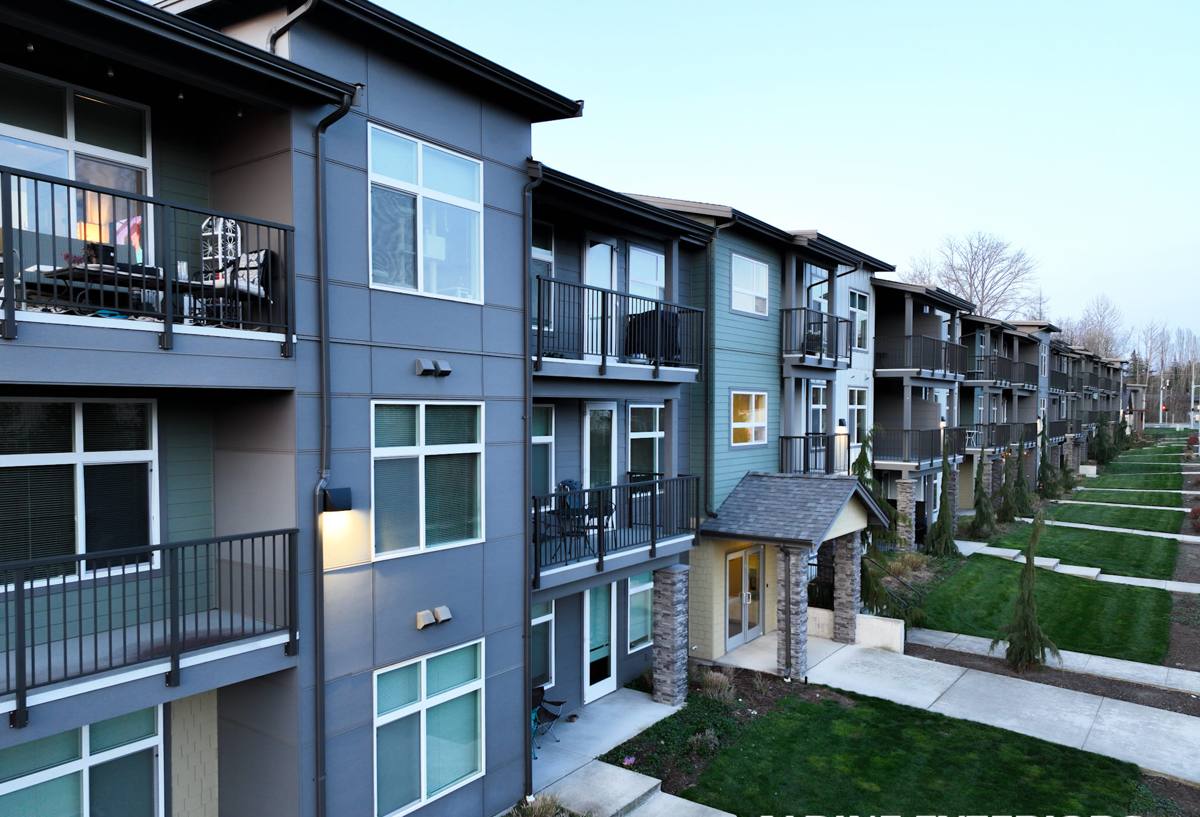
What "Energy-Efficient" Actually Means for a Home Here
In a marine climate like ours, energy efficiency isn't just about winter heating bills. It's also about controlling condensation on interior glass during cold, damp mornings, and keeping homes comfortable during the warmer, drier stretches we now see more of in summer. A well-built energy-efficient window is doing several jobs at once:
- U-factor — how well the window resists heat flow. Lower numbers mean less heat lost through the glass and frame in winter.
- Low-E coatings — microscopically thin coatings on the glass that reflect heat while still letting light through, cutting both winter heat loss and summer heat gain.
- Gas fills — argon or krypton sealed between panes to slow heat transfer compared to plain air.
- Warm-edge spacers — the material separating the panes at the edge of the glass unit, which affects how much condensation forms on the inside of the window during cold snaps.
For Ferndale specifically, condensation control deserves as much attention as the U-factor rating on the label. A window that's technically efficient but prone to interior condensation will feed moisture problems on sills and trim — exactly the conditions that invite the mildew and soft wood we see so often in this area.
Signs Your Windows Are Already Costing You Money
Most homeowners don't replace windows because of a single dramatic failure — it's a slow accumulation of small signs that add up to real dollars on the utility bill. Worth checking for:
- Fogging or a hazy film between the panes of double-pane glass — this means the seal has failed and the gas fill is gone.
- Noticeable drafts near the frame, especially on windows facing the prevailing wind and rain.
- Condensation forming on the inside of the glass regularly, not just on the coldest mornings.
- Windows that are hard to open, close, or lock — often a sign the frame has swollen or warped from moisture.
- Visible moss, algae, or dark staining on the sill, frame, or exterior trim.
- Rooms near older windows feeling noticeably colder or hotter than the rest of the house.
Any one of these on its own isn't an emergency. Several of them together, especially on a home that hasn't had its windows touched in fifteen-plus years, usually means the windows are working against the furnace and the AC rather than with them.
Frame Materials: What Holds Up in This Climate
Frame material matters as much as glass package when salt air and constant moisture are part of daily life. Here's how the common options compare for a Whatcom County home:
| Frame Material | Relative Cost | Moisture & Salt Air Behavior | Maintenance |
|---|---|---|---|
| Vinyl | Lower | Doesn't corrode or rot; performs well against salt air and rain | Low — occasional cleaning |
| Fiberglass | Higher | Very stable in temperature swings and moisture; strong long-term durability | Low — occasional cleaning |
| Wood-clad | Higher | Attractive interior wood, but exposed end grain or damaged cladding can trap moisture | Moderate to high — cladding and seals need periodic inspection |
| Aluminum | Lower to moderate | Conducts heat and cold readily; can corrode faster in salt air without proper coatings | Moderate |
We don't push wood-clad windows on every Ferndale project — not because the product is bad, but because in a climate with this much sustained moisture, any nick in the exterior cladding or a gap in the sealant becomes an entry point for water against wood over time. That's a maintenance commitment we want homeowners to walk into with eyes open, not a surprise a few years down the road. Vinyl and fiberglass, by contrast, shrug off salt air and rain with far less upkeep, which is why they make up most of what we install in this area.
Glass Packages and Coatings Worth Paying For
Double-Pane vs. Triple-Pane
Double-pane windows with a good Low-E coating and argon fill are the standard upgrade for most Ferndale homes and deliver a strong return in comfort and efficiency. Triple-pane goes further — better insulation and better sound dampening — but adds weight, cost, and isn't always necessary unless a home faces unusual wind exposure or a homeowner has specific noise concerns.
Low-E Coating Selection
Not all Low-E coatings are tuned the same way. Some prioritize blocking summer solar heat gain, others prioritize retaining winter heat. For a home with a lot of south- or west-facing glass, we look at solar heat gain coefficient (SHGC) alongside U-factor rather than treating "Low-E" as a single checkbox.
Condensation Resistance
Given how often our mornings start damp and cool, we pay close attention to the condensation resistance rating on any glass package we recommend, not just the headline energy numbers. A window that scores well on paper but sweats heavily on the inside every winter morning isn't actually doing its job in this climate.
Installation Is Where Efficiency Is Won or Lost
A high-performance window installed poorly will underperform a mid-grade window installed correctly — every time. In a climate with this much driving rain, the details around the window opening matter as much as the window itself:
- Flashing integration — the window's flashing has to tie properly into the existing weather-resistive barrier and siding so water is directed out, not trapped behind the trim.
- Sealant placement — sealant belongs at specific points to allow the assembly to drain and dry, not just wherever looks tidy.
- Shimming and squaring — a window that isn't shimmed level and square will develop stress points that lead to air leaks and operational problems within a few years.
- Weep hole clearance — weep holes that get sealed over or blocked by trim or landscaping trap water inside the frame instead of letting it drain.
This is also where hiring a crew unfamiliar with wind-driven coastal rain shows up later as a callback. Techniques that are perfectly fine in a drier climate can leave a home vulnerable here.
Our Process, Start to Finish
We keep the process straightforward and give homeowners a clear picture of what's happening at each stage:
- On-site assessment — we look at each window opening, check for existing moisture damage around sills and framing, and note how the home is oriented to wind and rain.
- Product recommendation — based on that assessment, we recommend frame materials and glass packages suited to the specific exposure of each elevation of the home, not a one-size-fits-all package.
- Written estimate — a clear breakdown of materials, labor, and timeline before any commitment.
- Installation — proper flashing and sealant integration with the existing wall assembly, careful removal of old units to check for hidden rot before it's covered back up.
- Cleanup and walk-through — every window operated and checked with the homeowner before we consider the job done.
If we find rot, soft framing, or moisture damage behind an old window during removal, we'll tell you before we close anything up — not after.
Living With New Windows in a Moss-and-Rain Climate
Even the best windows benefit from a little seasonal attention in this part of Washington. A short annual routine keeps energy-efficient windows performing the way they're supposed to for the long haul:
- Wipe down tracks and weep holes each fall to clear debris before the heavy rains start.
- Check exterior caulking and sealant lines once a year for cracking or gaps.
- Keep gutters and downspouts clear near windows so runoff isn't sheeting directly down the frame.
- Address moss or algae on sills and trim promptly rather than letting it sit against the surface.
- Operate each window a few times through the year, even ones you rarely open, to keep hardware and seals from sticking or seizing.
Why Local Experience in Ferndale Matters
A crew that already works in and around Ferndale knows how differently a home facing the open wind off the bay behaves compared to one tucked behind trees a mile inland. They know what kind of moisture damage tends to show up behind older aluminum-frame windows in this area, and they don't need a learning curve on Whatcom County permitting or inspection expectations. That familiarity translates into fewer surprises during installation and a better match between the product recommended and what the specific home actually needs to hold up season after season.
If you're weighing whether your current windows are still doing their job, we're happy to take a look and give you an honest read — no pressure, no upsell script. Reach out for a free estimate using the form below and we'll walk your home's windows with you in person.