 Sumas Roofing
 Why New-Construction Window Installation Is Its Own Trade
Installing windows into a home that's already built is a different job from installing them during framing. On a new build in Ferndale, windows go in before the siding, before the final weather-resistive barrier laps are closed up, and often before the roof overhangs and flashing details are fully tied in. That sequencing matters. Get the window opening wrong at this stage — a bad sill pan, a missed flashing lap, a nailing fin fastened through the wrong layer of house wrap — and the mistake gets buried behind siding for the next 30 years. There's no do-over once the exterior is closed in.
New-construction installation also means we're working directly with the framer's rough openings, the architect's window schedule, and whatever energy code path the builder chose for the project. It's less about swapping an old unit for a new one and more about getting the water management and structural details right the first time, in the right order, before the rest of the building envelope closes over it.
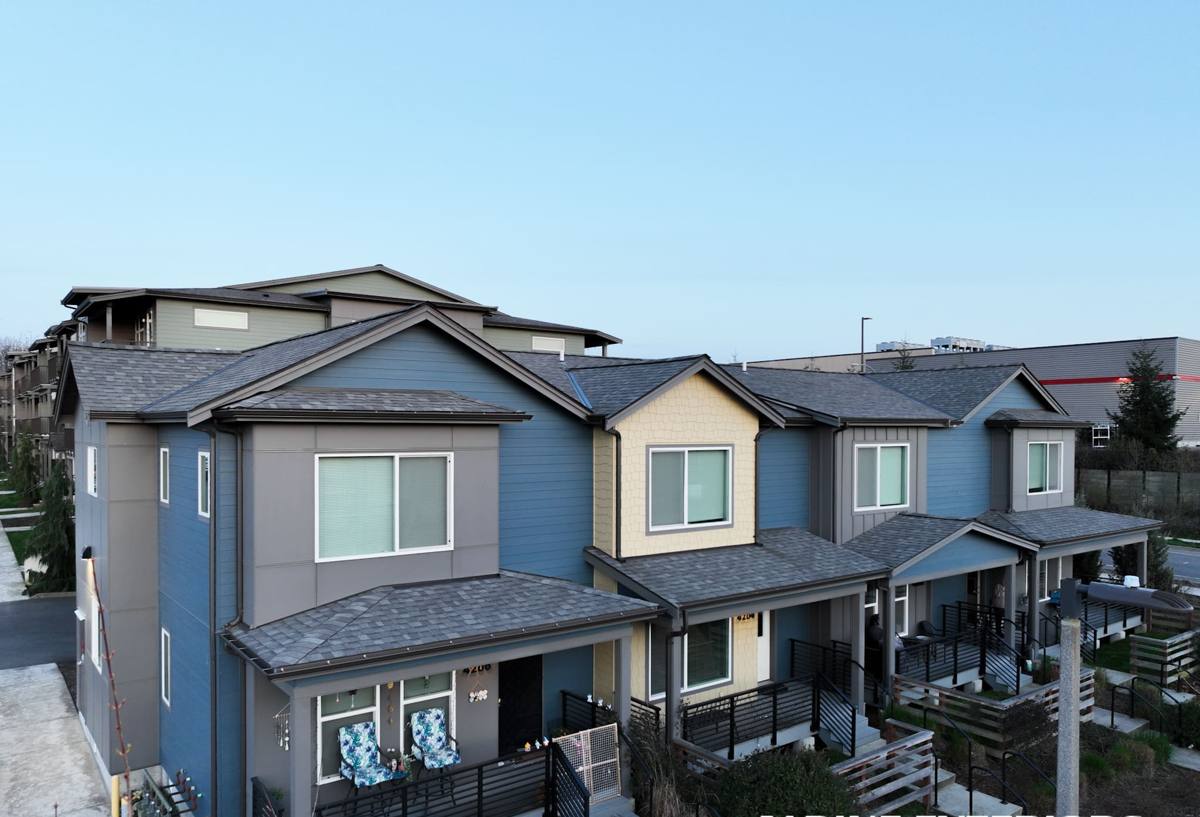
What Ferndale's Climate Actually Demands From a New Window Opening
Ferndale sits close enough to Bellingham Bay and the Salish Sea that salt-laden air is a real factor for exterior hardware, fasteners, and finishes — not just a coastal-town talking point. Combine that with the wind-driven, sideways rain events that move through Whatcom County several times a winter, and you've got two separate problems a window installation has to solve at once: corrosion resistance on anything exposed, and a drainage plane that can shed water even when it's being pushed sideways into the wall instead of falling straight down.
Then there's moss. Whatcom County's long, wet, mild-temperature season is close to ideal moss-growing weather, and it's not confined to roofs — moss and algae will colonize damp trim, sills, and the shaded north and west faces of a house just as readily. A window detail that traps moisture instead of shedding it becomes a moss and rot magnet within a few seasons, long before most homeowners would expect a brand-new window to show wear.
What this means at the framing stage
- Sill pans and end dams that actually direct bulk water back out of the wall, not just a bead of caulk under the frame
- Corrosion-resistant fasteners and flashing tape rated for long-term UV and moisture exposure, not general-purpose materials
- Head flashing that integrates with the house wrap in true shingle-lap order, so water is always directed down and out
- Sill and trim details that don't create flat, shaded ledges where moss and algae can take hold
Getting the Water Management Right Before the Siding Goes On
A roofing and exteriors crew thinks about a house as one connected water-shedding system, and that mindset carries directly into window installation. The same principles that keep water out of a roof deck — proper lapping, drainage gaps, and never trusting sealant alone to do a flashing's job — apply to every rough opening in the wall.
On a new build, the sequence generally goes: the weather-resistive barrier is installed and lapped correctly around the rough opening, a sloped sill pan goes in first, the window is set and fastened per the manufacturer's instructions (this affects the warranty — more on that below), then flashing tape or flashing membrane laps over the nailing fin in the correct shingle order, and finally the house wrap above the window laps over the top flashing. Skip or reverse any one of those steps and you've built a path for water to work its way behind the siding, where it won't show up as a visible leak for years.
This is also where a lot of the "why did this window fail so early" calls originate. In most cases it isn't the window unit itself — it's a flashing detail that was rushed or done out of order during the original build.
Choosing Window Products for a New Ferndale Home
There's no single "right" window brand for new construction — the right choice depends on budget, the home's design, and how much exposure a given wall gets to weather and salt air. What matters more than the brand name is the frame material's real-world performance in this climate and whether the manufacturer's nailing-fin and flashing details are compatible with a proper installation.
| Frame Material | Salt Air / Moisture Behavior | Maintenance | Typical Fit for New Builds |
|---|---|---|---|
| Vinyl | Good corrosion resistance; won't rust or pit | Low — occasional cleaning | Cost-effective, common on production and mid-range builds |
| Fiberglass | Excellent stability in wet, temperature-swinging climates; resists warping | Low | Good middle ground for exposed or coastal-influenced elevations |
| Wood-clad | Attractive interior look, but cladding seams need careful detailing near salt air and driving rain | Moderate to higher — exterior cladding and seals need periodic checks | Custom or higher-end builds where interior wood aesthetic matters |
| Aluminum | Prone to corrosion in salt-influenced air unless properly coated; conducts heat and cold | Moderate | Less common for residential new construction in this region |
We install to the manufacturer's published instructions on every job, because that's what keeps the window's warranty intact — most window warranties are void if the flashing and fastening steps deviate from spec, regardless of how the window itself performs. If a builder or homeowner has a brand preference, we'll work with it as long as the product's installation details are compatible with proper flashing for this climate; we're not going to cut corners on water management just to speed up a schedule.
Glass and Performance Packages
For new construction, Washington's energy code sets a minimum U-factor for windows, and most manufacturers offer several glass packages that clear it by different margins. In a marine climate like Whatcom County's, a double-pane unit with a Low-E coating and argon fill is the common baseline; homes with more west or north exposure, or owners who want a quieter interior near road noise, sometimes step up to a higher-performance glass package. We'll walk through the trade-offs for your specific elevations rather than defaulting to whatever's cheapest to order.
Our New-Construction Window Installation Process
- Rough opening check — verify openings are square, plumb, and sized correctly against the window schedule before anything goes in
- Sill pan and flashing prep — install a sloped sill pan and back dams so any water that gets past the window has somewhere to go
- Window set and fastening — set to level and plumb, fasten per manufacturer spec at the correct spacing
- Flashing integration — tape or flash the nailing fin in proper shingle-lap order with the house wrap
- Interior air seal — seal the interior gap between frame and framing for both energy performance and moisture control
- Final inspection — check operation, sightlines, and flashing laps before siding crews close the wall
We coordinate this timing directly with the builder or general contractor so windows go in at the right point in the framing schedule — not so early that they're exposed to job-site damage for months, not so late that it holds up siding and interior trades.
Common Mistakes We See on New-Construction Window Openings
Most window problems on newer homes in this area trace back to a handful of repeat issues:
- Sealant used as the primary water barrier instead of proper flashing and a sill pan
- House wrap and flashing tape lapped in the wrong order, sending water behind the barrier instead of over it
- Fasteners or flashing not rated for long-term exposure, leading to early corrosion in salt-influenced air
- Flat or poorly sloped sills that hold standing water and encourage moss and algae growth
- Installation steps skipped in a rush to keep a build schedule, voiding the manufacturer's warranty without the homeowner knowing
Cost Factors for New-Construction Windows
Pricing for new-construction window packages varies with the number and size of openings, frame material, glass package, and how much flashing and trim detail each elevation needs. Rather than a single per-window number, it helps to think in terms of what actually drives the cost up or down:
| Factor | Effect on Cost |
|---|---|
| Frame material (vinyl vs. fiberglass vs. wood-clad) | Vinyl is typically the most affordable; wood-clad and higher-end fiberglass cost more |
| Glass package (standard Low-E vs. upgraded coatings/argon) | Higher-performance glass adds cost but can reduce energy bills and interior noise |
| Number and size of openings, including large or custom shapes | Bigger openings and custom sizes require more structural and flashing work |
| Elevation exposure (west/north-facing, coastal-influenced walls) | More exposed walls may warrant upgraded flashing materials, adding modest labor cost |
| Coordination with framing/siding schedule | Tight or complex schedules can affect labor efficiency and cost |
We'll walk the plans or the framed structure with you and give a written estimate broken down by opening, so you can see exactly what's driving the number rather than a vague lump sum.
Why Hiring a Crew That Already Works in Ferndale Matters
A window installer who mostly works inland, drier parts of the state may not think twice about flashing details that are non-negotiable here. Sumas Roofing Co crews already work homes throughout Whatcom County — from Sumas out to Ferndale and the homes closer to Bellingham Bay — so we're used to building for driving rain and salt air as a matter of course, not as a special request. We also know the local building department's expectations for new-construction window installs and coordinate directly with builders and framers so nothing gets missed at the handoff between trades.
That local familiarity shows up in small decisions that matter over time: which flashing tape actually stays adhered through a wet Whatcom County winter, which sill details shed water instead of holding it, and where on a Ferndale lot's typical orientation a window needs extra attention against wind-driven rain.
Questions to Ask Before You Sign a Window Package
- Will the crew install strictly to the manufacturer's flashing and fastening instructions to preserve the warranty?
- What sill pan and end-dam detail will be used at each rough opening?
- How will flashing tape and house wrap be lapped relative to each other?
- Is the fastener and flashing hardware rated for long-term exposure to moisture and salt-influenced air?
- Who coordinates timing with the framing and siding crews so windows aren't exposed longer than necessary?
- Is the estimate broken down by opening, material, and glass package, or given as one lump number?
If you're planning a new build in Ferndale and want windows installed right the first time — with the flashing, sill, and material details this climate actually requires — we're happy to walk the plans or framed structure with you and put together a free, no-pressure estimate using the form below.