 Sumas Roofing
 Deck Replacement Built for Goshen's Weather, Not Just a Showroom Photo
Goshen sits close enough to the coast and the Fraser Valley weather patterns that decks here take a beating most catalog decking was never tested against. Salt-tinged air, long stretches of driving rain off the valley, and a moss season that can run from late fall into spring all work on wood, fasteners, and footings at the same time. A deck that looks fine from the yard can already be failing where it counts — at the ledger board, the post bases, and the joists you can't see from above. When we replace a deck in Goshen, we're not just swapping old boards for new ones; we're rebuilding the parts of the structure that this specific climate attacks first.
This page is about deck replacement specifically — full removal and rebuild of a deck that's past the point where sanding, staining, or board-for-board repair makes sense. If your deck just needs a few boards swapped or a re-stain, that's a smaller job; replacement is for decks with structural rot, failing framing, or a layout that's no longer safe to patch around.
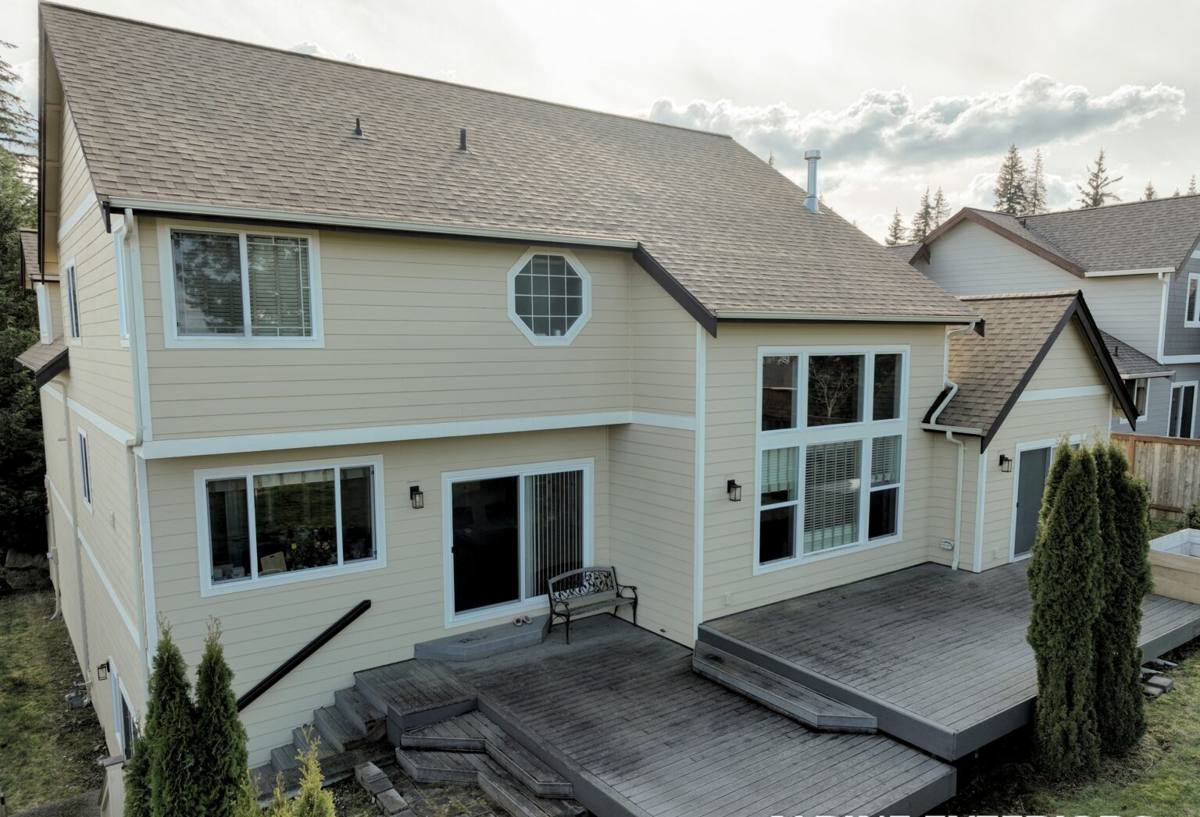
What Salt Air, Driving Rain, and Moss Season Actually Do to a Deck
Moisture that never fully leaves
The problem in Goshen isn't any single storm — it's that decks rarely get a long enough dry stretch to fully shed the moisture they take on. Rain drives in at an angle instead of falling straight down, so it gets up under railings, behind ledger flashing, and into end-grain cuts on joists and posts. That moisture sits, and untreated or under-flashed wood starts to break down from the inside before it ever looks bad on the surface.
Salt air and hardware fatigue
Airborne salt accelerates corrosion on fasteners, joist hangers, and any exposed metal connectors. Once a nail or hanger starts rusting, it loses grip strength long before it visibly fails, which is one reason we treat hardware replacement as a standard part of any deck rebuild here rather than an upsell.
Moss, algae, and the surfaces they hide
A long moss season means organic growth gets a real foothold on horizontal surfaces, especially on the north or shaded side of a house. Moss holds moisture against the decking and framing underneath it, so even boards that look "just dirty" can be sitting on wood that's been damp for months at a time. Pressure-washing moss off the surface doesn't address what's already happened underneath — that's a maintenance step, not a repair.
Signs a Goshen Deck Needs Full Replacement
Some damage can be repaired locally without tearing out the whole structure. Other signs mean the framing itself is no longer trustworthy. Here's how we sort it out on a walkthrough:
- Soft, spongy decking boards, especially near the house or in shaded corners where moss collects
- Visible rot or discoloration at the ledger board where the deck attaches to the house
- Rust streaks running down from joist hangers, screws, or bolts
- Posts that wobble or footings that have shifted, cracked, or sunk
- Railings that flex noticeably when leaned on
- A musty smell coming from underneath the deck, which usually means trapped moisture in the framing
- Gaps opening up between boards where moisture has repeatedly swelled and dried the wood
- A deck built without proper ledger flashing (common on older additions), which lets water into the house-side rim joist year after year
If you're seeing two or more of these, especially anything at the ledger or the footings, it's worth having someone look underneath before spending money on cosmetic fixes.
What a Correct Deck Replacement Actually Involves
A lot of "deck replacement" quotes only price the visible decking boards. A full, correct replacement addresses everything that touches moisture, because in this climate the framing fails before the surface boards do. Our scope typically includes:
- Full tear-off of decking, railings, and any framing that's compromised — not just the boards that look bad.
- Ledger board and flashing replacement where the deck meets the house, using proper step and Z-flashing so water can't track behind the siding or into the rim joist.
- Footing and post inspection, with replacement or reinforcement of any footings that have shifted or don't meet current code depth for this area.
- New joists and beams sized correctly for the span and load, using fasteners and hangers rated for exterior, coastal-influenced exposure.
- Decking installation with proper board spacing for drainage and expansion — a detail that matters more here than in drier climates, because boards installed tight will cup or trap moss-feeding moisture between them.
- Railing and stair rebuild to current code, since older Goshen decks were often built before current baluster spacing and guard height requirements.
- Final grading check under the deck to confirm water drains away from the house rather than pooling under the new structure.
Decking Material Options for This Climate
There's no single "best" decking material — there's the right material for your budget, your maintenance appetite, and how much sun or shade your deck gets. Here's how the common options actually perform in Goshen's rain-and-moss conditions:
| Material | How It Handles Rain & Moss | Maintenance | Typical Lifespan |
|---|---|---|---|
| Pressure-treated wood | Good if fully sealed and re-coated regularly; moss gets a foothold fast if maintenance lapses | Annual cleaning, re-stain every 2-3 years | 10-15 years with upkeep |
| Cedar | Naturally moisture-resistant but still needs sealing in shaded, moss-prone spots | Cleaning and sealing every 1-2 years | 15-20 years with upkeep |
| Capped composite | Handles driving rain and moss well; won't rot, but moss can still grow on the surface film if never cleaned | Occasional wash, no sealing or staining | 25+ years |
| Uncapped composite (older generation) | Can absorb moisture at the core over time; not our first recommendation for shaded, damp yards | Cleaning, moisture can still cause swelling | Varies, shorter than capped composite |
For Goshen yards with a lot of shade or tree cover, we generally steer homeowners toward capped composite or well-sealed cedar over bare pressure-treated wood left to weather on its own — not because pressure-treated is a bad product, but because it demands more consistent upkeep to hold up against a long wet season, and it's the option most likely to get neglected once the deck "looks fine."
How Our Process Works, Start to Finish
We keep this simple and give straight answers at every step:
- Free on-site estimate — we walk the existing deck, check underneath it, and look at the ledger and footings before quoting anything.
- Written scope and price — you get a clear breakdown of what's being torn out, what's being rebuilt, and material options with honest tradeoffs, not just a lump-sum number.
- Permitting — most deck replacements in Whatcom County require a permit, especially if footings, framing, or height changes. We handle that paperwork rather than leaving it on you.
- Tear-off and framing — old material removed, framing and ledger addressed first since that's the structural core of the deck.
- Decking, railing, and stairs — installed to spec with proper spacing and code-compliant railings.
- Final walkthrough — we go over the finished deck with you, including what maintenance (if any) your chosen material needs going forward.
Permits and Code: Why This Isn't Optional Here
Ledger attachment, footing depth, and railing height are all governed by code, and they matter more in this climate than in a dry one because a poorly flashed ledger is the single most common source of hidden rot on decks we tear out. Whatcom County requires permits for most deck rebuilds, particularly when framing or footings are involved. Skipping that step to save time can leave you with an uninsurable structure or a problem you inherit at resale — we pull the permit and handle inspections as part of the job rather than treating it as an extra.
What Affects Deck Replacement Cost
Every deck is different, but the same handful of factors drive most of the price difference between jobs:
| Factor | Why It Matters |
|---|---|
| Deck size and layout | Square footage, plus stairs and multiple levels, adds material and labor |
| Decking material chosen | Pressure-treated, cedar, and composite carry different upfront costs |
| Condition of the footings and posts | Replacing or adding footings costs more than reusing sound ones |
| Ledger and flashing work | Full re-flashing at the house wall is more involved than decking-only replacement |
| Railing style and code updates | Bringing older railings up to current code can add scope on top of decking |
| Site access | Decks with tight yard access or steep grade take longer to tear out and rebuild |
We'd rather walk your specific deck and give you real numbers than throw out a broad range that doesn't mean much until we've seen the framing underneath.
Why Hire a Crew That Already Works Goshen
A deck built to a generic spec sheet doesn't always hold up to how Goshen actually weathers through the year. Knowing how far driving rain typically pushes under a ledger here, how long moss season really runs on a shaded lot, and which footing depths hold up on this area's soil isn't something you get from a manufacturer's install guide — it comes from doing the work locally, season after season. That's the difference between a deck that looks good for one summer and one that's still sound a decade in.
If your deck in Goshen is showing soft spots, rust, or rot at the ledger, we'll come take an honest look and tell you straight whether it needs a repair or a full rebuild. Reach out for a free, no-pressure estimate using the form below.