 Sumas Roofing
 What Goshen's Climate Actually Does to Siding
Goshen sits in the kind of Whatcom County weather pattern that wears siding down slowly and quietly. It isn't one dramatic storm that causes the damage — it's the accumulation of driving rain that hits the same wall assemblies year after year, a moss season that stretches for months, and a steady flow of moist, salt-influenced air moving through the region. None of that shows up on day one. It shows up three, five, or ten years later, when a homeowner notices soft trim, peeling paint, or siding that never quite dries out between storms.
Siding is the first line of defense against all of that, but only if it's the right product, installed the right way. A siding job that looks fine at close-out can still fail early if the wrong material was used, the wrong fasteners were driven, or the flashing details were rushed. That's the gap we focus on closing for homes in this area.
Moisture Intrusion Behind the Cladding
Wind-driven rain doesn't just hit siding — it gets pushed sideways and upward into laps, seams, and penetrations. Over time, that moisture works its way behind the cladding if the weather-resistive barrier, flashing, and drainage plane weren't detailed correctly. Once water gets behind siding and can't dry out, it doesn't matter how good the surface material is; sheathing and framing start to suffer.
Moss, Algae, and Constant Damp
A long moss season means siding surfaces stay damp far more of the year than in drier climates. Products that absorb moisture or rely on a field-applied paint film are more vulnerable here — damp wood fibers swell, edges soften, and paint that would last a decade elsewhere can start failing in half that time. Siding choice and installation quality both matter more in a climate like this than in a mild, dry one.
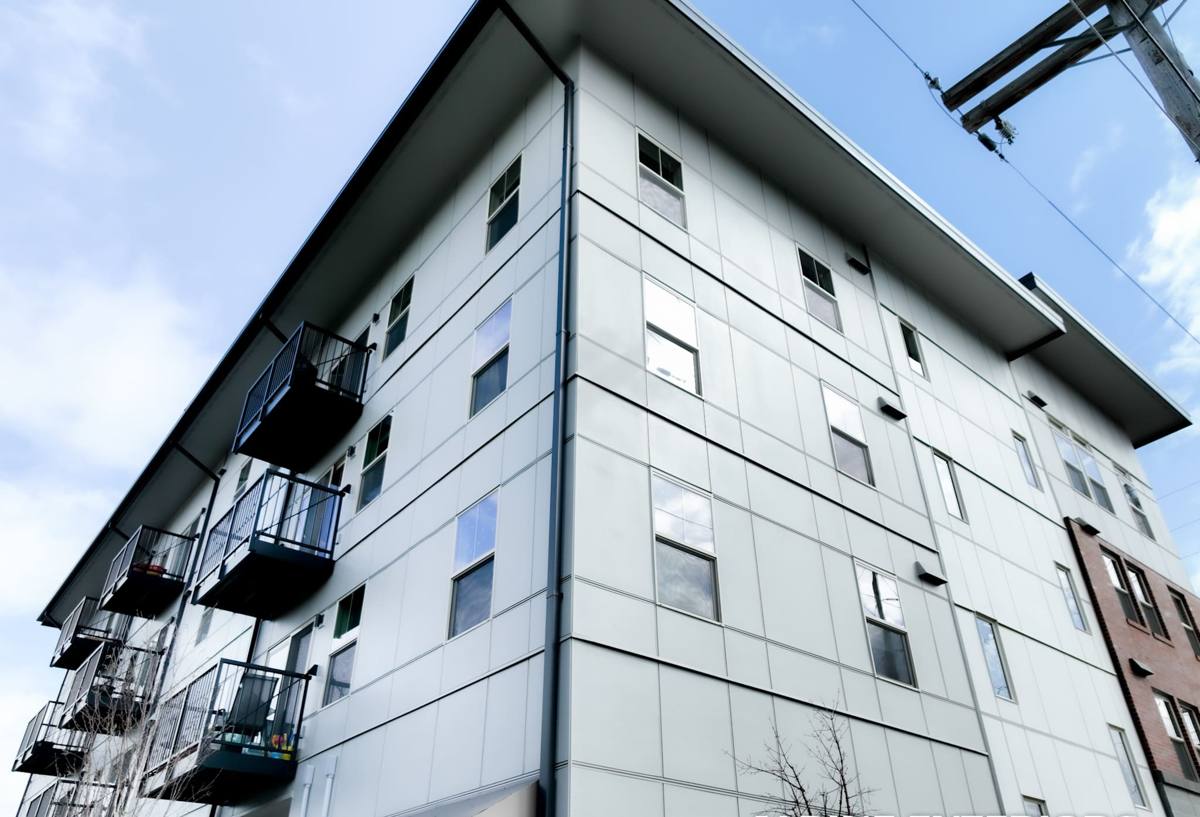
Why We Install James Hardie Fiber Cement — and Nothing Else
We standardized on James Hardie fiber cement siding for every project we do, including work in and around Goshen, because it's engineered to hold up to exactly the conditions described above. We don't install vinyl, LP SmartSide, Cemplank, Allura, primed spruce, or cedar. That's not a marketing position — it's a decision based on what actually performs, and what we're willing to warranty our labor against, in this specific climate.
A Non-Combustible, Moisture-Stable Core
Fiber cement doesn't rot, swell, or feed insects the way wood-based products can. It's non-combustible, which matters for wildfire-adjacent risk and insurance considerations alike. And because it's dimensionally stable, it holds paint and caulk lines better through repeated wet-dry cycles than wood-fiber composite products, which can expand at cut edges and fastener points if those areas aren't fully sealed.
ColorPlus Finish vs. Field-Applied Paint
Most of the siding we install carries Hardie's factory-applied ColorPlus finish rather than a job-site paint job. That finish is baked on in a controlled environment, cures fully before it ever reaches a wall, and is backed by its own finish warranty. In a climate with this much sustained moisture, a factory finish is simply more consistent than a field-applied coat that has to cure in variable weather and get proper coverage on every cut edge.
What a Correct Siding Installation Actually Involves
The material is only half the job. We see plenty of siding failures where the product itself was fine but the installation wasn't — gaps at the wrong clearances, missing flashing, or fasteners driven incorrectly. On a climate like ours, those shortcuts fail faster and more visibly than they would somewhere drier.
Weather-Resistive Barrier and Flashing
Before a single piece of siding goes up, the wall needs a continuous, correctly lapped weather-resistive barrier, properly integrated flashing at windows, doors, and any wall penetrations, and a drainage plane that lets any moisture that does get behind the cladding find its way back out. Skipping or rushing this step is the single biggest cause of hidden rot behind otherwise good-looking siding.
Fastening, Clearances, and Manufacturer Spec
James Hardie publishes exact installation specifications — fastener type and spacing, minimum clearance from grade, roof lines, and decks, and gapping requirements at butt joints and trim. Those specs exist because the manufacturer's warranty depends on them, and because they're based on how the product actually performs in the field. Installing to spec isn't optional detail work; it's what keeps the product doing its job for decades instead of years.
- Weather-resistive barrier installed and lapped shingle-style before any siding goes up
- Flashing integrated at every window, door, and wall penetration — not caulk substituted for flashing
- Correct fastener type, length, and spacing per manufacturer specification
- Proper clearance maintained from grade, roofing, decks, and patios
- Butt joints and trim gapped and sealed per manufacturer detail, not just butted tight
- Cut edges primed or sealed before installation to protect the fiber cement core
Our Process for Goshen Siding Projects
We run the same disciplined process on every home, adjusted for the specific exposure and condition of that property.
Assessment and Moisture Check
We start by walking the exterior and checking for existing moisture problems — soft trim, staining, or signs the current siding has already let water in. If there's hidden damage in the sheathing or framing, we want to know before we close the wall back up, not after.
Installation Sequence
Tear-off and disposal of the old siding, repair of any damaged sheathing found underneath, installation of the weather-resistive barrier and flashing, then the Hardie siding, trim, and accessories in sequence per manufacturer spec. We don't skip steps to save a day on the schedule.
Final Inspection and Cleanup
Every job gets a final walkthrough against the installation checklist before we call it done, plus a full site cleanup. You shouldn't be finding stray fasteners in the yard weeks later.
Comparing Siding Options for a Climate Like This
Homeowners in Goshen often ask us to weigh in on other products they've seen quoted elsewhere. Here's an honest comparison based on how each performs under sustained rain and moss exposure — not on price alone.
| Material | Moisture Behavior | Finish Durability | Long-Term Maintenance |
|---|---|---|---|
| James Hardie fiber cement | Dimensionally stable, doesn't rot or swell | Factory ColorPlus finish, warrantied | Occasional wash; repaint not required for years |
| Vinyl | Doesn't absorb water, but can warp/gap over time | Color molded in, fades over time; can't be easily repainted well | Low, but replacement often needed at joints/damage |
| LP SmartSide / wood-composite | Wood-fiber core sensitive to sustained moisture at cuts and edges | Field or factory-primed, needs maintained paint film | Regular inspection of edges and caulk lines |
| Cedar | Natural wood, absorbs moisture, prone to rot without upkeep | Stain/paint needs reapplication on a cycle | Highest ongoing maintenance of the group |
Cost Factors for Siding Installation in Goshen
We don't quote exact prices without seeing the house, but the real cost drivers on most jobs are consistent. Understanding them helps you evaluate any estimate you get, from us or anyone else.
- Home size and wall complexity — more corners, gables, and cutouts mean more labor per square foot
- Tear-off vs. overlay — full removal of old siding costs more up front but lets us check and fix what's underneath
- Hidden sheathing or framing repair — if moisture has already gotten in, that repair gets addressed before new siding goes on
- Trim, soffit, and fascia scope — whether those are being replaced along with the field siding
- Product line and profile — Hardie's lap, shingle, and panel profiles carry different material and labor costs
- Access and site conditions — steep grades, tight setbacks, or multi-story walls affect labor time
Why Hiring a Crew That Already Works in Goshen Matters
Whatcom County's building requirements, inspection process, and typical construction of homes in this area aren't identical to what a crew from outside the region might be used to. A contractor who already works jobs in and around Sumas and Goshen knows what local inspectors look for, understands how homes here were typically built and what that means for tear-off surprises, and isn't learning the region's weather behavior on your project. That familiarity shows up in fewer change orders, fewer callbacks, and a crew that isn't guessing at how the wall assembly needs to perform against this specific climate.
Maintaining Your New Siding Through Whatcom County Weather
A correctly installed James Hardie system is low-maintenance, not no-maintenance. A rinse down once or twice a year removes the buildup that moss season leaves behind before it has a chance to hold moisture against the surface. Keep an eye on caulk lines at trim and penetrations, and address anything that looks cracked or pulled away before the next wet season sets in. Beyond that, there's no repainting cycle to manage the way there is with wood-based or field-painted products — the ColorPlus finish is built to go the distance.
If you're weighing a siding replacement on a Goshen-area home and want a straight answer about what your walls actually need, we're glad to take a look. A free, no-pressure estimate gets you a real assessment of your home's condition and a clear explanation of what correct installation would involve — no obligation, just information you can use.