 Sumas Roofing
 Metal Roofing Built for Huntingdon, BC's Climate
Huntingdon sits right against the Washington border, close enough to Sumas that the weather doesn't know the difference. Homes here deal with the same wet Pacific Northwest pattern that defines Whatcom County: long stretches of driving rain from fall through spring, damp air moving in off the water, and moss that finds a foothold on almost any roof surface that stays shaded and wet long enough. A metal roof handles that combination better than most other materials, but only if it's specified and installed correctly for this exact environment. That's the part that gets skipped when a crew treats every job the same regardless of where it sits.
We work Sumas and the border communities on both sides, including Huntingdon, on a regular basis. That matters more than it sounds like it should. A roof here isn't fighting the same fight as a roof forty miles inland — the moisture load is heavier, the moss pressure is worse, and salt-tinged air moving up from the coast plays a role in how fasteners and flashing age over time.
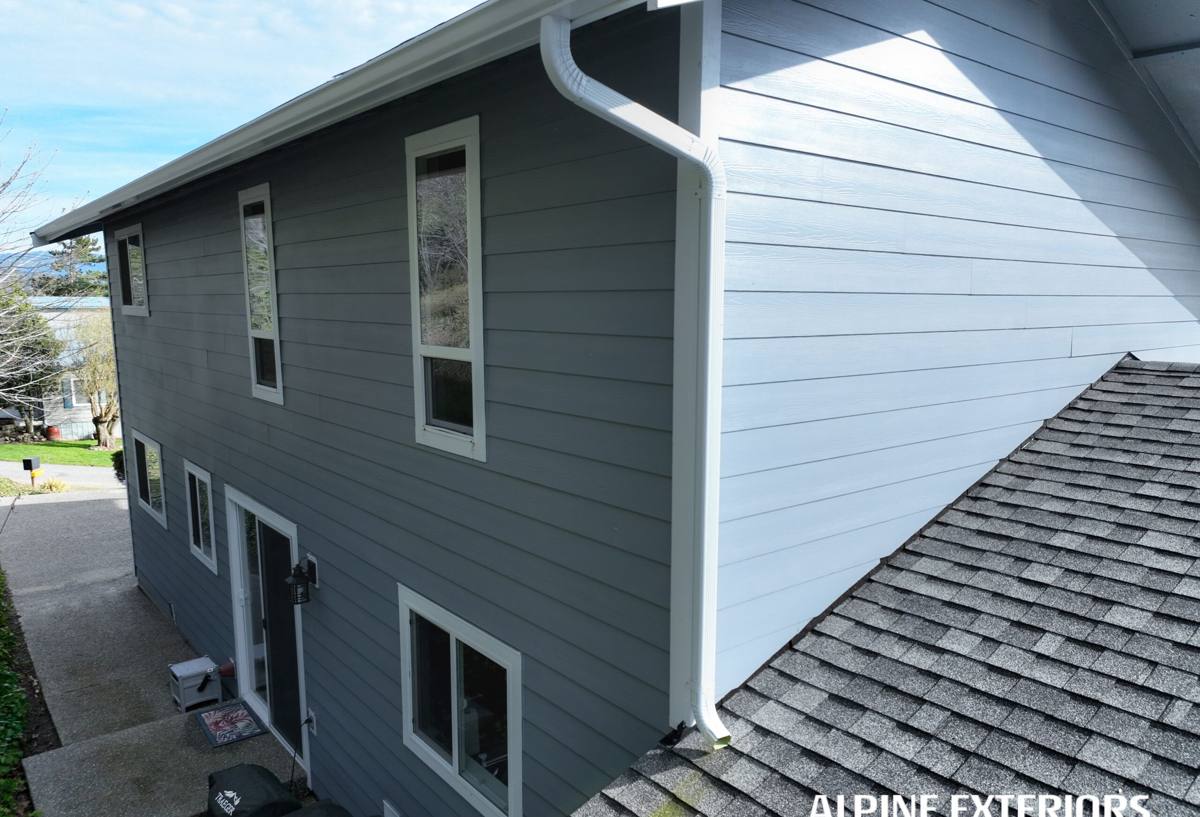
What Local Homes Actually Need From a Metal Roof
Three regional factors drive almost every decision we make on a Huntingdon-area metal roofing job:
Salt Air and Metal Fatigue
You don't need to be on the waterfront to feel the effects of salt-laden air in this part of Whatcom County. Over years, airborne salt accelerates corrosion at cut edges, fastener heads, and anywhere a coating has been scratched or thinned. This is why fastener and flashing material choice matters as much as the panel itself — a mismatched or bargain fastener can become the weak point in an otherwise solid roof.
Driving Rain and Wind-Driven Water
Rain here doesn't always fall straight down. Wind off the valley pushes it sideways, which means water gets tested at every seam, lap, and penetration on the roof. A metal roofing system depends on its seams and flashing details doing their job under that kind of lateral pressure, not just under a calm vertical downpour.
Extended Moss Season
Moss doesn't need much — shade, moisture, and organic debris are enough to get it started. Metal sheds moss far better than asphalt or wood because there's no granule surface for spores to grip, but valleys, low-slope sections, and areas under overhanging trees still need attention. Moss that's allowed to mat against any roofing material traps moisture against the surface and shortens its life.
Panel Types We Install and How They Compare
Not every metal roofing product performs the same way in a wet, moss-prone, salt-influenced climate. We steer homeowners toward systems that have a proven track record here rather than whatever happens to be cheapest that month.
| Panel Type | Best For | Moisture/Moss Performance | Typical Lifespan |
|---|---|---|---|
| Standing seam steel | Most homes, especially steeper roofs | Excellent — raised seams shed water fast, smooth surface resists moss | 40–60+ years |
| Exposed-fastener panels (screw-down) | Budget-conscious projects, outbuildings | Good, but fastener seals need periodic checking | 25–40 years |
| Metal shingles / shakes | Homes wanting a traditional look with metal durability | Very good, interlocking design sheds water well | 40–50 years |
| Stone-coated steel | Homes matching a tile or shake aesthetic | Good, textured surface needs occasional moss monitoring | 40–50 years |
For most Huntingdon-area homes, standing seam is our first recommendation. The concealed fastener design means fewer penetration points for water and salt air to work on over time, and the smooth panel surface gives moss almost nothing to hold onto.
What a Correct Metal Roof Installation Involves
A metal roof is only as good as the system underneath it. We treat the visible panels as the last step, not the whole job.
Deck Inspection and Repair
Before anything goes down, we check the roof deck for soft spots, rot, or damage from prior leaks. In a wet climate, skipping this step means sealing a problem under a new roof instead of fixing it.
Underlayment Selection
We use synthetic or high-temp ice-and-water underlayment appropriate for metal roofing, with extra protection at eaves, valleys, and any low-slope transitions where wind-driven rain is most likely to find a way in.
Fastener and Flashing Material
Given the salt air in this area, we match fasteners, flashing, and trim metals to the panel material to avoid galvanic corrosion — a common failure point when mismatched metals are used together near coastal air.
Ventilation
Metal roofs perform best with proper attic and roof ventilation. Trapped moisture underneath the deck doesn't disappear just because the surface material changed — it needs somewhere to go, or it condenses and causes problems from the inside out.
Seam and Penetration Detailing
Every pipe boot, vent, chimney flashing, and valley is a place water can get in if it's rushed. This is where driving rain finds weak installs, and it's where we spend the extra time.
Our Process, Start to Finish
- On-site assessment — we inspect the existing roof, deck condition, ventilation, and any moss or moisture damage before quoting anything.
- System recommendation — based on your roof's slope, exposure, and budget, we recommend a panel type and underlayment package suited to Huntingdon's climate, not a one-size-fits-all package.
- Written estimate — a clear scope of work, materials, and price range with no vague allowances buried in the fine print.
- Tear-off and deck prep — old roofing removed, deck repaired where needed, debris hauled off site.
- Underlayment and flashing — installed with extra attention at eaves, valleys, and penetrations.
- Panel installation — panels set, seamed, and fastened to manufacturer spec.
- Final walkthrough — we review the finished roof with you and cover basic care going forward.
Cost Factors for a Huntingdon-Area Metal Roof
Every roof is priced individually, but the variables below are what typically move the number up or down. We'd rather explain this upfront than let a quote feel like a mystery.
| Factor | Why It Affects Price |
|---|---|
| Panel type | Standing seam runs higher than exposed-fastener panels due to material and labor |
| Roof complexity | Valleys, dormers, and multiple roof planes add labor and flashing detail |
| Deck condition | Rot or soft decking found during tear-off adds repair cost |
| Existing roof removal | Layers of old roofing to strip off adds disposal and labor time |
| Ventilation upgrades | Adding or correcting attic ventilation is sometimes needed for the system to perform properly |
| Access | Steep pitches or tight lot access can add time and equipment cost |
We give a firm written price after the on-site assessment — not a phone estimate that changes once the crew shows up.
Living With a Metal Roof in a Moss-Heavy, Salt-Air Region
A properly installed metal roof needs less maintenance than most alternatives, but "less" isn't "none." A short annual routine keeps it performing the way it's supposed to for decades.
- Clear overhanging branches and debris that hold moisture against the roof or valleys
- Rinse off accumulated organic debris in valleys and low-slope sections once or twice a year
- Check gutters and downspouts so water isn't backing up under eave flashing
- Look for any scratched or chipped panel coating and touch it up promptly to prevent corrosion from starting
- Have penetration flashing (vents, pipe boots, chimneys) checked periodically, especially after major windstorms
- Avoid pressure washing directly at seams and fasteners — it can force water where it doesn't belong
None of this is heavy work, but it's the kind of thing that gets skipped when homeowners assume metal roofing means zero upkeep. Regular, light attention is what keeps a well-installed metal roof living up to its long lifespan in this climate.
Why It Matters That We Already Work Huntingdon
Sumas Roofing Co is based right in Sumas, minutes from the border. We're not driving in from a metro area, unfamiliar with how weather sits differently on this side of Whatcom County versus further inland. We know which roof lines in this area tend to trap moss, which exposures take the worst of the wind-driven rain, and how to schedule work around the wetter stretches of the year so a job isn't rushed against incoming weather.
Being local also means we're not a one-time crew that disappears after the invoice clears. If a flashing detail needs a second look a year down the road, or you have a warranty question, you're calling a company that's still working in your area — not chasing down a contact number for someone who moved on to the next region.
Signs It's Time to Talk About a Metal Roof
Not every home needs a new roof today, but a few signals are worth a professional look sooner rather than later:
- Heavy moss buildup that returns quickly after cleaning
- Curling, cracked, or missing shingles on your current roof
- Visible rust or corrosion on existing metal flashing or fasteners
- Water stains on interior ceilings, especially near valleys or chimneys
- A roof approaching or past the manufacturer's expected lifespan for its material
If any of that sounds familiar, it's worth getting an honest, no-obligation look before a small issue turns into a deck repair or interior damage.
Get a Straight Answer on Your Roof
If you're weighing a metal roof for your Huntingdon-area home, we're happy to walk the roof, explain what we see, and give you a clear, honest recommendation — no pressure, no upsell. Fill out the form below for a free estimate, and we'll get back to you with real answers, not a generic sales pitch.