 Sumas Roofing
 Why Blaine's Climate Is Hard on Siding
Blaine sits close enough to the water that homes there deal with a different set of stresses than siding a few miles inland has to handle. Salt-laden air moves in off the bay, winter storms drive rain sideways into every seam and joint, and tree cover on many lots keeps whole walls shaded and damp for weeks at a stretch. None of that is unusual for Whatcom County, but it adds up over the life of a siding system, and it's a big part of why some materials hold up here and others don't.
Salt Air and Corrosion
Airborne salt settles on exterior surfaces and works into any exposed metal — fastener heads, trim edges, flashing seams. Over years it can pit unprotected metal and break down finishes that weren't built to handle it. Siding that looks fine going up a few miles from the water can chalk, fade, or start showing surface breakdown noticeably faster on a property with direct coastal exposure.
Driving Rain and Moisture Intrusion
Storms off the water don't fall straight down — wind pushes rain sideways into laps, corners, and anywhere two materials meet. A siding system that isn't detailed correctly for wind-driven rain will eventually let moisture get behind the cladding, and once that happens the damage is happening to the sheathing and framing behind the wall, not to something you can see from the yard.
Moss, Shade, and Trapped Moisture
A lot of Blaine properties have enough tree cover that north- and west-facing walls stay shaded and damp far longer after a storm than a wall in full sun would. That's exactly the condition moss and algae need to take hold, and it's hard on any material that absorbs water or has surface texture that holds organic growth against it.
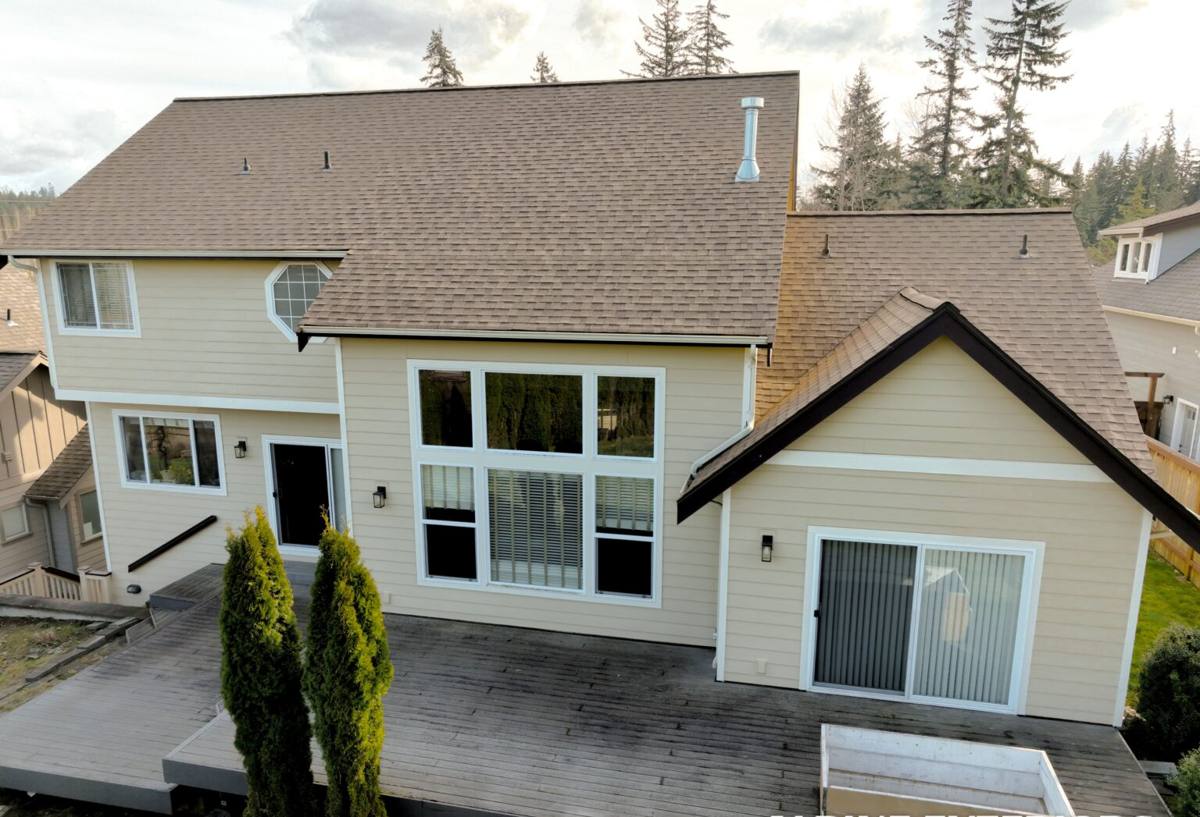
Why James Hardie Fits This Environment
What Fiber Cement Actually Is
James Hardie siding is fiber cement — cellulose fiber, sand, and portland cement formed into rigid planks, panels, shingles, and trim. It doesn't absorb and swell with moisture the way wood-based sidings can, it's not a food source for rot or insects, and it's non-combustible. That combination matters in a climate where wet weather is the rule, not the exception.
Climate-Engineered HZ Formulations
Hardie manufactures region-specific HZ formulations rather than one generic product for the whole country. The formulation used in wetter climates like ours is engineered for sustained moisture exposure, which is a meaningful difference from products designed around a drier national average.
ColorPlus Factory Finish
Hardie's ColorPlus finish is baked on in a controlled factory process instead of being sprayed or brushed on site. That gives more even coverage, better adhesion, and a finish that holds its color against UV and salt exposure considerably longer than a typical field-applied paint job — which also means a longer stretch before repainting becomes a maintenance item.
What a Correct Installation Involves Here
Most siding problems that show up years later trace back to installation, not the material itself. That's especially true close to the water, where small gaps in the water-management details get tested by weather more often than they would inland.
Water Management Behind the Cladding
A correct job starts with a drainable weather-resistive barrier, properly lapped flashing at every window, door, and roof-to-wall intersection, and — where conditions call for it — a rain screen gap so any water that does get behind the siding has a path to drain and dry instead of sitting against the sheathing.
Fastening, Clearances, and Caulking
Hardie specifies fastener type, spacing, and minimum clearance from grade, roofing, decks, and other siding for a reason. Cut those clearances short or use the wrong fastener and you've created the entry points that let wind-driven rain in. Manufacturer-approved caulk needs to go at the joints designed for it — and just as important, joints that are supposed to stay open to let the wall assembly breathe need to be left open, not sealed shut out of habit.
Cut Edges and Field Sealing
Every field cut exposes raw fiber cement, and in a wet climate that cut edge needs to be primed and sealed before it goes up — especially around window and door openings, where cuts are most common. Skipping this is a small shortcut that doesn't show up as a problem for a few years, which is exactly why it happens.
- Drainable weather-resistive barrier installed correctly, not just stapled up
- Flashing at every window, door, and roof-to-wall intersection
- Rain screen or drainage gap where site conditions call for it
- Manufacturer-specified fasteners, correct spacing and penetration depth
- Full clearance from grade, decks, roofing, and adjoining siding
- Primed and sealed cut edges, especially around openings
- Caulk only where specified — open joints stay open
Our Process on a Blaine Siding Project
- On-site inspection — we look at the existing siding, the condition of the sheathing underneath, and any signs of past moisture problems before recommending anything.
- Product and detail plan — we choose the right Hardie line and plan out flashing, drainage, and trim details for that specific wall and exposure.
- Prep and water management — weather barrier, flashing, and any rain screen components go in before a single piece of siding is hung.
- Installation to spec — fastening, clearances, and cut-edge sealing done to Hardie's published requirements, not shortcuts.
- Final walkthrough — we go over the finished work with you and register the manufacturer warranty.
Choosing the Right Hardie Line for Your Home
Hardie makes several product lines, and the right one depends on the home's style and how exposed the walls are.
| Product Line | Profile | Where It Fits Well in Blaine |
|---|---|---|
| HardiePlank | Horizontal lap siding | Most common choice; works on nearly any home style and exposure level |
| HardieShingle | Staggered or straight-edge shingle panels | Coastal cottage or craftsman-style homes wanting a shingle look without cedar's upkeep |
| HardiePanel | Vertical panel siding | Modern builds, gable accents, or mixed-material facades |
| HardieTrim | Fascia, corner boards, window/door trim | Pairs with any of the above; keeps trim as moisture-resistant as the field siding |
Cost Factors for a Blaine James Hardie Project
Every home is different, but the same handful of factors drive most of the cost variation we see on Blaine projects.
| Factor | Why It Matters |
|---|---|
| Removal of existing siding | Tear-off, disposal, and any sheathing repair found underneath add labor before new siding starts |
| Home size and story count | More wall area and second-story work both increase labor and equipment needs |
| Trim and architectural detail | Gables, dormers, and multiple corners take more cutting and flashing work than a simple rectangle |
| Exposure level | Waterfront or wind-exposed walls often warrant extra water-management detail, which adds time |
| Product line and profile | Shingle and panel profiles generally run higher in material and labor than standard lap siding |
| Site access | Tight lots, landscaping, or limited staging area can slow the job down |
Maintenance in a Salt-Air, Moss-Prone Climate
Hardie siding is low-maintenance, not no-maintenance, and coastal exposure changes what that maintenance looks like a little. A periodic rinse to knock off salt film and organic buildup goes a long way, especially on shaded walls where moss tends to establish first. Keep vegetation and irrigation spray off the siding where you can — both keep walls wetter longer than they need to be. ColorPlus finish holds up far longer than a field-applied paint job, but it's still worth a yearly walk-around to check caulking at joints and around penetrations, since that's the first place a small gap tends to show up.
Why a Crew That Already Works Blaine Matters
Installation quality is what determines whether Hardie siding performs the way it's supposed to, and a lot of that comes down to judgment calls a crew makes on site — where a rain screen gap is worth adding, how much clearance a given roofline needs, how to detail a wall that gets more weather than the rest of the house. A crew that's worked Blaine and the surrounding Whatcom County coastline regularly has already made those calls on homes with the same salt air, the same wind-driven rain, and the same shaded, moss-prone walls. That's not something you can fully substitute with a spec sheet, no matter how good the spec sheet is.
If you're weighing a siding project on a Blaine home, we're happy to take a look and walk you through what your specific walls need. Reach out for a free, no-pressure estimate using the form below.