 Sumas Roofing
 Kendall Decks Face a Different Set of Problems
Kendall sits in the kind of terrain that makes a deck either a great investment or a slow-motion maintenance headache, depending on how it was built. Tree cover, damp ground, and long stretches of grey, wet weather are normal here, and a deck that was framed and finished like it's going on a house in a dry climate will show it within a few seasons — soft spots, black streaking, loose fasteners, and boards that cup or split. The moist marine air that moves through Whatcom County doesn't just make things damp for a day after it rains; it keeps wood and hardware wet for days at a time, especially on decks that sit low, are shaded by trees, or don't get much direct sun to dry out between storms.
Add in the driving rain that comes sideways during a real Pacific Northwest storm, and a deck built without proper flashing, drainage gaps, and fastener choices is going to fail faster than the same deck built correctly. This page is about what a deck actually needs to hold up in Kendall specifically — not a generic list that could apply anywhere.
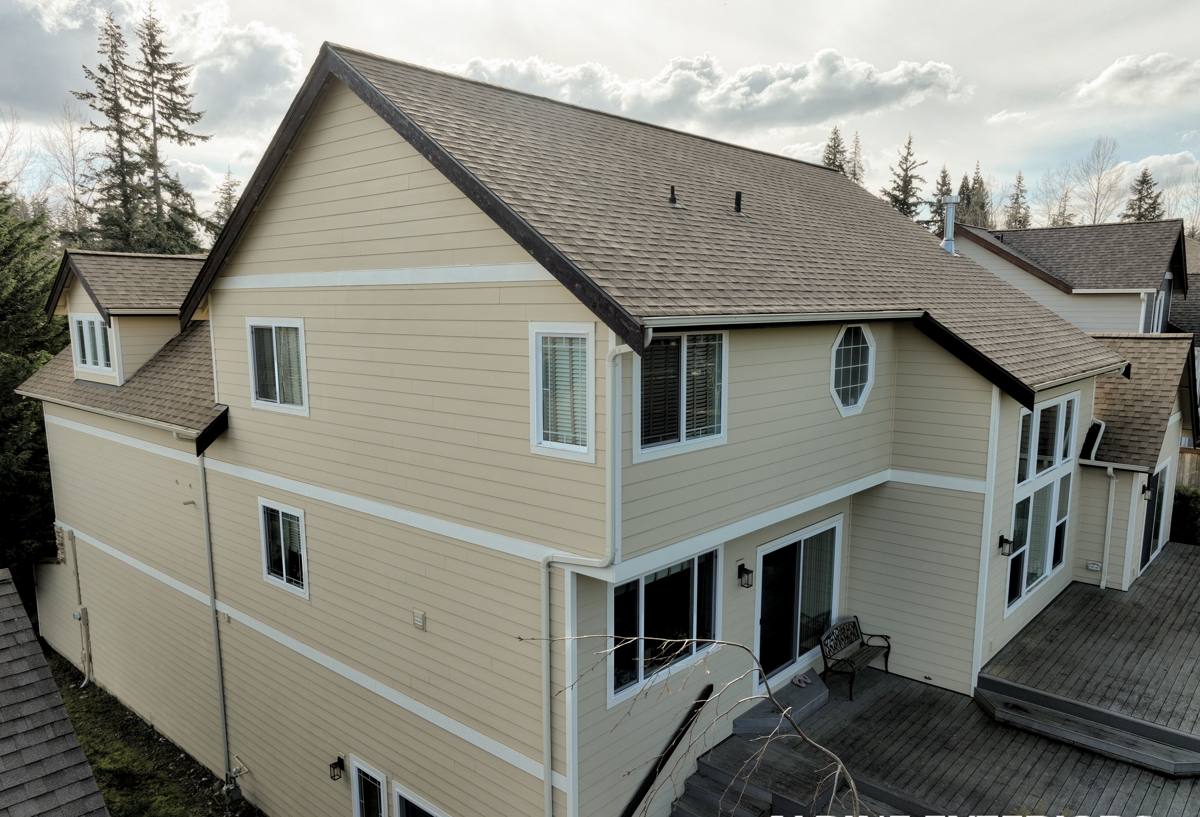
What Local Conditions Actually Do to a Deck
Moisture That Doesn't Let Up
A long moss season is one of the clearest signs of how much moisture this area holds onto. Moss doesn't just grow on roofs — it takes hold on deck boards, especially in shaded corners, against the house where airflow is poor, and on any horizontal surface that stays damp. Moss holds water against the wood surface, which accelerates rot in untreated or poorly finished decking and turns boards slick and dangerous underfoot.
Freeze-Thaw at the Footings
Kendall's elevation means colder nights and more freeze-thaw cycling than you'd get closer to the water. Footings that aren't poured to the correct depth, or posts that aren't properly isolated from ground moisture, can heave or shift over a few winters. This is a structural issue, not a cosmetic one — it's the difference between a deck that stays solid for decades and one that develops a wobble by year five.
Fastener and Hardware Corrosion
Salt air moving inland off the Sound, combined with constant dampness, is hard on unprotected metal. Standard fasteners and connectors corrode faster here than in a dry inland climate, and corroded fasteners are one of the most common hidden causes of deck failure — the wood can look fine on the surface while the hardware holding it together is quietly rusting away underneath.
What a Correctly Built Deck Involves
Footings and Framing
Footings need to be sized and set to the depth required for this area's frost line, not guessed at. Posts should be set on proper bases that keep end grain off concrete and out of standing water. Joist spacing needs to account for the decking material chosen — composite and PVC boards often require tighter joist spacing than solid wood to avoid flexing over time.
Ledger Attachment and Flashing
Where the deck attaches to the house is the single most important place to get flashing right. A ledger board that isn't properly flashed will channel driving rain directly into the house's rim joist and wall framing, and that kind of hidden rot can go unnoticed for years before it shows up as a soft spot or a sagging deck edge. This is not an area to cut corners on, regardless of what decking material sits on top.
Fasteners and Connectors
Stainless steel or heavy hot-dip galvanized fasteners and structural connectors are worth the extra cost here. In a climate with salt air and near-constant dampness, the small savings from standard coated fasteners disappear quickly once corrosion sets in and starts staining the decking or weakening connections.
Drainage and Airflow
Proper gapping between boards, and a plan for water to actually get out from underneath the deck rather than pooling against posts and joists, matters more here than in drier regions. A deck built tight to the ground with no airflow underneath is a moss and rot problem waiting to happen.
Choosing a Decking Material for This Climate
There's no single "best" decking material — it depends on budget, how much upkeep you're willing to do, and how much shade and moisture the site gets. Here's how the common options actually perform in Kendall's conditions:
| Material | Upfront Cost | How It Handles Moisture & Moss | Maintenance |
|---|---|---|---|
| Pressure-treated lumber | Lowest | Resists rot when properly finished, but needs consistent sealing to shed water and discourage moss | Annual cleaning and re-sealing recommended |
| Cedar | Mid-range | Naturally moisture and insect resistant, but still needs finish maintenance to prevent graying and moss buildup in shaded areas | Periodic cleaning and oiling or staining |
| Composite decking | Higher | Doesn't rot, but can still grow surface moss or mildew in constantly shaded, damp spots if not cleaned | Occasional washing; no sealing or staining needed |
| PVC decking | Highest | Fully moisture-proof board, best resistance to staining and moss adhesion | Lowest maintenance; occasional washing |
We'll talk through these trade-offs honestly during an estimate. A shaded, low-airflow site under trees is a different conversation than an open, sunny deck — the right material choice depends on your specific lot, not just personal preference.
Our Deck Building Process
- Site walk and design conversation. We look at sun exposure, tree cover, drainage, and how the deck will attach to the house before talking materials.
- Permitting. We handle the Whatcom County permit process for you, including any structural details the county requires for footing depth and ledger attachment.
- Footings and framing. Footings poured to proper depth, framing built with corrosion-resistant hardware sized for the decking material chosen.
- Flashing and waterproofing. Ledger flashing and any house-side waterproofing done before a single deck board goes down.
- Decking installation. Boards installed with correct spacing and fastening for the material, with attention to drainage underneath.
- Railings and finish work. Code-compliant railings, stairs, and any finish coating or sealing the material requires.
- Final walkthrough. We go over care and maintenance specific to what was installed, so you know what to expect through the wet months.
Permits and Local Requirements
Most new decks and many deck replacements in Whatcom County require a building permit, particularly once you're above a certain height off grade or attaching structurally to the house. Requirements can vary based on the specifics of your property and the deck's design. We handle the permit application and inspection process as part of the job, so you're not stuck figuring out county requirements on your own — and so the finished deck is actually built to what the inspector expects, not just to what looks right.
Deck Maintenance Through Moss Season
Even a well-built deck needs some seasonal attention in this climate. A short checklist that goes a long way:
- Sweep leaves and debris off the deck surface regularly — trapped organic matter holds moisture and feeds moss growth
- Clean moss and algae off boards before it builds a thick layer, especially in shaded corners
- Check that gaps between boards haven't filled with debris that blocks drainage
- Inspect fasteners and connectors yearly for rust staining or looseness
- Re-seal or re-stain wood decking on the schedule the finish product calls for — don't wait until it's visibly graying
- Confirm downspouts and gutters aren't dumping extra water directly onto or under the deck
Repair or Rebuild? Signs to Watch For
Not every tired-looking deck needs to be torn out. Some signs point to a straightforward repair, while others mean the structure itself is compromised:
- Repair territory: a few soft or cupped boards, surface graying, moss buildup, loose railing balusters, or isolated rust staining
- Rebuild territory: soft or spongy framing when you press on it, visible rot at the ledger board, posts that wobble at the base, or a deck that was never permitted or flashed correctly to begin with
If you're not sure which category your deck falls into, that's exactly what a walkthrough is for — we'll tell you honestly if repair makes sense or if you'd be pouring money into a structure that's past the point of patching.
Why Hiring a Crew That Already Works Kendall Matters
A deck built by a crew that doesn't work this area regularly can still look good on installation day. The difference shows up two or three winters later, once driving rain and a long moss season have had time to find every weak point — the ledger flashing that was skipped, the standard fasteners that started rusting, the footing that wasn't set deep enough for local freeze-thaw. Crews who work Kendall and the rest of Whatcom County routinely build with these conditions in mind from the start, because they're the ones who get called back when it's done wrong.
We're a local roofing and exteriors contractor based out of Sumas, and deck building is part of how we think about a whole building envelope — flashing, drainage, and moisture management don't stop at the roofline. If you're planning a new deck or trying to figure out whether an existing one is worth saving, we're glad to take a look and give you a straight answer.
If you're in Kendall and thinking about a new deck or need an honest opinion on one you've already got, reach out for a free, no-pressure estimate using the form below.