 Sumas Roofing
 Composite Decking Built for Laurel's Weather, Not Just Its Looks
Laurel sits in one of the wetter pockets of Whatcom County, and any deck out here has to earn its keep against months of standing moisture, driving rain, and the kind of shaded, damp air that keeps moss and algae going nearly year-round. A deck material that looks great in a showroom in July can start showing problems by its second wet winter if it wasn't matched to conditions like these. Composite decking, when it's the right product installed the right way, handles that load a lot better than dimensional lumber — but "composite" is a broad category, and how it's built matters as much as what it's built from.
We install composite decking for homeowners in Laurel and throughout the Sumas area with that climate in mind first. That means thinking about drainage, airflow under the boards, and fastener choices before we ever talk about color or board profile.
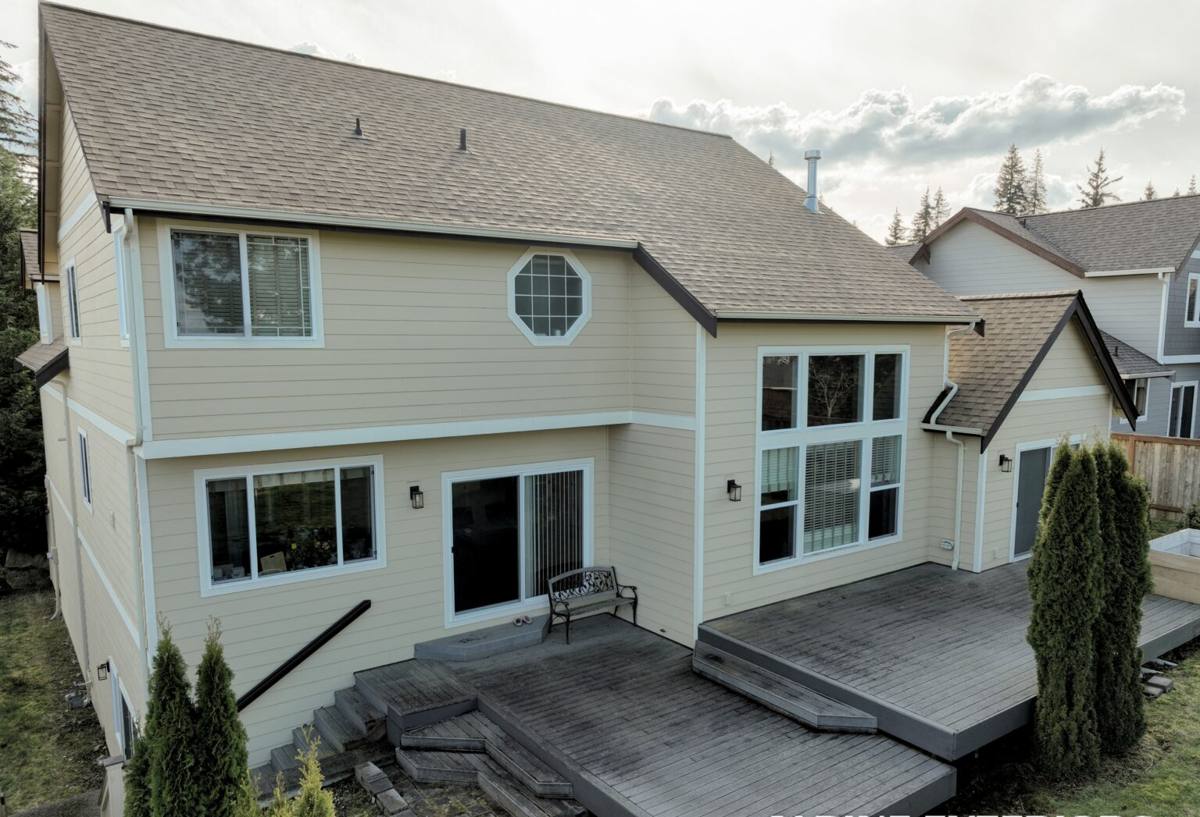
What Local Conditions Actually Do to a Deck
The combination of salt-tinged coastal air moving inland, consistent driving rain off the foothills, and a moss season that can run from early fall through late spring puts three separate kinds of stress on outdoor structures:
- Moisture intrusion — water finding its way into end grain, fastener holes, and any gap where boards meet framing.
- Surface growth — moss, algae, and mildew that thrive on shaded, slow-drying surfaces, especially decks tucked under trees or against north-facing walls.
- Metal fatigue — corrosion on fasteners, brackets, and flashing that aren't rated for damp, salt-influenced air over the long haul.
Untreated or poorly protected wood decking loses that fight over time — cupping, splintering, and soft spots show up around fastener heads and butt joints first. Composite boards resist water absorption and won't rot the way wood fibers do, which is a real advantage here. But composite decking still depends on a correctly built substructure and proper drainage underneath — the material doesn't fix a bad frame.
What a Correct Composite Deck Build Involves
Substructure and Ledger Attachment
Everything starts with what's underneath the boards. A ledger board attached to the house needs proper flashing so water sheds away from the wall rather than into it — this is one of the most common failure points on older decks we've replaced. Joists and beams need to be sized and spaced correctly for the composite product being used, since composite boards often have different span ratings than lumber.
Joist Protection and Airflow
In a climate this wet, we protect exposed joist tops with a moisture barrier and leave real airflow underneath the deck. Decks built low to the ground or against a foundation with poor ventilation stay damp longer after every rain, which is exactly the environment moss and mildew want. Where clearance is tight, that's something we flag and address during planning rather than after the boards are down.
Fastening and Hidden Hardware
Hidden fastener systems keep the deck surface clean and, just as important, don't puncture the board's cap layer the way face-screwing can — every puncture is a spot water can start working its way in. We use fasteners and structural hardware rated for exterior, high-moisture use, not general-purpose hardware that will corrode faster than the decking around it.
Drainage and Slope
Boards need a slight, consistent slope away from the house so water doesn't pool against the ledger or in low spots on the deck surface. Standing water is what accelerates moss growth on any decking material, composite included.
Moss, Algae, and the Long Wet Season
Composite decking won't rot from moisture the way wood does, but it isn't maintenance-free in a climate like this. Moss and algae can still grow on the surface of any decking material if it stays damp and shaded long enough — the difference is that composite handles routine cleaning without the wear and re-sealing that wood demands. A build with good airflow underneath, proper drainage, and adequate gapping between boards will need far less scrubbing over the years than one that traps moisture.
Board profile matters here too. Grooved-edge boards paired with hidden fastener clips leave a small gap between boards that helps water drain through rather than sit on the surface — useful in a place where it can rain for days at a stretch. Solid, square-edge boards look a bit more finished but shed water more slowly, which is worth weighing for shaded Laurel lots.
Composite vs. Wood vs. PVC: What Actually Holds Up Here
| Factor | Composite | Cedar / Pressure-Treated Wood | PVC / Vinyl |
|---|---|---|---|
| Moisture resistance | Strong — resists rot and swelling | Moderate — depends on sealing upkeep | Strong — non-absorbent |
| Moss/algae resistance | Good with proper drainage/airflow | Weak — porous surface holds growth | Good — very smooth surface |
| Ongoing maintenance | Low — occasional cleaning | High — annual sealing/staining | Low — occasional cleaning |
| Typical lifespan | Long, with quality installation | Shorter without consistent upkeep | Long |
| Relative upfront cost | Medium-High | Low-Medium | High |
| Look and feel underfoot | Wood-grain texture, warmer feel | Natural wood grain | Very smooth, plastic feel |
Composite lands in the middle for most Laurel homeowners: it costs more upfront than treated lumber but far less to maintain over the life of the deck, and it handles this region's damp, mossy conditions noticeably better than untreated wood without the fully synthetic feel of PVC.
How We Approach a Composite Deck Project in Laurel
Site Assessment First
Before we talk board color, we look at sun exposure, tree cover, existing drainage patterns, and how the ground slopes away from the house. A shaded, low-lying lot needs a different airflow and drainage plan than an open, sun-exposed one, even with the same decking product.
Structural Check
If we're replacing an existing deck, we check the ledger attachment, footings, and framing before assuming they're reusable. Reusing a compromised substructure under new composite boards just moves the problem underneath a nicer surface.
Product Selection
We walk through board profile, cap type, and color options with an eye toward how each will perform on your specific lot — not just what looks good in a sample.
Installation and Finish Details
Fascia, stair stringers, railings, and post caps get the same moisture-conscious detailing as the deck surface itself, since these are common spots for water to collect if they're rushed.
Problems We Commonly Find on Existing Decks in the Area
- Missing or undersized ledger flashing, letting water track into the house rim joist
- Joists set too close to the ground with little to no airflow underneath
- Face-screwed boards with failed or corroded fastener heads
- Moss buildup concentrated in shaded corners with poor drainage
- Railings and stair connections that were never properly flashed or sealed
Most of these trace back to a build that didn't account for this area's wet season, not a flaw in the decking material itself.
Why a Crew That Already Works in Laurel Matters
A contractor who works this part of Whatcom County regularly already knows which lots hold water, which areas stay shaded longest through the moss season, and what kind of substructure protection actually holds up here versus what looks fine on paper. That local knowledge shows up in decisions you might not think to ask about — joist spacing for a particular composite product, how much slope to build in on a low lot, or where extra flashing is worth the time. It also means someone who's easy to reach if a warranty question comes up two or three years down the road, not a crew that was passing through for one job.
Planning Your Composite Deck Project
Before you get quotes, it helps to have a clear picture of what will actually drive cost and timeline on your project:
- Total deck size and shape (simple rectangle vs. multiple levels or angles)
- Condition of any existing structure being replaced
- Ledger attachment and flashing needs at the house
- Railing style and material (composite, metal, or cable)
- Stairs, landings, or grade changes on the lot
- Site access for equipment and material delivery
- Any permit requirements through the county for the size and height involved
Every one of these affects both price and how long the job takes, which is why an accurate quote starts with an actual site visit rather than a size and a price per square foot over the phone.
Let's Look at Your Deck
If you're planning a new composite deck in Laurel or replacing one that's showing its age, we're glad to come take a look, walk the site, and put together a straightforward, no-pressure estimate. Use the form below to get started.