 Sumas Roofing
 Deck Repair Built for Laurel's Weather, Not a Generic Climate
Laurel sits in the part of Whatcom County where damp air, long wet stretches, and shaded tree cover work on a deck year-round, not just during a couple of storms. A deck here doesn't fail because of one bad winter. It fails slowly, from moisture that never fully dries out between rains, from moss and algae that hold water against wood and fasteners, and from salt-tinged coastal air that finds its way inland and speeds up corrosion on anything metal. By the time a deck looks obviously bad — soft boards, rust streaks, a railing that wiggles — the damage underneath is usually further along than it appears on the surface.
That's the case for repairing a deck properly instead of patching the parts you can see. A board replacement that ignores a rotting joist underneath, or a new coat of stain over hardware that's already corroding, buys a homeowner a season or two, not years. We repair decks in Laurel with that in mind: fix what's actually wrong, not just what shows.
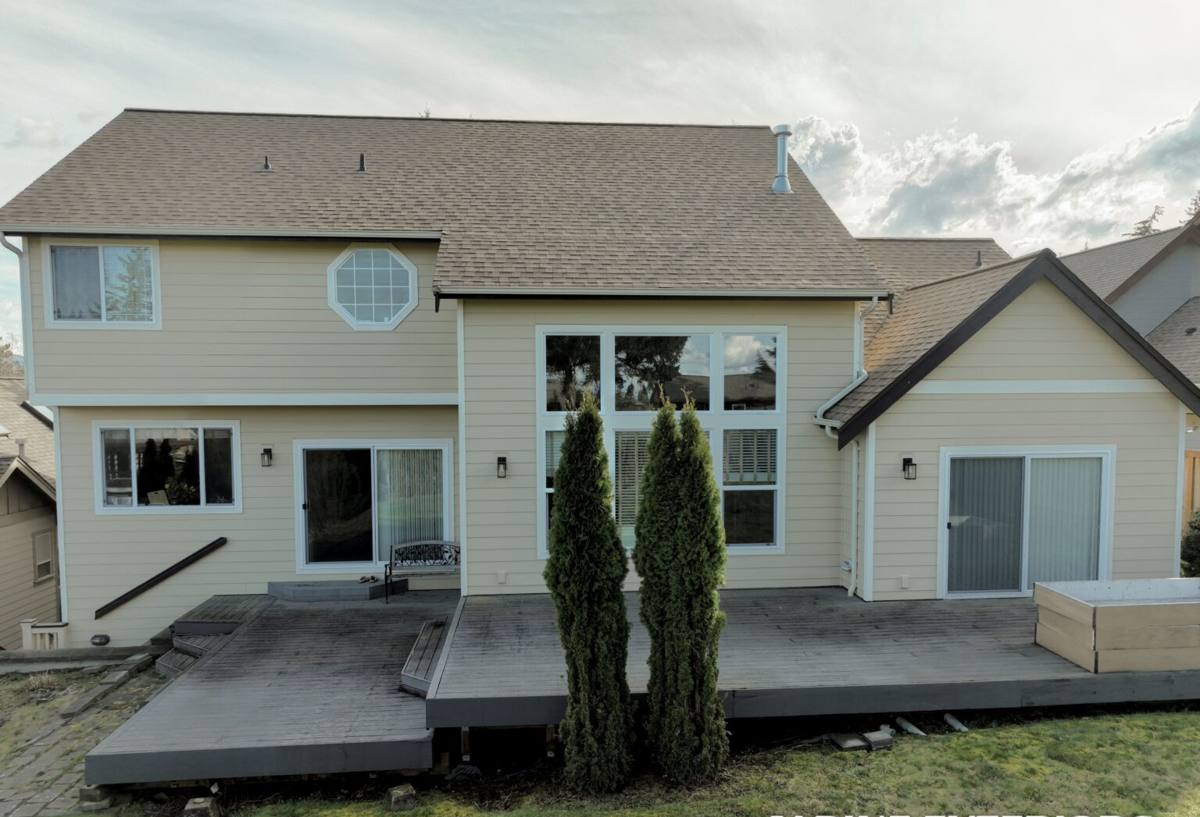
Why Local Decks Wear Out the Way They Do
Three things drive most of the deck repair calls we get in this part of Whatcom County:
Driving rain and poor drainage
Rain that comes in sideways gets under railings, behind ledger boards, and into any gap where two pieces of wood meet. If a deck wasn't built with flashing and slope to shed that water, it collects in the joints instead of running off, and that's where rot starts.
A long moss season
Moss and algae thrive in the shaded, damp stretches common to this area, and they don't just look bad — they hold moisture against the deck surface long after the rain has stopped, which keeps wood wet and slick far longer than an open, sun-exposed deck would stay.
Salt air and metal fatigue
Even away from the immediate coastline, salt-carrying air moves through Whatcom County and accelerates corrosion on fasteners, brackets, and railing hardware. Once a nail, screw, or joist hanger starts rusting, it loses grip strength long before it looks obviously failed, which is part of why a deck can feel solid right up until it isn't.
Signs a Laurel Deck Needs Repair, Not Just Cleaning
A pressure wash and a fresh coat of stain can make a tired deck look better without addressing anything structural. Here's how to tell the difference between a deck that needs maintenance and one that needs actual repair:
- Boards that flex, bounce, or feel soft underfoot, especially near the house or around posts
- Rust streaks running down from screw heads, brackets, or railing hardware
- Gaps opening up where the deck meets the house, or where railings meet posts
- Wood that's discolored gray or black in patches rather than evenly weathered
- Persistent moss or algae growth that comes back within weeks of cleaning
- A ledger board area that feels damp or looks stained where the deck attaches to the house
- Loose or wobbly railings and stair stringers
Any one of these on its own might be minor. Two or three together usually mean moisture has been working on the structure for a while, and it's worth having someone actually get underneath the deck to look, not just walk the surface.
What a Correct Deck Repair Actually Involves
A repair that holds up in this climate has to deal with what's underneath the boards, not just the boards themselves. We treat deck repair as a structural job first and a cosmetic one second.
Structural inspection
We check the ledger board connection to the house (a common failure point where water intrusion goes unnoticed for years), the condition of joists and beams, post bases where they meet concrete or grade, and every load-bearing connection point. Soft or dark wood, rust bleed, and give underfoot all get investigated, not just noted.
Fastener and hardware condition
Given how hard local air and moisture are on metal, we look closely at joist hangers, structural screws, and bolts. Corroded hardware gets replaced with fasteners rated for exterior and coastal-influenced exposure — this is one of the most overlooked parts of a deck repair, because the hardware is usually hidden, but it's what's actually holding the deck together.
Water management
Flashing at the ledger board, proper gaps between deck boards for drainage, and grading that directs water away from posts all matter more here than in a drier climate. A repair that replaces rotted wood without correcting the water path that caused the rot will fail again in the same spot.
Board and railing repair
Once the structure underneath is sound, we address the visible deck boards, stair treads, and railings — replacing what's damaged, resecuring what's loose, and matching new material to existing decking as closely as practical.
Repair, Board Replacement, or Full Rebuild: Sorting Out the Right Scope
Not every deck needs the same level of work, and part of an honest inspection is telling a homeowner when a smaller repair is genuinely enough versus when it's a false economy. The table below covers the general factors that push a project toward one option or another.
| Situation | Repair Scope | Key Factor |
|---|---|---|
| Surface wear, a few damaged boards, sound framing underneath | Spot board replacement + hardware check | Framing and ledger board test solid on inspection |
| Soft spots near the house, rust bleed, isolated joist damage | Targeted structural repair | Damage limited to specific areas rather than spread across the frame |
| Widespread rot, multiple failed connections, persistent moisture problems | Full or partial rebuild | Cost of repeated repairs starts to approach rebuild cost |
| Deck is structurally sound but hardware is corroded throughout | Hardware replacement pass | Wood is fine; metal is the weak link |
Cost ranges vary a lot based on deck size, how much of the substructure is affected, and whether decking material needs to be sourced to match existing boards, so we don't quote sight unseen. What we can say honestly: a small, caught-early repair generally costs a fraction of what it costs to fix the same problem after it's spread to the framing, which is the main reason we recommend addressing soft spots and rust as soon as they're noticed rather than waiting for a slow season.
How Our Deck Repair Process Works
- On-site inspection. We walk the full deck surface and get underneath it wherever access allows, checking ledger board, joists, posts, and hardware, not just what's visible from the top.
- Straight assessment. We tell the homeowner what we found in plain terms — what's failing, what's still sound, and what the realistic options are, including if the honest answer is "this doesn't need much."
- Written scope and estimate. Before any work starts, the homeowner gets a clear description of what will be repaired, what materials and hardware will be used, and what it costs.
- Repair work. We address the structure first — framing, fasteners, water management — then move to boards, stairs, and railings.
- Final check. We test the repaired areas for solidity (no bounce, no give, hardware secure) before calling the job done.
Materials and Hardware: What We Use and Why
Material choice matters more in a climate that stays damp for long stretches. We generally recommend:
- Pressure-treated lumber for structural framing, joists, and anything in ground contact or close to it — rated for the moisture exposure this area sees
- Stainless steel or hot-dip galvanized fasteners and hardware rather than standard coated screws, since salt-influenced air corrodes lower-grade metal faster than most homeowners expect
- Composite or capped decking as an option where a homeowner wants to reduce future maintenance, weighed honestly against its higher upfront cost and the fact that the substructure underneath still needs the same moisture protection regardless of what's on top
- Proper flashing material at the ledger board connection — this single detail prevents more hidden rot than almost anything else on a deck
We don't push a specific decking brand as the only right answer. The honest trade-off is that traditional wood decking costs less upfront but needs more regular maintenance (cleaning, staining, and rechecking fasteners), while composite materials cost more initially and largely eliminate staining, but still depend entirely on the wood framing and hardware underneath being done right. Either choice fails the same way if the substructure and water management are skipped.
Living With Moss, Algae, and Long Wet Seasons
Even a correctly repaired deck needs some ongoing attention in this climate. A few habits go a long way toward keeping a repair from turning back into a repair job in a few years:
- Sweep leaves and debris off the deck surface regularly, especially in shaded areas where moisture sits longest
- Clean moss and algae off before it spreads, rather than waiting for an annual deep clean
- Check gaps between boards periodically to make sure they haven't clogged with debris that blocks drainage
- Look at the ledger board area and any visible hardware once or twice a year for early rust or staining
- Reapply sealant or stain on wood decking on the schedule the product calls for — skipping a cycle in this climate matters more than it would somewhere drier
None of this replaces a proper repair when something's actually failing, but it does stretch the life of a repair considerably, and it's the kind of low-cost habit that saves real money over the years a deck is in use.
Why a Crew That Already Works in Laurel Makes a Difference
Deck problems here follow patterns — where water tends to collect, which connection points corrode first, how far moss damage typically extends before it's visible from the surface. A crew that regularly works decks and roofs around Sumas and the surrounding Whatcom County communities has already seen these patterns repeat across different homes, which means less time spent guessing and more time spent fixing the actual problem. It also means showing up with the right hardware and materials on hand for this climate, rather than defaulting to whatever's standard in a drier region's building supply catalog.
Just as important, working locally means being available if a repair needs a follow-up look, or if a homeowner has a question a year later about how a repaired section is holding up. That kind of accountability is harder to get from a crew that's just passing through the area for one job.
Questions Worth Asking Before You Hire Anyone for Deck Repair
Whoever you hire, a few questions separate a thorough job from a surface-level patch:
- Will you inspect underneath the deck, not just the visible boards and railings?
- What hardware and fasteners do you use, and are they rated for this area's moisture and air conditions?
- Will the ledger board and flashing be checked and corrected if needed, not just left as-is?
- Do I get a written scope before work starts, so I know exactly what's being repaired?
- What's the plan if you find more damage once you open things up?
A contractor who answers these clearly and specifically, rather than with vague reassurance, is usually one who's done this kind of repair enough times to know what actually matters.
If you've got a deck in Laurel that's showing soft spots, rust, stubborn moss, or just doesn't feel as solid as it used to, we're glad to come take a look. The estimate is free, there's no pressure to move forward, and you'll get a straight answer about what's actually going on underneath — use the form below to get started.