 Sumas Roofing
 Lynden's Climate Is Rough on Siding — Here's Why
Lynden sits in Whatcom County's northern lowlands, close enough to the Salish Sea and the marine weather patterns that roll through it that homes here deal with a real combination of stressors: salt-tinged air, long stretches of driving rain, and a moss season that can run from late fall well into spring. None of that is exotic weather — it's just relentless. Siding on a Lynden home isn't dealing with one hard freeze a year or one big storm; it's dealing with months of damp, shaded, low-airflow conditions that give moisture, mildew, and moss every chance to take hold.
That matters because siding failure in this part of Washington is rarely dramatic. It's slow — a swelling seam here, a soft spot behind a downspout there, moss creeping up from the ground line — and by the time it's obvious, the substrate underneath has usually been wet for a while. The right siding product and the right installation details are what keep that slow failure from ever starting.
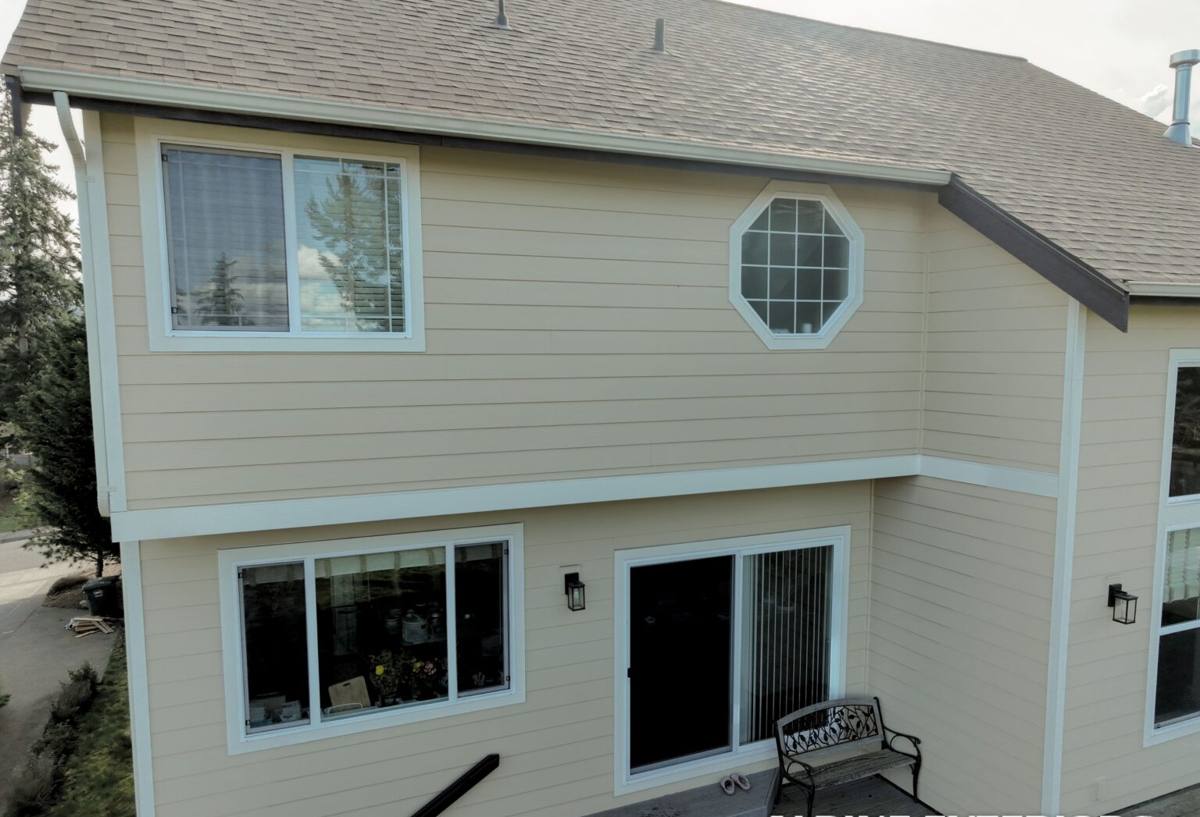
What Lynden Homes Actually Need From Their Siding
Moisture Management, Not Just a Pretty Face
Any siding product can look good on install day. The question that matters in this climate is what happens to the wall assembly behind it during a wet November through a wet April. Siding needs to shed water fast, resist wicking at the bottom edge, and allow whatever moisture does get behind it to dry out rather than sit.
Moss and Mildew Resistance
Whatcom County's moss season isn't limited to roofs. North-facing walls, siding under overhangs, and anything close to landscaping or tree cover will grow moss and algae if the material and the finish don't resist it. A siding surface that stays damp for days at a time needs a factory finish that doesn't feed organic growth and doesn't need repainting every few years just to look presentable.
Salt-Air Tolerance
Airborne salt accelerates the breakdown of a lot of building materials, especially anything that relies on paint film alone for protection. Fasteners, trim, and the siding substrate itself all need to be able to take that exposure over decades, not just survive the first few winters.
Why We Install Only James Hardie Fiber Cement
We made a decision a while back to standardize on James Hardie fiber cement siding for every job we take on, including here in Lynden. It's not the only siding product on the market, and other contractors will sell you alternatives — vinyl, engineered wood, other fiber cement brands. We don't install those, and we're upfront about why: fiber cement from Hardie is non-combustible, dimensionally stable in wet climates, and backed by a factory-applied ColorPlus finish that's built to handle exactly the kind of damp, low-sun exposure Lynden gets for a good chunk of the year. We'd rather install one product very well than install several products adequately.
Hardie also builds its HZ5 product line specifically for climates like ours — engineered for moisture and freeze-thaw cycling rather than for a one-size-fits-all national spec. That's the version we spec for Lynden homes.
What a Correct Fiber Cement Installation Involves
Fiber cement siding is only as good as the details behind it. This is where a lot of installations quietly go wrong — not because the product failed, but because the install skipped steps that don't show up until years later.
- Proper clearance between the siding's bottom edge and grade, decking, or hardscape — typically a minimum gap to keep splashback and standing water off the material
- A drainage plane or rain screen behind the siding so any moisture that gets behind the cladding has somewhere to go
- Correct flashing at every window, door, and roof-to-wall intersection, installed in the right shingle-lap order
- Factory-primed or field-primed cut edges — every field cut needs to be sealed before it goes on the wall
- Fastener placement and spacing that matches Hardie's published specs, not a generic "close enough" pattern
- Caulking only where Hardie's install guide calls for it — over-caulking traps moisture just as badly as under-caulking lets it in
Skip any one of these and the siding can still look fine on install day. The problems show up two, five, or ten winters later, usually as rot or staining that's much more expensive to fix than it would have been to install correctly the first time.
Our Process on a Lynden Job
1. On-Site Assessment
We start by walking the exterior and looking at what's actually happening on the walls — moisture staining, moss buildup, soft trim, failed caulk joints, and how the current siding is performing against sun exposure and prevailing wind and rain direction on that specific lot.
2. Product and Color Selection
We help homeowners choose the right Hardie plank profile, exposure width, and ColorPlus color for the home's style and the surrounding neighborhood. For most Lynden homes we're speccing HZ5 boards given the moisture exposure.
3. Prep and Removal
Old siding comes off, and we inspect the sheathing and framing underneath before anything new goes up. Any water damage found at this stage gets addressed and repaired — not covered over.
4. Weather Barrier and Flashing
This is the step that determines how the wall performs for the next 30+ years. We install the drainage plane, window and door flashing, and all transition flashing before a single piece of siding goes on.
5. Installation
Boards go up to Hardie's fastening and clearance specs, cut edges get primed on-site, and every joint and penetration is treated the way the manufacturer's install guide requires.
6. Final Walkthrough
We walk the finished job with the homeowner, check caulk lines, trim, and touch-up work, and go over what basic maintenance (if any) looks like going forward.
Product Options for Lynden Homes
| Product | Best For | Notes for This Climate |
|---|---|---|
| HardiePlank Lap Siding (HZ5) | Most home styles, standard replacement jobs | Widest color and exposure options; our default recommendation |
| HardieShingle | Craftsman and cottage-style homes, accent gables | Good moss-resistant alternative to real wood shingle in shaded areas |
| HardiePanel | Modern builds, board-and-batten look | Fewer horizontal joints, which reduces potential water entry points |
| HardieTrim | Window and door surrounds, corner boards | Pairs with any of the above; avoids the rot risk of painted wood trim |
What Fiber Cement Siding Costs to Install
| Factor | How It Affects Price |
|---|---|
| Home size and wall complexity | More corners, gables, and dormers mean more cutting, flashing, and labor time |
| Removal and repair | Rotted sheathing or framing found during tear-off adds cost but has to be fixed properly |
| Product line and profile | HZ5 boards, wider exposures, and premium ColorPlus finishes run a bit higher than base options |
| Trim and accent work | Shingle accents, board-and-batten sections, and custom trim add labor beyond standard lap siding |
| Site access | Steep lots, tight setbacks, or limited driveway access can add setup time |
Broad, honest ranges vary a lot based on these factors, which is why we walk every home in person before quoting rather than giving a number over the phone.
Why Hiring a Crew That Already Works Lynden Matters
Fiber cement installation isn't complicated in theory, but getting the moisture details right in a climate like this takes repetition. A crew that's installed Hardie siding across Whatcom County knows what a Lynden roofline typically needs for flashing, how much clearance a given lot's drainage calls for, and what kind of moss and mildew exposure to plan around before it becomes a problem. That local pattern recognition is worth more than a generic install checklist — it's the difference between siding that looks good for a season and siding that performs for decades.
Maintenance Once It's Installed
One of the practical advantages of Hardie fiber cement with a factory ColorPlus finish is how little upkeep it needs compared to painted wood or vinyl in a wet, mossy climate. It doesn't need repainting on the schedule that wood does, and the substrate itself doesn't feed moss growth the way bare wood can. A rinse-down once or twice a year to clear off any moss or grime buildup, and keeping gutters and downspouts clear so water isn't dumping directly onto a wall section, covers most of what a Lynden homeowner needs to do.
If your Lynden home's siding is showing moss, staining, or soft spots, or you're planning a replacement and want it done with the moisture details this climate actually requires, we're happy to walk the property and give you a free, no-pressure estimate — no obligation, just a straight look at what your home needs.