 Sumas Roofing
 Siding Replacement Built for Nooksack's Weather, Not Just Its Look
Nooksack sits in a part of Whatcom County where the exterior of a house works overtime. Between the driving rain that blows in off the valley, the salt-laden air that moves through this corner of the Pacific Northwest, and a moss season that can stretch from fall through spring, siding here isn't just cosmetic — it's the first and most important barrier protecting the framing, sheathing, and insulation behind it. When that barrier fails quietly, homeowners usually don't find out until there's a soft spot on the wall or a mold smell in a closet that shares an exterior wall.
We replace siding on Nooksack-area homes with one product line: James Hardie fiber cement. This page walks through what local homes actually need from a siding system, what a correct replacement job looks like, and why we don't cut corners by offering alternatives that don't hold up as well in this climate.
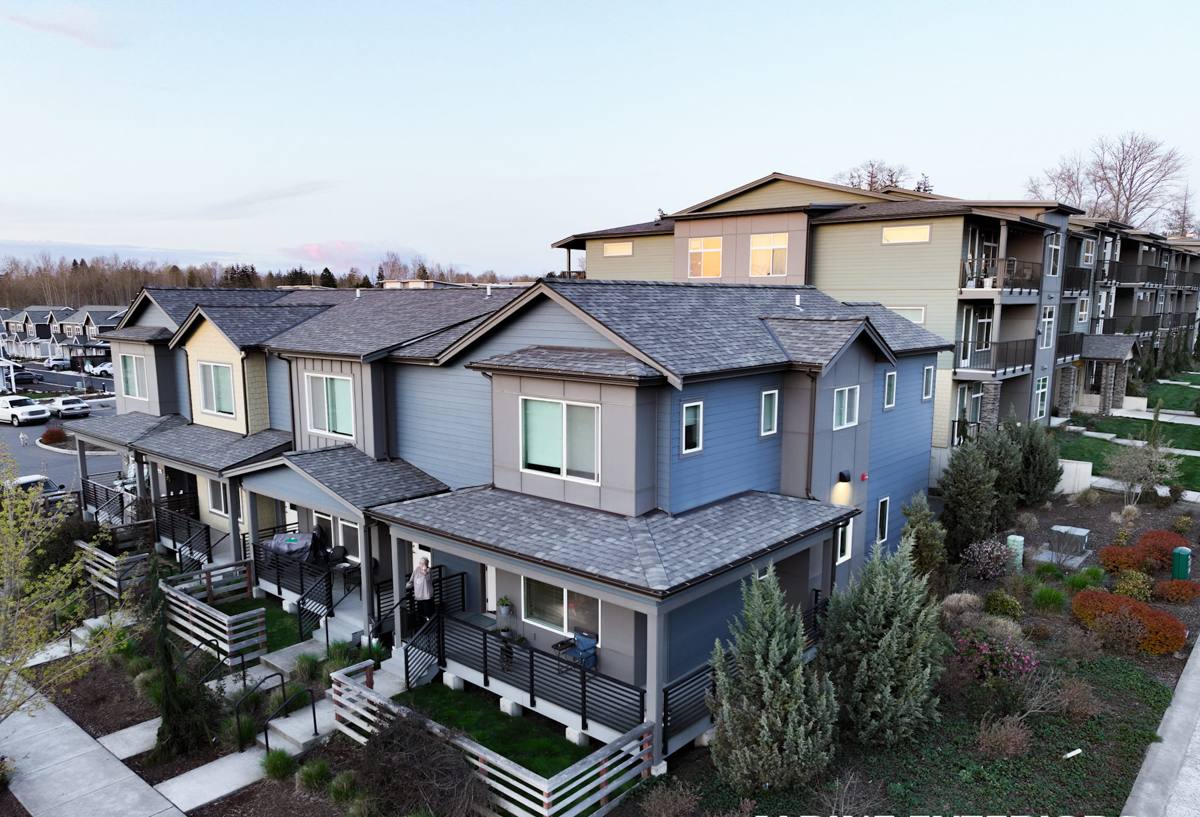
Signs a Nooksack Home Needs Siding Replacement, Not Just Repair
Not every siding problem calls for a full tear-off. But in this climate, several signs point toward replacement rather than patchwork:
- Soft, spongy, or delaminating boards — especially at the bottom courses, corners, and around windows where water collects
- Persistent moss or algae staining that comes back within weeks of cleaning, even after pressure washing
- Visible gaps, warping, or bowing panels, common with wood and engineered wood products that have absorbed moisture over multiple wet seasons
- Paint that won't hold — chalking, peeling, or blistering within a year or two of a repaint, which usually means moisture is moving through the siding itself
- Rising energy bills alongside drafty rooms, which can point to a failing weather barrier behind the cladding
If you're seeing one or two of these, a targeted repair might buy time. If you're seeing several at once, or the siding is original to a home built more than 20-25 years ago, replacement is almost always the more cost-effective path — repeated patch jobs on failing siding rarely pay for themselves.
Why James Hardie Fiber Cement — And Why We Don't Install Alternatives
We get asked regularly why we don't offer vinyl, LP SmartSide, cedar, or other fiber cement brands. It's a fair question, and the honest answer is that we've standardized on James Hardie because of how it performs specifically in conditions like the ones Nooksack sees year-round.
What each alternative gets right — and where it struggles here
Vinyl siding is inexpensive and low-maintenance in mild, dry climates, but it's a thin, flexible material that can crack in cold snaps, warp under direct heat, and never fully seals at the seams — which matters when driving rain is a regular feature of the local weather, not an occasional event. LP SmartSide and other engineered wood products use a wood-strand core, and while the technology has improved, any wood-based product remains vulnerable at cut edges and fastener points if the factory coating is ever breached — a real risk in a place where moss and standing moisture are constant companions. Cedar and primed spruce look good on day one, but they demand ongoing sealing, staining, or painting to keep water out, and in a long, wet moss season that maintenance schedule gets expensive and easy to fall behind on. Other fiber cement brands are a closer comparison to Hardie, but we've found the factory-baked ColorPlus finish, the climate-specific HZ product engineering, and the warranty backing on Hardie to be the most consistent match for what Pacific Northwest exteriors need.
Why fiber cement matters in this specific climate
James Hardie siding is non-combustible fiber cement — a mix of cement, sand, and cellulose fiber engineered to resist swelling, cracking, and rot from repeated wetting and drying cycles. That matters directly here: a Nooksack exterior isn't dealing with one hard freeze a year, it's dealing with months of damp, moss-friendly conditions where any material that absorbs water is going to lose the fight eventually. Hardie's HZ5 product line is engineered specifically for climates with the freeze-thaw cycles and moisture exposure the Pacific Northwest sees, and the factory ColorPlus finish is baked on under controlled conditions, which holds color and resists the chalking and peeling that field-applied paint jobs are prone to.
Comparing Siding Options for a Whatcom County Home
| Material | Moisture Resistance | Maintenance Needs | Typical Lifespan Here |
|---|---|---|---|
| James Hardie Fiber Cement | Excellent — won't swell or rot | Occasional wash; factory finish holds up | 30+ years with proper install |
| Vinyl | Fair — seams and edges are vulnerable | Low, but cracks/fades over time | 15-25 years |
| Engineered Wood (LP SmartSide) | Good if intact, poor if coating is breached | Moderate — edge sealing critical | 20-30 years, install-dependent |
| Cedar / Primed Wood | Poor without upkeep | High — regular staining/painting | 15-25 years with diligent care |
These are general ranges, not guarantees — actual lifespan on any product depends heavily on installation quality, site exposure, and upkeep. But the pattern holds across the industry: products that rely on a surface coating to keep water out only perform as well as that coating is maintained, and in a climate with this much sustained moisture, that's a real ongoing cost to factor in.
What a Correct Siding Replacement Job Actually Involves
Swapping old siding for new isn't just a facelift — most of what determines whether the job lasts happens underneath the boards, in parts of the job a homeowner never sees once it's finished.
Tear-off and inspection
We remove the existing siding down to the sheathing and inspect for hidden damage — rot, mold, or compromised framing that often only becomes visible once the old cladding is off. In a moss-heavy climate like this one, it's not unusual to find moisture issues behind siding that looked fine from the street.
Weather barrier and flashing
A correctly installed weather-resistive barrier, properly lapped and taped, is what actually keeps bulk water out of the wall assembly — the siding itself is the second line of defense, not the first. Flashing at windows, doors, and any roof-to-wall intersections has to be detailed correctly, since these transition points are where the majority of siding failures actually start.
Proper fastening and clearances
James Hardie has specific fastening patterns, nail placement, and clearance requirements — including minimum gaps at grade, roof lines, and decks — that are engineered into the manufacturer's installation instructions. Skipping these details is one of the most common ways siding jobs fail early, and it's also grounds for a voided warranty, regardless of how good the underlying product is.
Trim, caulking, and finish detail
Corners, trim boards, and joints get sealed correctly the first time. Rushed caulking work is one of the most common weak points we find when we're called out to look at a siding job someone else did.
Our Siding Replacement Process for Nooksack Homeowners
- On-site inspection and honest assessment of whether you need full replacement or targeted repair
- Written estimate with product line, color, and scope clearly spelled out — no vague allowances
- Tear-off, sheathing inspection, and any needed repair to framing or sheathing before new material goes on
- Weather barrier and flashing installed to manufacturer spec at every window, door, and transition
- James Hardie panels or lap siding installed per fastening and clearance requirements
- Final walkthrough with the homeowner before we consider the job done
What to Check Before Hiring Anyone for Siding Work
Whatcom County has no shortage of contractors willing to bid siding jobs, and not all of them will detail the moisture-management work that actually determines whether the job lasts. Before hiring, it's worth confirming:
- Are they licensed and insured in Washington State, and will they provide proof without hesitation?
- Do they install to the manufacturer's written specifications, including fastening pattern and clearances — not just "however it's always been done"?
- Does the estimate specify the exact product line, not just "fiber cement" or "Hardie-style"?
- Do they explain the weather barrier and flashing plan, or only talk about the visible siding?
- Are they familiar with how local moss, rain exposure, and seasonal moisture affect installation choices in this area?
- Is the warranty — both material and labor — explained in writing, not just verbally?
Maintaining Hardie Siding Once It's Installed
One of the practical advantages of fiber cement in this climate is how little upkeep it demands compared to wood or vinyl. A rinse with a garden hose once or twice a year removes most moss and pollen buildup before it becomes a stain. Because the ColorPlus finish is factory-applied, most homeowners never repaint — touch-up paint matched to the finish handles the rare nick or scratch. Keeping gutters clear and vegetation trimmed back from exterior walls goes a long way toward keeping moss and moisture from building up against the siding in the first place, regardless of the material.
Why It Matters That We Already Work in Nooksack
A crew that already works this corner of Whatcom County knows what this climate does to an exterior over a five, ten, or twenty-year stretch — not just what a product spec sheet says on paper. That familiarity shows up in small decisions: where extra flashing attention pays off, how much clearance to leave at grade given the local rain patterns, and which details matter most for a home that's going to sit through many more wet seasons ahead. We install one siding system because we've seen what holds up here and what doesn't, and we'd rather stand behind a smaller, better-vetted product line than offer a menu of options we don't fully trust in this weather.
If your Nooksack home's siding is showing its age, we're happy to take a look and give you a straight answer — replacement, repair, or just keep an eye on it for now. Reach out for a free, no-pressure estimate using the form below.