 Sumas Roofing
 Bellingham's Siding Problem Isn't Cosmetic
Most homeowners start looking into siding replacement because something looks bad — streaking, peeling paint, a greenish cast on the north wall. In Bellingham, those cosmetic signs are almost always a symptom of something underneath the surface. This part of Whatcom County sits close enough to Bellingham Bay to get salt-laden air, close enough to the mountains to get heavy driving rain off the water, and far enough north that siding stays damp for long stretches of the year. Siding here isn't just decoration; it's the one layer standing between that weather and the sheathing, framing, and insulation behind it. When it fails, it usually fails quietly, and the damage is already inside the wall by the time it shows on the outside.
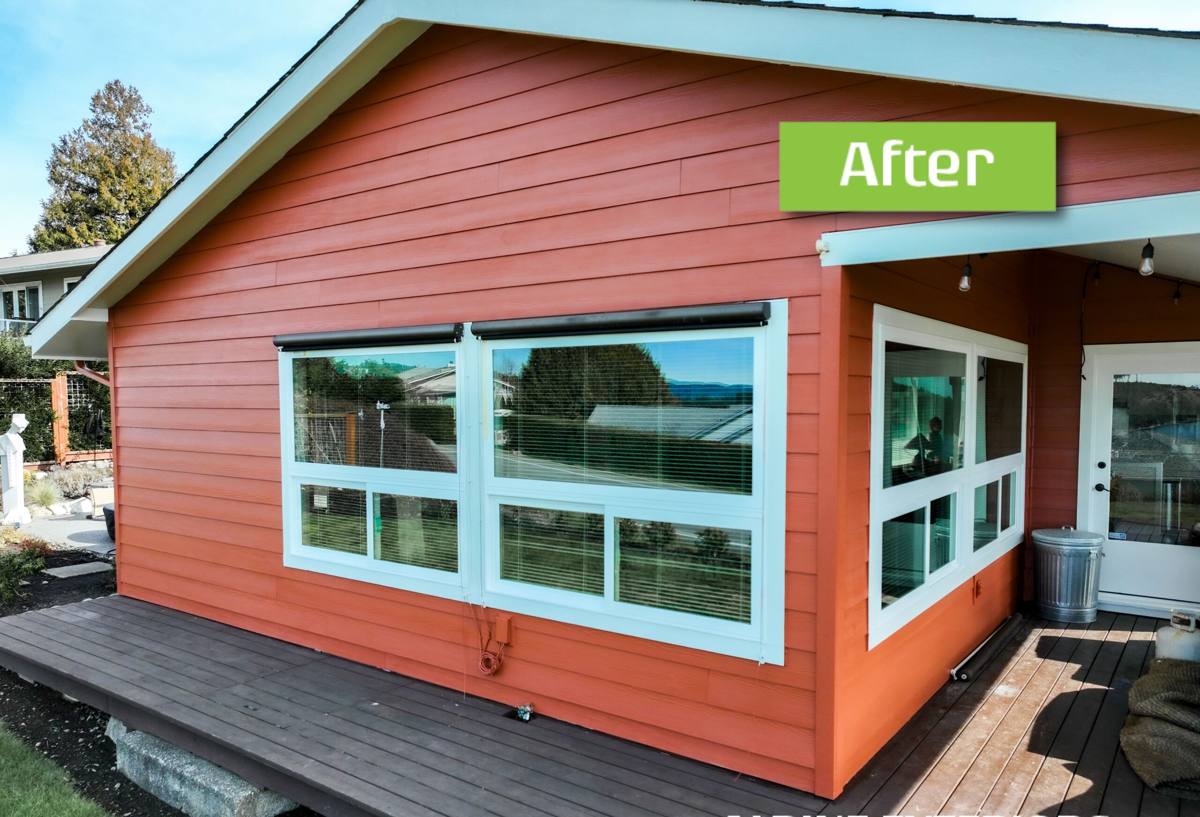
What Bellingham's Climate Actually Does to Siding
Salt Air
Bellingham isn't a beachfront town, but proximity to the bay still means airborne salt reaches homes, especially on west- and south-facing walls that catch prevailing wind and weather. Salt accelerates corrosion on fasteners, trim, and any metal flashing, and it works into porous or poorly sealed siding materials over time. A product that isn't dimensionally stable or properly sealed at the factory will pick up that moisture and salt faster than one engineered for a coastal-adjacent climate.
Driving Rain
Rain in this part of Washington doesn't usually fall straight down — wind pushes it sideways into wall assemblies, which is why lap siding, flashing details, and caulking joints matter so much more here than in drier climates. A siding system with the wrong overlap, the wrong fastener pattern, or gaps at trim and window returns will let wind-driven rain behind the cladding, where it has nowhere to go but into the sheathing.
A Long Moss and Mildew Season
Whatcom County's mild, wet stretch runs long — often eight months or more of conditions that favor moss, algae, and mildew growth on anything that stays damp. North-facing walls, areas shaded by trees, and low-clearance siding near grade are the first to show green or black staining. That staining isn't just an appearance issue; sustained moisture retention at the siding surface is what eventually leads to substrate rot underneath wood-based products.
Signs a Bellingham Home Needs Replacement, Not Another Repair
Not every siding problem calls for a full tear-off. But in this climate, patch jobs on failing siding often buy a homeowner one more wet season, not a permanent fix. Signs it's time to talk replacement instead of repair:
- Soft, spongy, or crumbling spots when you press on the siding, especially near the bottom courses
- Paint that won't hold — repeated peeling or bubbling within a couple of years of repainting
- Persistent moss or algae staining that comes back within a season of cleaning
- Visible warping, cupping, or separation at seams and butt joints
- Rising interior signs — musty smell, peeling interior paint, or staining near exterior walls
- Siding that's original to a home built more than 20-25 years ago, particularly wood or older composite products
What a Correct Siding Replacement Job Actually Involves
The siding itself only does part of the work — the assembly behind it matters just as much, especially in a climate that stays wet this long. A proper replacement in Bellingham should include:
- Full tear-off of the old siding, not installation over existing material
- Inspection of the sheathing underneath for rot or moisture damage, with repairs made before anything new goes up
- A continuous weather-resistant barrier installed correctly, lapped shingle-style so water drains down and out
- Proper flashing at every window, door, and roofline intersection — the places wind-driven rain finds first
- Correct fastener type, spacing, and depth for the specific siding product, not a generalized fastening pattern
- Proper clearance from grade, decks, and roof lines so the bottom edge of the siding isn't sitting in standing moisture
Skipping any one of these steps is how a siding job that looks fine on installation day fails within a few years — and it's often invisible until the damage is already done.
Why Material Choice Matters More Here Than in Drier Climates
In a dry inland climate, the gap between siding products is mostly about looks and price. In a climate like Bellingham's, it's about how each product actually handles sustained moisture exposure over years of use.
| Material | Moisture Behavior | Typical Maintenance | Factory Finish |
|---|---|---|---|
| Vinyl | Doesn't rot, but warps and becomes brittle with temperature swings; seams can let water behind panels | Low, but limited repair options once damaged | Color molded in, fades over time, cannot be repainted easily |
| Cedar / wood | Absorbs moisture readily; prone to rot, splitting, and insect damage in sustained wet conditions | High — regular staining or painting, moss treatment | None; finish is field-applied and reapplied over the life of the siding |
| Engineered wood (e.g. LP SmartSide) | Resin-treated to resist moisture better than raw wood, but edges and cut ends remain vulnerable if not sealed correctly | Moderate — edge sealing and repainting on a cycle | Primed, needs field-applied topcoat and maintenance |
| James Hardie fiber cement | Non-combustible, dimensionally stable, engineered specifically for moisture exposure | Low — periodic washing, no repainting cycle with ColorPlus finish | Factory-applied ColorPlus finish backed by its own warranty |
Why We Install Only James Hardie Fiber Cement
We don't install vinyl, cedar, primed wood, or engineered wood-based siding products, and Bellingham's climate is a big part of why. Fiber cement doesn't absorb water the way wood-based products do, so it doesn't swell, rot, or feed moss and mildew growth the way a damp wood surface does. James Hardie's HZ product lines are engineered for specific climate zones, and the HZ5 formulation used across the Pacific Northwest is built for a wet, moderate-temperature climate rather than a generic national spec. The ColorPlus factory finish matters here too — because it's baked on rather than field-applied, it holds color and resists the streaking and fading that comes from constant rain exposure, and it's backed by its own finish warranty separate from the product warranty. That combination — a substrate that doesn't feed rot and organic growth, plus a finish that's built for wet climates rather than applied afterward — is why it's the only material we put on homes.
Our Bellingham Siding Replacement Process
- Assessment — We walk the exterior, check for soft spots, moisture damage, and problem areas like north-facing walls or low-clearance sections, and talk through what's driving the need for replacement.
- Tear-off and sheathing check — Old siding comes off completely, and any water-damaged sheathing or framing is identified and repaired before anything new is installed.
- Weather barrier and flashing — A continuous drainage plane goes on first, with flashing detailed at every window, door, and transition point.
- Hardie installation — Panels or planks go up to manufacturer spec: correct fastener schedule, proper clearances, and seams sealed and detailed correctly.
- Trim, caulking, and final details — Trim work and sealant joints are finished to shed water, not trap it.
- Walkthrough — We go over the finished work with the homeowner and explain warranty coverage on both the product and the installation.
What Siding Replacement Costs Depend On
There's no single number that applies to every Bellingham home — cost depends on the condition of what's underneath the old siding as much as the siding itself.
| Cost Factor | Why It Matters |
|---|---|
| Home size and number of stories | More surface area and more complex access (scaffolding, lifts) both add labor time |
| Condition of existing sheathing | Rot repair discovered during tear-off is common in older homes and adds material and labor cost |
| Trim and architectural detail | Homes with more corners, gables, and trim require more precise (and slower) installation |
| Siding profile and color | Some Hardie profiles and ColorPlus color options carry different material costs |
| Site access | Tight lots, landscaping, or difficult roof lines can affect equipment and crew time |
We give straightforward, itemized estimates rather than a single rounded number, so homeowners can see exactly what they're paying for and where the cost is coming from.
Why Hiring a Crew That Already Works Bellingham Matters
Siding installation looks similar everywhere on paper, but the details that actually matter shift with climate. A crew that works Whatcom County regularly already knows which walls in this area take the worst weather exposure, how much clearance to leave near grade given how wet the ground stays, and how the local moss and mildew cycle affects long-term siding performance. That local experience also means faster, more informed answers if something needs attention under warranty down the road — you're not explaining your climate to someone who's never worked in it.
If you're weighing repair versus replacement, or just want a straight answer on what your siding needs, we're happy to walk your home with you and give a free, no-pressure estimate — use the form below to get started.