 Sumas Roofing
 Deck Building in Van Zandt: A Different Job Than It Looks Like on Paper
Van Zandt sits in a stretch of Whatcom County that gets more weather than most homeowners plan for when they start sketching a deck. Long wet seasons, driving rain off the border lowlands, salt-laden air working its way in from the Sound, and a moss season that seems to run longer every year — all of it lands directly on whatever you build outside. A deck here isn't just a place to put a grill and some chairs. It's a structure that has to shed water correctly, resist rot at every joint, and keep its footing solid through repeated freeze-thaw cycles in the cold months. Get the fundamentals wrong and you won't find out for a year or two — by then the damage is already inside the framing where you can't see it.
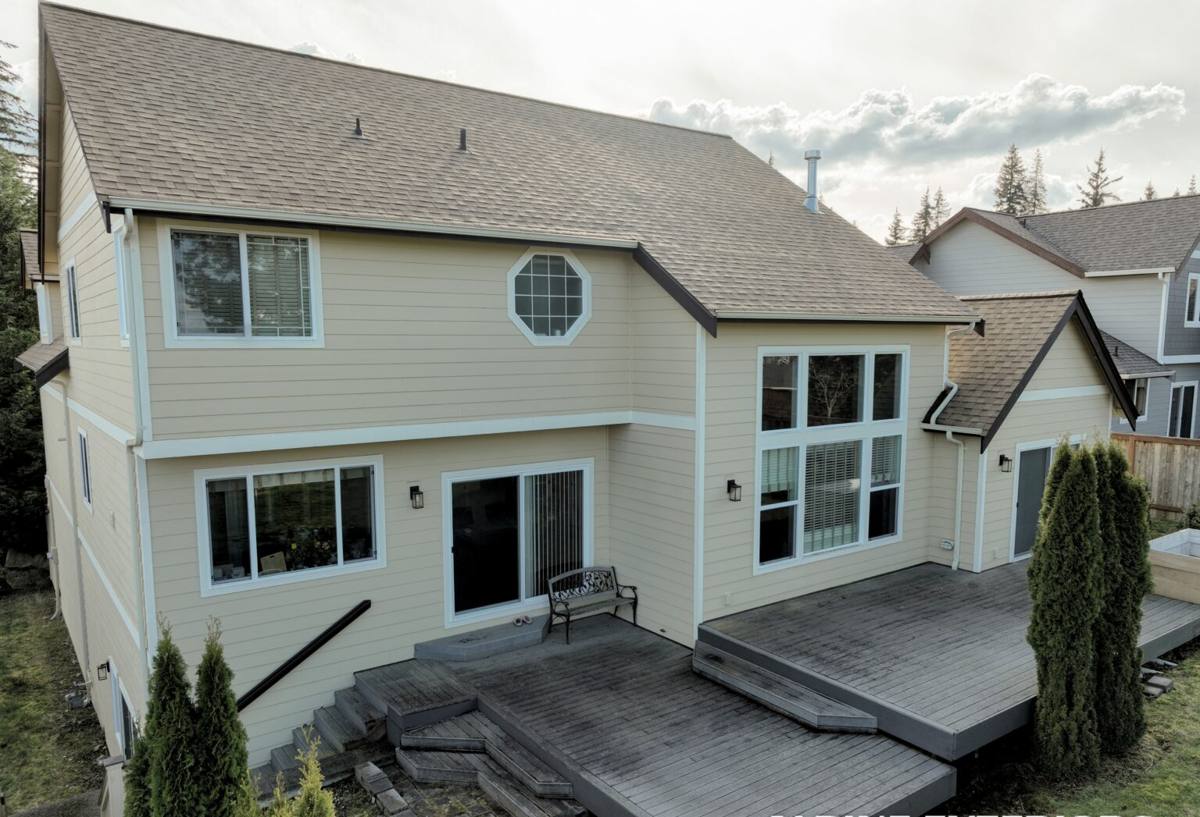
We build and repair decks for homes in and around Van Zandt regularly, and the patterns repeat: decks that looked fine when they went in but were never detailed for this specific climate. This page walks through what a deck actually needs to hold up here, how we build them, and what to watch for whether you're planning new construction or trying to figure out if an existing deck is worth saving.
What Whatcom County Weather Does to an Outdoor Structure
It helps to be specific about what a deck is up against in this area, because "it rains a lot" undersells the real mechanics of the damage.
Moisture That Never Fully Leaves
Long stretches of overcast, damp weather mean wood surfaces and structural members rarely get a full dry-out cycle. Any spot where water can sit — a poorly sloped board, a ledger board without proper flashing, a post base set directly in soil — stays wet longer than it should, and that's exactly the condition rot and mold need.
Moss and Organic Growth
A long moss season isn't just cosmetic. Moss and algae hold moisture against decking boards and joists, and on stairs and ramps they turn into a slip hazard. Decking that isn't gapped and ventilated properly becomes a moss farm within a couple of seasons.
Salt Air and Metal Fasteners
Salt-laden air accelerates corrosion in fasteners, brackets, and hardware that aren't rated for it. A deck can look structurally sound while the hidden hardware — joist hangers, ledger bolts, structural screws — is quietly corroding away underneath.
Freeze-Thaw Cycling
Whatcom County winters bring enough freeze-thaw swings to work on anything that wasn't set below frost depth or properly drained. Footings that heave even slightly will telegraph movement into the whole structure over time — squeaks, gaps, and eventually a deck that doesn't feel solid underfoot.
What a Correctly Built Deck Needs Here
None of this is exotic — it's standard good practice, applied consistently instead of skipped where it's inconvenient.
- Footings poured to the correct depth for local frost conditions, not just "deep enough to look right"
- A ledger board properly flashed and sealed where it meets the house, with a drainage gap so water can't wick behind the siding
- Corrosion-resistant, code-rated fasteners and structural hardware throughout — not just at the visible connections
- Decking boards with proper spacing for drainage and airflow underneath
- A structural frame sized for the actual load, not the minimum the span tables allow
- Grading and drainage around the base of the deck so water moves away from posts and footings instead of pooling
Decking Material Options: Real Trade-Offs
There's no universally "best" decking material — there's the right one for your budget, your maintenance appetite, and how the deck sits relative to sun and shade. Here's how the common options actually compare in a climate like this one.
| Material | Upfront Cost | Maintenance | How It Handles This Climate |
|---|---|---|---|
| Pressure-treated wood | Lowest | Annual cleaning, periodic staining/sealing | Performs well if sealed and maintained on schedule; skipped maintenance shows fast in wet climates |
| Cedar | Moderate | Regular sealing to hold color and resist moisture | Naturally rot-resistant but still needs upkeep here; looks better than PT wood if maintained |
| Capped composite | Higher | Occasional washing, no sealing/staining | Strong moisture resistance, resists moss buildup better than uncapped boards |
| PVC decking | Highest | Lowest — mostly just washing | Fully synthetic, doesn't absorb moisture; best long-term option where budget allows |
We install all of these depending on what a homeowner wants. Our standard is to be honest about the trade-off up front: wood costs less to install but costs more in labor and attention over its life; composite and PVC cost more up front and largely remove that ongoing burden. We steer people away from uncapped composite boards specifically for this climate — early-generation composite without a capping layer can absorb moisture at cut edges and fastener points, which is a maintenance headache in a place that stays damp as long as this one does.
Framing and Substructure: Where Deck Failures Actually Start
Almost every deck failure we get called out for started below the decking boards, not on top of them. The parts nobody sees are the parts that matter most.
Ledger Board Attachment
This is the single most common failure point on older decks. If the ledger board isn't flashed correctly where it attaches to the house, water works its way behind the siding and rots the rim joist and sheathing from the inside — often invisibly until the deck starts to pull away from the house.
Post Bases and Footings
Posts set directly into concrete, or footings poured too shallow, are two of the most common corner-cutting shortcuts we find. Post bases should hold the post above grade and off standing water; footings need to go to proper depth for this region's frost conditions.
Joist Hardware
Joist hangers and structural screws need to be rated for exterior and, ideally, corrosion-resistant given the salt air this area sees. Mismatched or undersized hardware is cheap to install wrong and expensive to fix once the deck is finished.
Our Deck Building Process
- On-site assessment — we look at the house connection point, grading, drainage, sun/shade exposure, and what you actually want to use the space for.
- Design and material selection — sizing, layout, railing style, and decking material discussed honestly against your budget and maintenance preference.
- Permitting — we handle the permit application and inspections required for the jurisdiction covering your property.
- Demolition or site prep — removal of any existing structure, grading corrections if needed.
- Footings and framing — footings poured to proper depth, ledger flashed and sealed, frame built to span and load requirements.
- Decking, railing, and stairs installed — with correct fastening and spacing for drainage.
- Final walkthrough and inspection sign-off — we walk the finished deck with you before calling the job done.
Permits and Code: Don't Skip This Step
Deck construction in Whatcom County typically requires a permit once you're past a certain size or height above grade, and there are specific requirements around railing height, guard spacing, and stair geometry that inspectors check. Skipping the permit doesn't just risk a fine — it can cause real problems later if you sell the house and an unpermitted structure shows up in a disclosure or inspection. We pull permits as a standard part of new deck construction rather than treating it as optional.
Maintenance: What Actually Keeps a Deck Going Here
Whatever material you choose, a little seasonal attention goes a long way in this climate. This is the realistic list, not the aspirational one:
- Clear leaves, needles, and debris out from between boards before they trap moisture
- Wash off moss and algae buildup at least once a year, more often on shaded sections
- Check and re-seal wood decking on the schedule the product calls for — don't wait until it looks dry and gray
- Inspect the ledger board area and post bases annually for signs of water staining or soft wood
- Keep gutters and downspouts near the deck clear so runoff isn't dumping directly onto or under it
- Tighten or replace any hardware showing early rust or corrosion before it spreads
Why Local Experience in Van Zandt and Sumas Matters
A deck builder who only works occasionally in this part of Whatcom County is guessing at things a crew that works here regularly already knows — how deep footings need to go for local frost conditions, which framing details actually hold up through a full wet season, and which shortcuts show up as callbacks two winters later. We're not choosing generic specs off a national chart; we're building to what this specific stretch of weather actually does to a structure over years, not just what passes inspection on day one. That's the difference between a deck that needs attention every season and one that quietly does its job.
Cost Factors: What Actually Moves the Price
Every deck project is different, but the same handful of factors drive most of the cost swing between projects of similar size.
| Factor | Why It Matters |
|---|---|
| Decking material | Pressure-treated wood costs the least upfront; capped composite and PVC cost more but reduce long-term maintenance |
| Height above grade | Taller decks need more substantial framing, footings, and often stairs and additional railing |
| Ledger vs. freestanding | A ledger-attached deck can be more efficient to frame than a fully freestanding structure, but the ledger connection has to be done right |
| Railing style | Basic code-compliant railing costs less than cable, glass, or custom railing systems |
| Site access and grading | Sloped or hard-to-access lots add labor for footings, material staging, and drainage work |
| Permit requirements | Larger or higher decks trigger more inspection steps, which adds time but protects you long term |
Rather than quote a number without seeing the site, we walk the property, talk through what you want, and give a real estimate based on your specific deck — not a generic square-footage formula.
If you're planning a new deck in Van Zandt or need an honest opinion on whether an existing one is still sound, we're happy to come take a look. Reach out through the form below for a free, no-pressure estimate.