 Sumas Roofing
 Storm Damage Roofing in Van Zandt: A Different Kind of Wear
Van Zandt sits in the part of Whatcom County that takes weather from more than one direction at once. Pacific storm systems push driving rain in sideways off the water, and cold outflow wind funnels down through the Sumas Gap and the Fraser Valley corridor hard enough to strip shingles that would survive a normal windstorm anywhere else. Add a moss season that runs long into the year because the shade and humidity never fully let up, and you have a roof that's under more sustained stress than most manufacturers' warranty language assumes. Storm damage repair out here isn't a once-in-a-decade emergency call. It's a maintenance category homeowners in this area need to plan for.
We work on roofs in Van Zandt regularly, not as a one-off service call from across the county. That matters for storm damage specifically, because the difference between a roof that gets fixed correctly and one that gets patched and fails again in the next storm usually comes down to whether the crew understood what actually caused the damage in the first place.
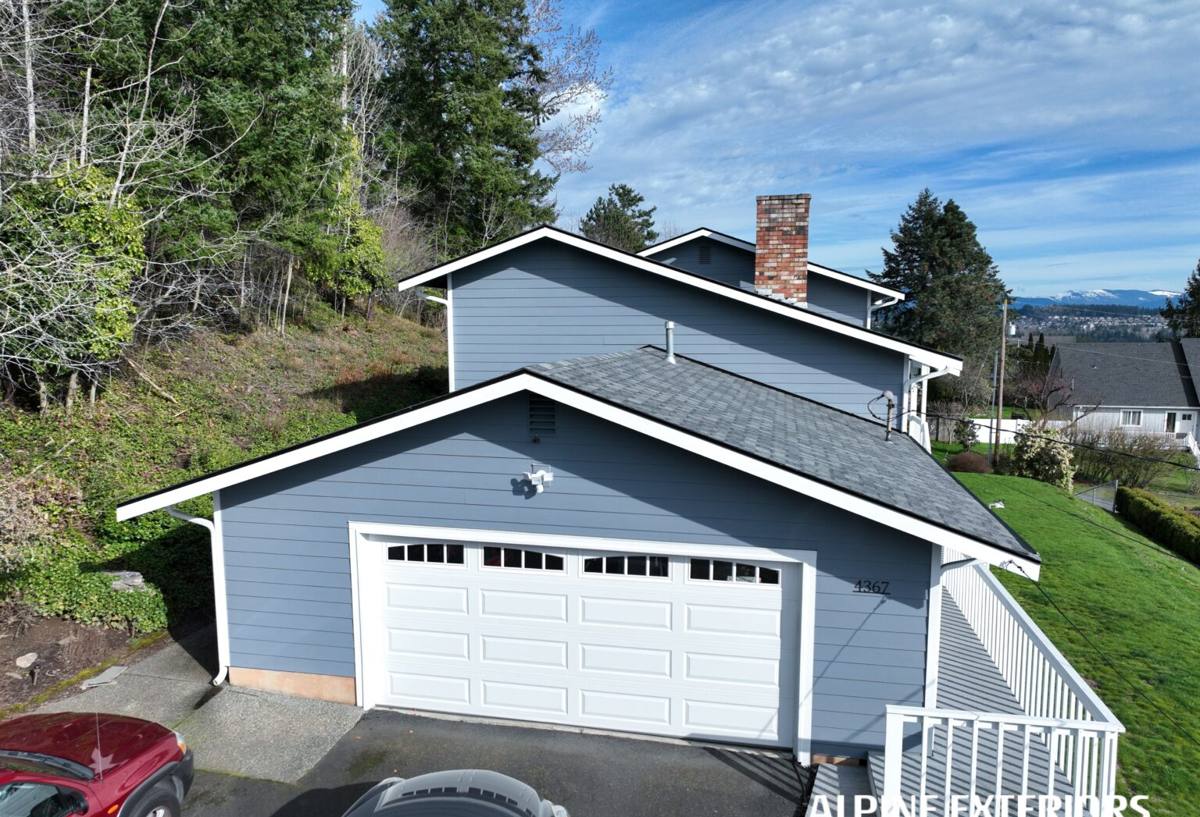
What Actually Counts as Storm Damage
Homeowners often picture storm damage as a dramatic event — a tree limb through the roof deck, or shingles littering the yard after a windstorm. That's real, but it's the minority of what we find. Most storm damage is quieter and easier to miss:
- Wind-lifted shingle tabs that look fine from the ground but have broken their sealant strip, leaving them able to flap and take on water in the next wind event
- Creased or bruised shingles from wind-driven debris that don't leak yet but have lost their granule protection and will fail early
- Flashing pulled loose at chimneys, skylights, and wall intersections — often the first failure point in a wind event, and the most common source of a "mystery leak" weeks later
- Fastener backout where repeated wind loading works nails and screws partway out over multiple storms rather than one
- Gutter and edge damage that redirects water into the fascia and soffit instead of away from the house
The driving rain typical of storms in this part of Whatcom County finds every one of these weak points fast, because it isn't falling straight down — it's being pushed sideways under laps and flashing that were only ever designed to shed water moving downhill.
Moss Season Makes Storm Damage Worse, Not Just Uglier
A lot of homeowners think of moss as a cosmetic problem. In Van Zandt's climate, it's a structural one. Moss holds moisture against the roof surface long after a storm has passed, which does two things: it keeps shingles wet and vulnerable during the exact window when they need to dry out and reseal, and it lifts shingle edges as it grows, giving wind a place to get underneath. A roof that went into storm season with heavy moss coverage is far more likely to lose shingles in the same wind event that a clean roof next door shrugs off. Any real storm damage repair in this area has to account for moss as a contributing factor, not just clean debris and move on.
How Moss and Storm Damage Compound Each Other
The pattern we see most often: moss establishes along the shaded north slope and valleys, holds moisture there through the wet months, softens the shingle's grip on the roof, and then a wind event finishes the job by lifting or tearing what the moss already weakened. Treating the storm damage without addressing the moss just resets the clock on the same failure.
What a Correct Storm Damage Repair Involves
Not all storm repairs are equal, and the gap between a quick patch and a correct repair is exactly where most repeat leaks come from. A tarp and some roofing cement over a visible hole stops water today. It rarely addresses what let the water in, or what else nearby is compromised but not yet leaking.
| Quick Patch | Correct Storm Repair |
|---|---|
| Seals the visible leak point only | Traces the leak to its actual entry point, which is often several feet from the stain |
| Uses surface sealant over damaged material | Replaces damaged shingles, underlayment, or decking as needed |
| Ignores surrounding shingles with broken seals | Checks and re-seals adjacent tabs that took the same wind load |
| Leaves flashing as-is if it isn't visibly torn | Inspects flashing fasteners and laps for loosening, not just gaps |
| No documentation | Photo documentation useful for insurance claims |
A quick patch has its place — if there's active water intrusion during a storm, stopping it is the priority, and we'll do that first. But it should always be followed by a proper inspection and repair once the weather clears, not treated as the finished job.
Our Process for Van Zandt Storm Repairs
1. Inspection Before Estimate
We walk the roof (or use a drone where a physical walk would cause more harm than the storm did) and look past the obvious damage. Wind and rain damage rarely stays contained to one spot, so we check the whole roof plane, not just where you saw the leak from inside.
2. Clear Explanation of What We Found
You get a straightforward rundown of what's damaged, what's at risk but not yet failed, and what can wait. We don't pad a storm repair into a full re-roof recommendation unless the roof's age and condition genuinely call for it.
3. Repair Matched to the Actual Cause
If the root cause was a broken shingle seal, we address the seal and the shingle. If it was flashing, we address the flashing — not just the shingle above it that happened to leak. Treating the symptom instead of the cause is the single biggest reason storm repairs fail again in the next storm.
4. Cleanup and Debris Removal
Storm repair work generates its own debris on top of what the storm left. We clear the roof, gutters, and yard before we consider the job done.
Insurance and Storm Damage Claims
Many storm repairs in Whatcom County end up going through a homeowner's insurance policy, especially after a significant wind event. A few honest points on that process:
- Documentation matters — photos of the damage before repair work begins strengthen a claim considerably
- Not every storm-related issue meets a policy's damage threshold; a licensed contractor can tell you what's realistic before you file, so you're not filing a claim that gets denied
- We provide the inspection findings and photos you need to submit a claim, but the claim itself is between you and your insurer
- Timing matters — most policies have a window for reporting storm damage, so don't sit on a known issue through an entire wet season
We're not in the business of inflating a repair to maximize a claim. We tell you what's actually damaged and let the insurance conversation follow from that.
Cost Factors for Storm Damage Repair
Storm damage repair costs vary more than a routine repair because the scope depends entirely on what the storm actually did — and that's not always visible from the ground. Rather than quote a number that doesn't apply to your roof, here's what actually drives the cost:
| Factor | Why It Matters |
|---|---|
| Extent of shingle loss vs. isolated tabs | Full sections of missing shingles cost more than resealing a handful of lifted tabs |
| Whether decking was exposed to water | Wet decking needs to dry and may need replacement before new shingles go down |
| Flashing condition | Flashing replacement involves more labor than shingle replacement alone |
| Roof pitch and access | Steeper or harder-to-access roofs take longer to work safely |
| Age and condition of the surrounding roof | Matching older shingles or working around a roof nearing the end of its life changes the approach |
| Moss or debris buildup | Adds cleanup and treatment time before repair work can start |
We give a written estimate after inspection, not a phone-quote guess. On storm damage specifically, a guess is usually wrong in one direction or the other, and neither helps you plan.
Signs You Need a Storm Damage Inspection
Some storm damage announces itself. Some doesn't, and it's the quiet kind that causes the most expensive repairs later because it had months to work before anyone noticed. After any significant wind or rain event, it's worth checking for:
- Shingle granules collecting in gutters or at downspout outlets
- Shingles that look slightly lifted or "fluffed" compared to the rest of the roof
- New water stains on ceilings or upper walls, even faint ones
- Debris — branches, moss clumps, torn material — caught in valleys or against the chimney
- Gutters pulling away from the fascia or sagging in one section
- Daylight visible through the attic roof deck
- A musty smell in the attic that wasn't there before
If any of these are present after a storm, it's worth having a professional look before the next weather system moves through. Waiting through a second storm on damage from the first is how a $400 repair becomes a $4,000 one.
Why a Crew That Already Works Van Zandt Matters
Storm damage repair isn't a specialty that requires exotic skill — it requires knowing what this specific area's storms actually do to a roof, and that comes from being here regularly, not from a general contractor passing through after a big regional storm makes headlines. A crew that works Van Zandt and the greater Sumas area routinely knows which roof styles and ages in this area are prone to which failures, understands how the outflow wind pattern through the Sumas Gap behaves differently than a typical coastal windstorm, and isn't guessing at how long moss has likely been established based on one visit.
There's also a practical local advantage after a bigger storm: when wind events hit a wide area at once, response time matters, and a crew based nearby can get to your roof faster than one dispatched from farther away in the county. A tarped-over leak sitting through a second storm because the original crew never made it back is one of the more common ways a manageable repair turns into a bigger one.
Getting Started
If your Van Zandt home has recent storm damage — or you're not sure and just want an honest look before the next system rolls through — we're glad to come out for a free, no-pressure estimate. Use the form below to get started.