 Sumas Roofing
 Why Van Zandt Homes Put Extra Demands on Windows
Van Zandt sits in a part of Whatcom County where the weather doesn't do anything halfway. Homes here take on salt-laden air moving in off the water, long stretches of driving rain through the fall and winter, and a moss season that seems to get longer every year. None of that is a problem a window has to face once in a while — it's a daily grind on the seals, frames, and glazing that most manufacturers design and test for milder, drier climates.
Older aluminum and early-generation vinyl windows in this area tend to show their age the same way: fogged glass from failed seals, frames that have gone soft or warped at the corners, and sashes that won't latch tight anymore because the frame has shifted. If you've walked past a window in your Van Zandt home and felt a draft even with it closed, that's not something to live with — it's a sign the window has stopped doing its job.
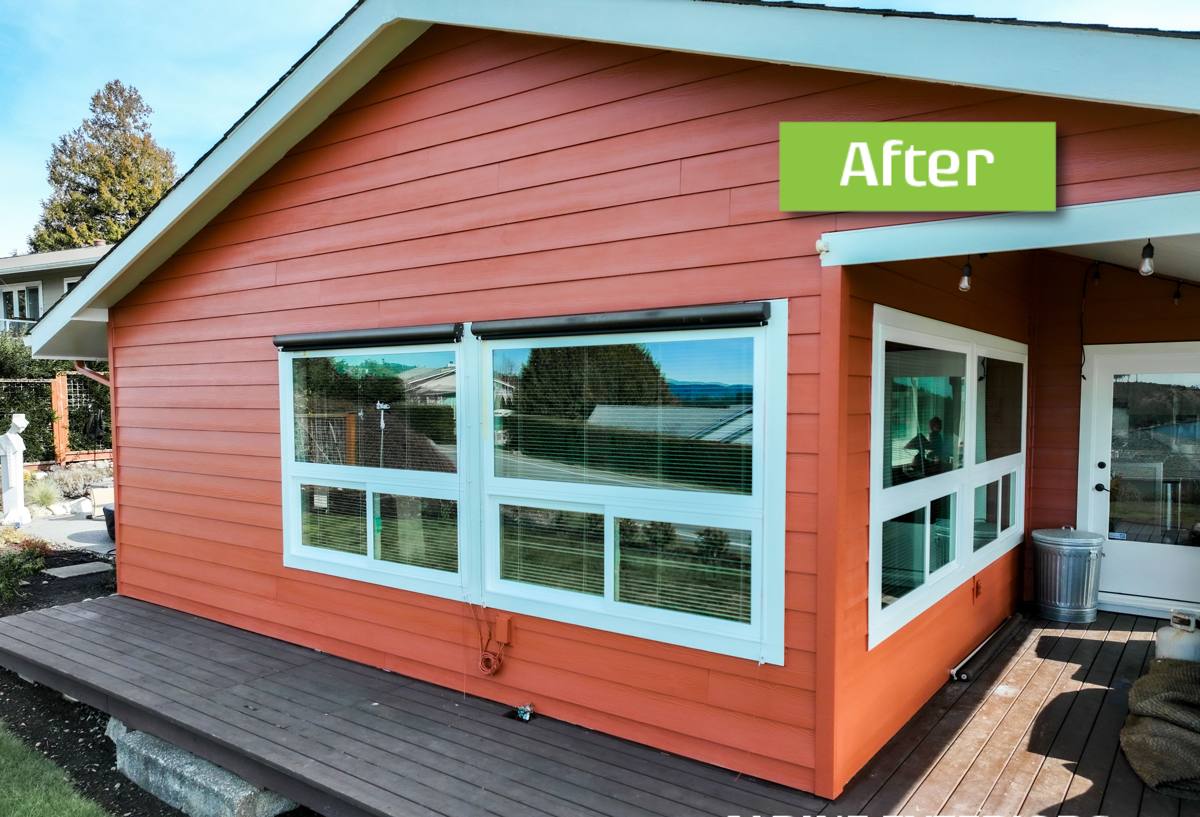
How to Tell a Window Actually Needs Replacing (Not Just Repair)
Not every window problem means a full replacement. But there are a handful of signs that tell us — and should tell you — that repair is just delaying the inevitable and spending money that won't hold up through another wet season.
- Condensation or fog trapped between panes (the seal has failed and can't be repaired)
- Visible gaps between the frame and the siding or trim, especially after rain
- Soft, discolored, or swelling wood around the window opening
- Windows that are difficult to open, close, or lock — a sign the frame has racked out of square
- A noticeable draft or cold spot near the window even when it's fully shut
- Moss or dark streaking building up on the sill or lower frame faster than on the surrounding siding
- Rising heating bills with no other explanation
If you're seeing two or more of these on the same window, replacement is almost always the more honest recommendation — patching a failed seal or re-caulking a rotted sill buys you a season, not a solution.
What a Correct Window Replacement Job Actually Involves
A window replacement is only as good as what happens behind the trim, and that's the part most homeowners never get to see. Rushed installs are the single biggest cause of early failure, and in a climate that throws this much rain at a wall, cutting corners on the details shows up fast.
Inspecting the Opening Before Anything Goes In
Once the old window is out, we check the rough opening for hidden rot, soft framing, or old flashing that's already failed. This is the point where problems that have been hiding behind the window for years finally show themselves — and it's much cheaper to deal with them now than after a new window is sealed in over the top of them.
Flashing and Water Management
Correct flashing — not just caulk — is what actually keeps driving rain from working its way behind the siding. We integrate flashing tape and drainage details so water that does reach the opening has somewhere to go besides your wall cavity. This is the step that separates a window that lasts through decades of Whatcom County winters from one that's leaking again in five years.
Air Sealing and Insulation
Gaps around the new frame get properly insulated and air-sealed — not stuffed with excess spray foam, which can bow a frame out of square, but filled with the right amount of the right material so the window operates smoothly and doesn't leak air.
Finish Work That Sheds Water
Exterior trim and caulking are finished so water is directed away from every joint, not just covered up. Sloppy caulk lines aren't just a cosmetic issue — they're often the first place a new window starts to fail.
Choosing Windows That Hold Up in This Climate
Material choice matters more here than in drier parts of the state. We steer Van Zandt homeowners toward products that handle sustained moisture exposure and salt air without excessive upkeep, and we're upfront when a product looks good on paper but comes with real trade-offs in a coastal-influenced climate.
| Frame Material | Moisture & Salt Air Performance | Maintenance | Typical Trade-Off |
|---|---|---|---|
| Vinyl | Very good — won't rust or rot, handles salt air well | Low — occasional cleaning | Fewer color/finish options than wood or fiberglass |
| Fiberglass | Excellent — dimensionally stable, resists warping | Low | Higher upfront cost |
| Wood-clad | Good if maintained; vulnerable where cladding is breached | Higher — finish and seals need periodic attention | Best appearance, but least forgiving of missed maintenance |
| Bare aluminum | Poor — prone to corrosion in salt air, conducts cold | Moderate | Not something we recommend for this area |
We don't install bare aluminum frames as a standard offering here — not because the material can't be made to work somewhere, but because in a climate with this much salt air and sustained moisture, it's a maintenance and corrosion headache we don't think is a fair trade for most homeowners. Vinyl and fiberglass consistently give Van Zandt homeowners the best balance of performance and upkeep.
Our Process for a Van Zandt Window Replacement
- On-site assessment. We look at every window being considered for replacement, check the surrounding wall and trim condition, and talk through what's actually needed versus what can wait.
- Straight-forward estimate. You get a clear breakdown of materials, labor, and timeline — no pressure, no inflated urgency.
- Scheduling around the weather. Openings are only exposed for as long as necessary, and we plan install days around forecasts rather than pushing through a downpour.
- Removal and opening inspection. Old windows come out carefully, and any hidden rot or flashing failure gets flagged and addressed before the new unit goes in.
- Proper installation. Flashing, insulation, and air sealing done to hold up through repeated wet seasons — not just to pass a quick visual check.
- Finish and walkthrough. Trim, caulking, and a final check that every window operates smoothly and seals tight.
What Window Replacement Typically Costs
Every home and window count is different, so we won't put a fake precise number here — but it's worth understanding the factors that actually move the price, so you know what you're paying for and where there's room to make choices.
| Cost Factor | Why It Matters |
|---|---|
| Frame material | Vinyl is typically the most budget-friendly; fiberglass and wood-clad cost more upfront |
| Window size and count | Larger openings and whole-house jobs shift per-unit pricing |
| Hidden framing repair | Rot or old flashing found during removal adds labor, but skipping this repair guarantees a repeat problem |
| Glass package | Double vs. triple pane, and coatings for energy performance, affect both cost and long-term comfort |
| Trim and finish complexity | Custom trim profiles or matching existing exterior detail takes more time |
Why It Matters That We Already Work in Van Zandt
A crew that's already worked homes in and around Van Zandt has seen how this specific stretch of Whatcom County weather treats a house over time — which window brands and frame materials actually hold up locally, which flashing details matter most given the direction wind-driven rain typically hits, and where moss tends to build up first on a wall. That's not something you can get from a national installer passing through, and it's not guesswork on our end either — it's pattern recognition from doing this work in this area, season after season.
It also means we're not disappearing after the install. If a question comes up six months or two years later, we're still a local call away, not a call center.
Keeping New Windows Performing Long-Term
A correctly installed window shouldn't need much — but a little attention goes a long way in this climate.
- Rinse frames and sills periodically to keep salt residue and grime from building up
- Clear moss and debris from nearby gutters and sills before it holds moisture against the frame
- Check exterior caulk lines once a year and touch up any that have cracked or pulled away
- Operate locks and hardware occasionally through the off-season so mechanisms don't seize up
- Watch for any new condensation between panes — it's the earliest sign a seal is starting to fail
If you're noticing drafts, fogged glass, or trim that's starting to look tired on your Van Zandt home, we're happy to take a look and give you a straight assessment — no pressure, no obligation. Reach out for a free estimate using the form below.